
Looking Back at 2025
by Sam Atkins
2025 saw quite a bit of unique activity in the world of astronomy. Ambitious new space missions were launched while iconic time-tested missions came to an end. Many countries and private firms made unprecedented strides in joining the space exploration frontier. Our solar system even received an interstellar visitor. It’s not an alien spaceship, we promise ;). Here are some of the more notable things that took place over the last year.
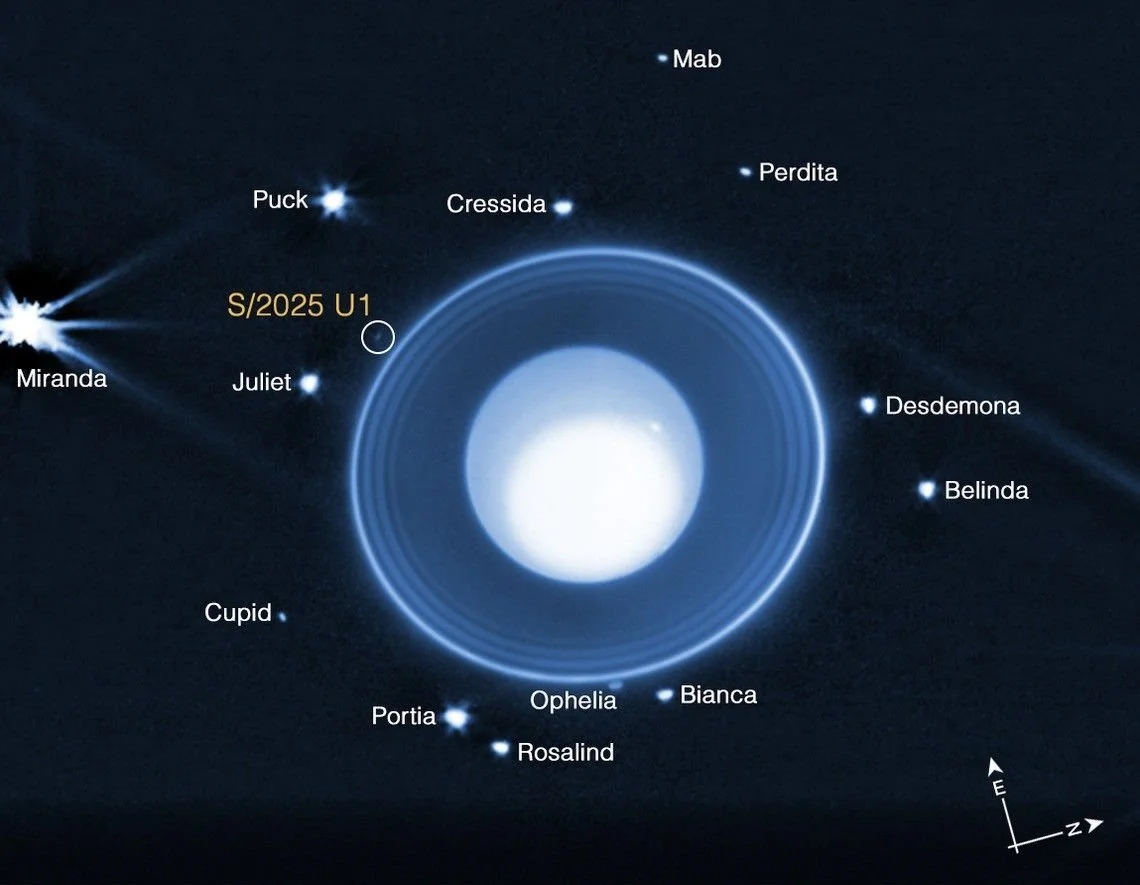
JAMES WEBB DISCOVERS NEW URANIAN MOON
Image credit: NASA, ESA, CSA, STScl, M. El Moutamid (SwRI), M. Hedman (University of Idaho)
The James Webb Space Telescope has been a bountiful piece of technology, offering us spectacular views of the farthest reaches of the cosmos and as well as new insights into the evolution of the universe and galaxies within it. This year, one of Webb’s more exciting discoveries was much closer to home.
While conducting a planetary survey, scientists at the Southwest Research Institute found in the long-exposure infrared images of Uranus a tiny previously unknown moon orbiting just beyond its outermost major ring. Above is a composite image showing Uranus, its 13 rings and 13 of its known moons. To the upper left of Uranus is the mysterious new moon which has been designated S/2025 U1. This brings the planet’s lunar family count up to 29 moons. The new moon’s position close to the rings makes it the 14th member of a sub-category of small Uranian moons that orbit closer than the five major moons, like Titania.
Many of the Uranian moons are thought to be as much ice as they are rock and thus have high albedos (meaning they reflect a lot of light). Assuming this new moon has a comparable albedo, looking at how bright it appears, scientists have estimated a diameter of 10 km wide (6 miles). This would have likely made the object too small to be seen by Voyager 2, which performed a flyby of Uranus back in 1986 and remains the planet’s sole visitor.
The moon will eventually have its official name approved by the International Astronomical Union. Tradition follows that Uranian moons are named after characters from the works of William Shakespeare or Alexander Pope.
QUIPU: THE LARGEST SUPERSTRUCTURE EVER
Image credit: Boehringer
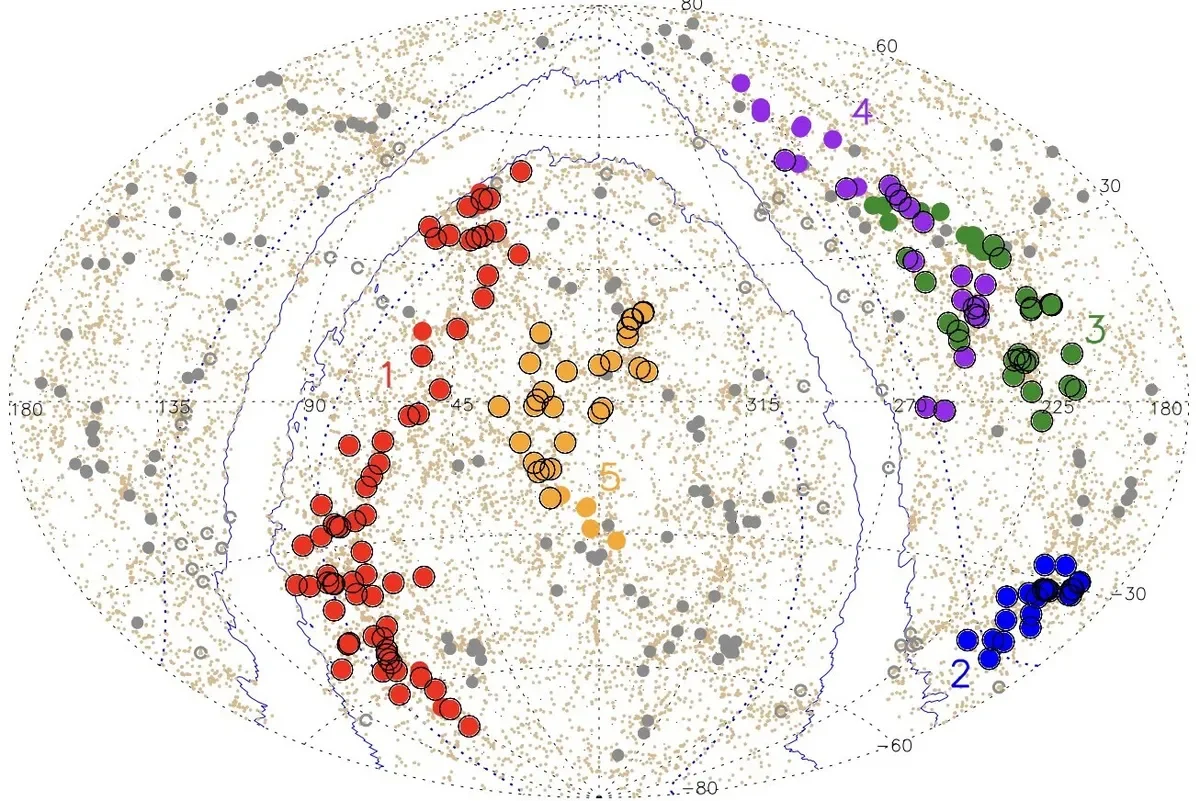
At the end of January 2025, a team of astronomers led by Hans Boehringer published a research paper detailing the discovery of the largest colossal superstructure ever found.
These superstructures make up the cosmic web of galaxies that pervades the entire universe. Gravitationally-bound galaxies form groups and clusters, which in turn gather around other groups and clusters to form massive superclusters. At the largest scales we are currently capable of detecting, we find swaths of superclusters congregating in vast networks of galactic filaments like the Laniakea Supercluster.
The superstructure in question was identified during a large-scale survey using the ROSAT X-ray satellite. Boehringer named the superstructure Quipu after its resemblance to Incan knotted cords of the same name used for record-keeping in the central Andes in South America. Quipu spans nearly 70 superclusters across 1.4 billion light years. That’s 13,000 times the diameter of the Milky Way with a combined mass of 200 quadrillion Suns. With this combined mass comes the combined gravity of millions of individual galaxies so extreme that it was found to distort the cosmic microwave background radiation that permeates the entire cosmos. They’ve also affected our measurements of how fast the universe appears to be expanding.
Quipu wasn’t alone either. It is actually one of five superstructures identified and mapped by the research team at the Max Planck Institute. Some were previously hypothesized but now confirmed. Together, these vast filaments and knots contain 45% of galaxy clusters we see in the observable universe. Identifying these superstructures is instrumental to testing our cosmological models of how the universe has evolved in the past and how it may evolve in the future.
You can read the research paper yourself here.
FALSE ALARM ASTEROID
Image credit: N. Bartmann (ESA/Webb), ESO/M. Kornmesser and S. Brunier, N. Risinger (skysurvey.org)
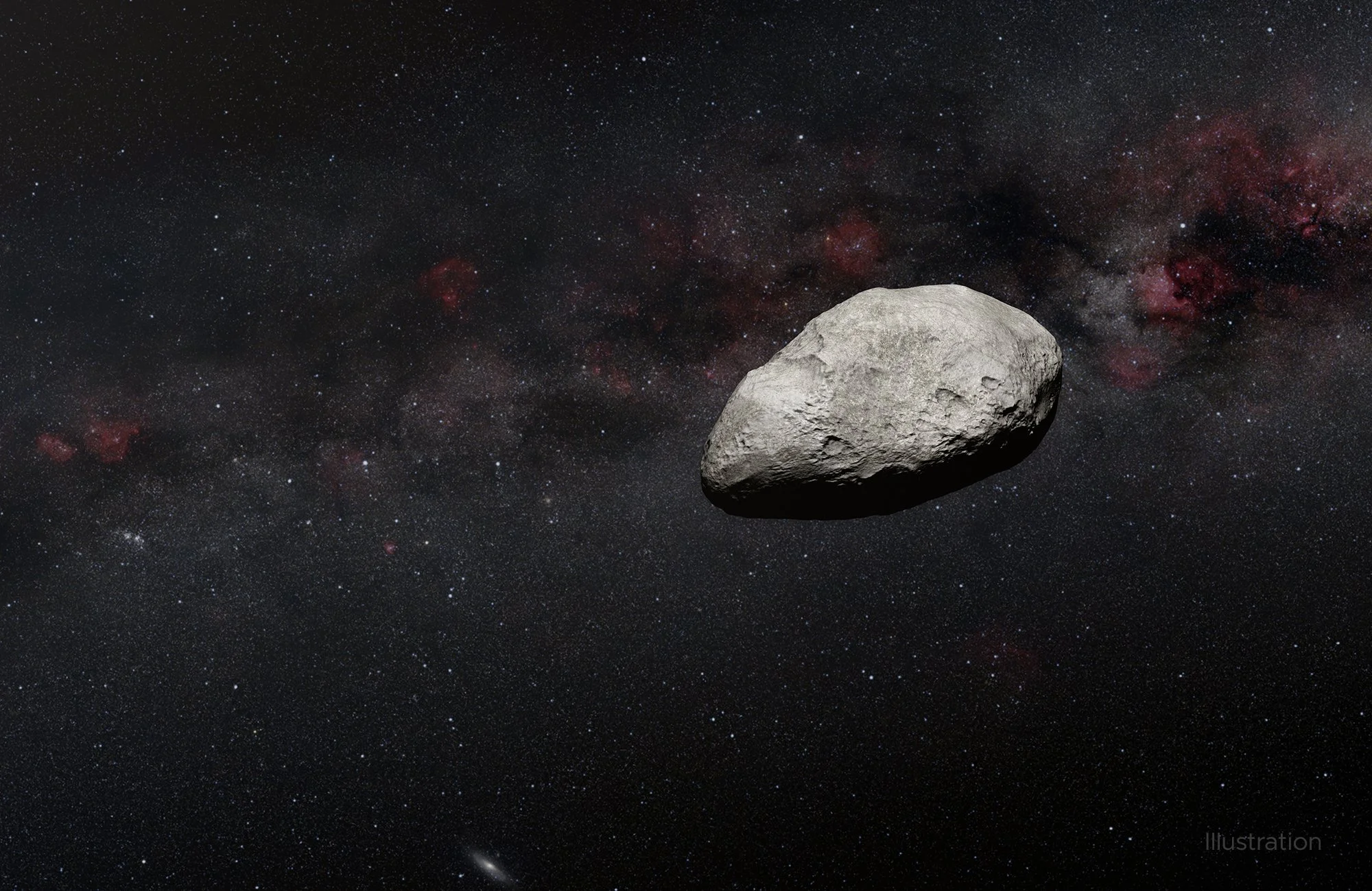
At the end of 2024, the ATLAS (Asteroid Terrestrial-impact Last Alert System) survey telescope in Rio Hurtado, Chile reported the discovery of an asteroid, dubbed 2024 YR4. A calculation of its trajectory suggested it had passed within a million kilometers of Earth on Christmas, just two days prior. This naturally raised concerns. An unfamiliar object passing this close to Earth may get closer and closer on subsequent passes.
Additional observations raised the probability of an Earth impact above 1%. The asteroid itself was estimated between 50-70 meters in diameter, the size of an Olympic swimming pool. This is comparable to the infamous Tunguska meteor that exploded above the Siberian wilderness in 1908. Over a populated region, this could be catastrophic. The calculations prompted the International Asteroid Warning Network (IAWN) to raise the asteroid to Level 3 on the Torino scale. Only two objects have ever reached that high since the adoption of the scale in 1999. By mid-February 2025, the probability increased to over 3%, making it one of the highest risk estimates ever recorded for an asteroid of this size.
However, from that point on further observations lowered the probability which probably seems strange to many people. Trying to predict the three-dimensional trajectory of a very distant object with extreme precision is a matter of making one observation after another. Each time the asteroid is observed, it is seen from a different distance and angle. This changes the asteroid’s apparent size and proper motion. Each of these changes allows astronomers to refine the trajectory and the uncertainty region narrows.
By the end of February, the probability of an Earth impact melted down to a fraction of a fraction of a percent and the asteroid was downgraded to a Level 0 on the Torino scale. As it currently stands, 2024 YR4 has a 0.001 % chance of impacting Earth in December 2032 and a slightly higher chance of hitting the Moon.
BLUE GHOST PUTS FIREFLY AEROSPACE ON THE LUNAR MAP
Image credit: Firefly Aerospace
In recent years, there has been significant interest in putting more hardware on the Moon and 2025 was no different. While this would have previously been almost exclusively done by government agencies like NASA, private companies are now joining the fray.
A joint mission launched NASA’s Trailblazer lunar orbiter and private company Intuitive Machines’ IM-2 lander. Trailblazer was meant to map lunar water ice, but contact was lost a day after launch. IM-2 experienced its own setbacks, landing on its side and leaving its solar panels unable to generate power. The loss stung all the more because Intuitive Machines’ previous lander, the first American spacecraft to reach the Moon since Apollo, had suffered a similar fate.
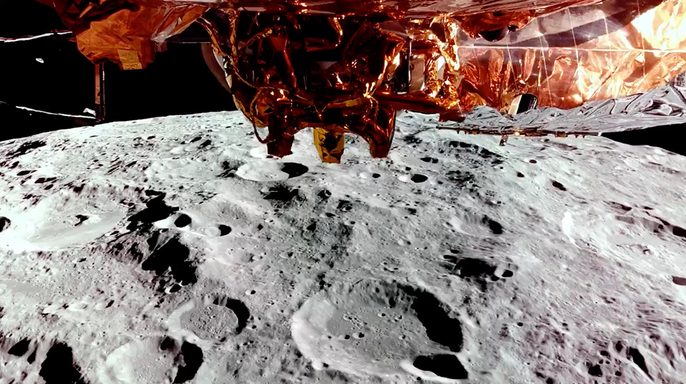
Not all missions ended in failure. Firefly Aerospace launched their first Blue Ghost mission which touched down on a small mountain located in Mare Crisium (fully upright) in early March. The objective of Blue Ghost was to spend two weeks (a lunar day) analyzing how the solar wind and Earth’s magnetic field interact with the lunar regolith, that powdery grey “soil” on the ground. As the Sun set on Mare Crisium, Blue Ghost’s solar power lasted another five hours, allowing it to study how the drop in temperature affects the regolith. Among its many findings, Blue Ghost found that temperatures around lunar noon were higher and longer-lasting than anticipated. It tested a new device that can remove sticky lunar dust from surfaces using an electric field. It drilled a meter deep into the ground to measure the heat flux coming from the depths.
This was the longest commercial operation on the Moon and Firefly Aerospace has more missions planned in the future.
SATURN’S RAZOR-THIN RINGS
Image credit: Fifth Star Labs - Sky Guide
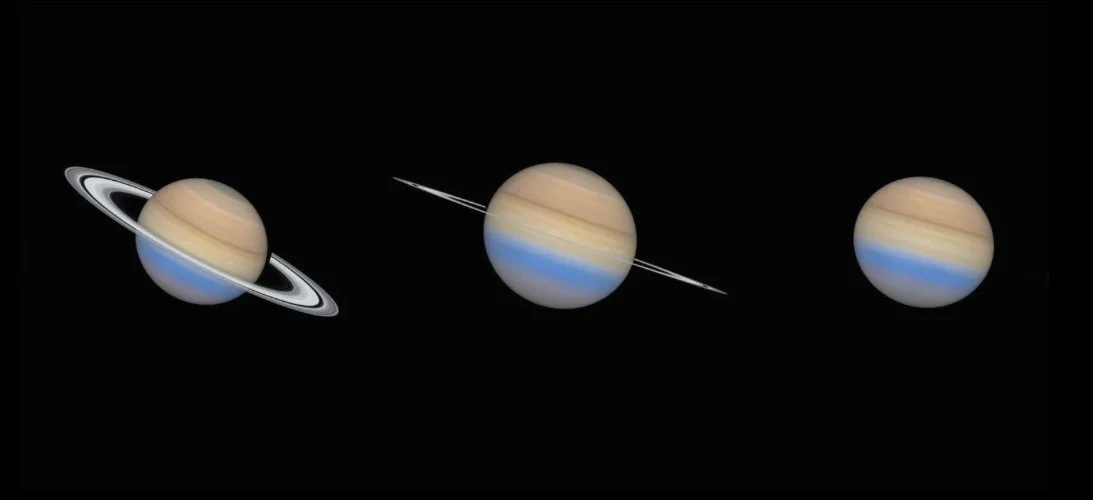
Like most planets in the solar system, Saturn is tilted on its rotational axis with respect to its orbital plane. Unlike the other planets, Saturn’s sweeping ring system makes its axial tilt dramatically visible. When it is tilted directly towards or away from us, its rings are sprawled out like a peacock’s feathers. When it’s tilted perpendicular to us, its rings are seen edge-on.
What many don’t realize is just how thin planetary rings are. Saturn’s ring system stretches roughly 282,000 km across, yet can be as much as 1 km thick or as little as 10 meters thick. If you were to shrink its rings down the size of a sheet of paper, they would be 10,000 times thinner than that paper.
Back in March, Saturn’s rings became oriented edge-on, causing them to seemingly disappear. It didn’t actually, but due to how incredibly thin they are, we can’t see them from Earth. This was around the time when Saturn was on the far side of the Sun and thus drowned out in daylight so seeing them through a telescope would have been difficult. However, as Earth continued its orbit, it came back around to the same side. In November, Saturn’s rings became nearly edge-on once again. While they didn’t disappear, they became razor-thin. This was only a few months after opposition so Saturn was near the largest it gets in our sky.
The planet orbits the Sun in a nearly 30-year period. That means that the rings only show themselves edge-on about every 15 years. One only gets a handful of opportunities to see them through their lifetime. If you missed it, you’ll have to wait until 2039 for the next chance. Until then, we’ll be getting well-acquainted with Saturn’s southern hemisphere being tilted towards us.
FAREWELL GAIA
Image credit: ESA
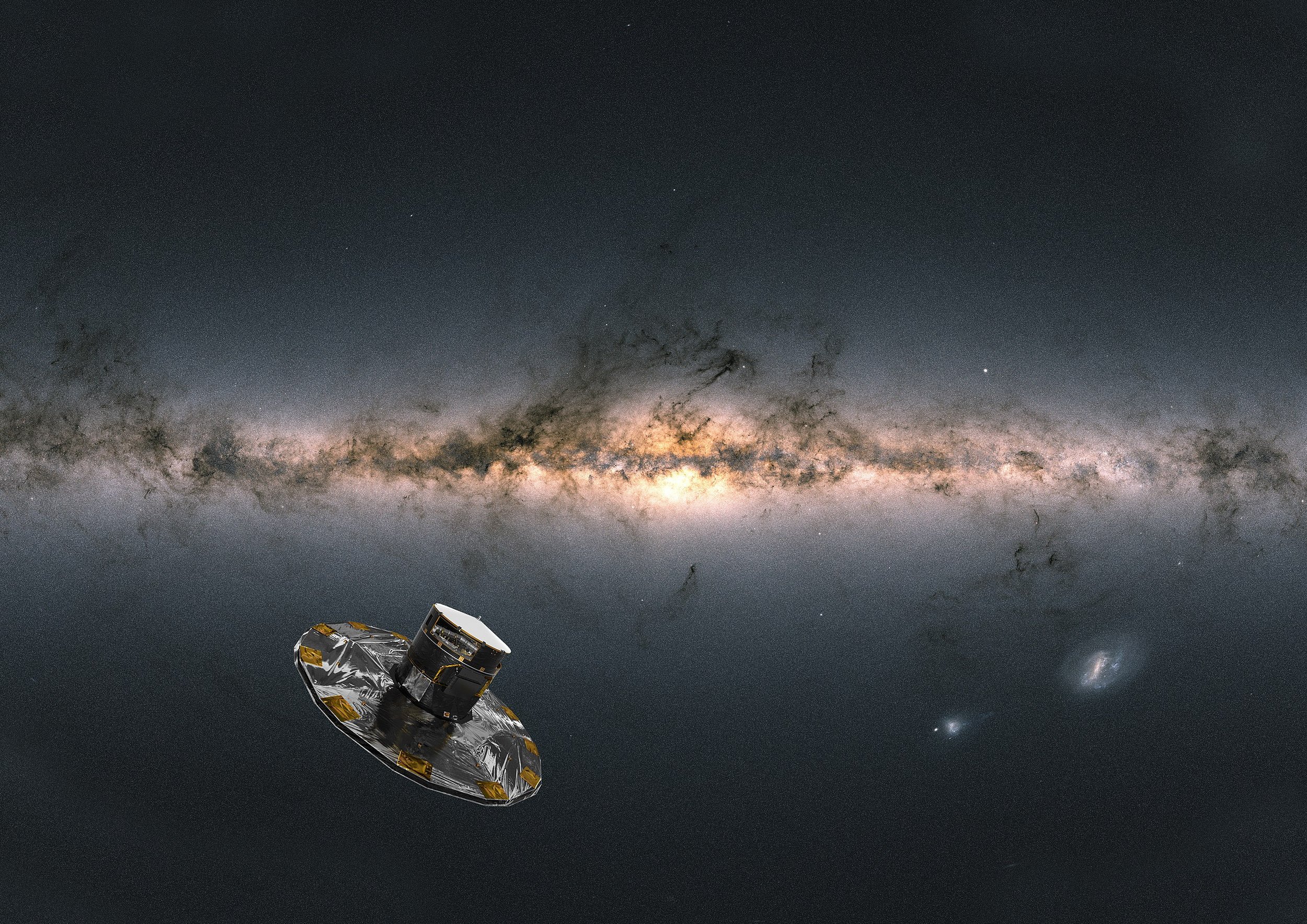
Launched in December 2013, ESA’s Gaia space telescope found its home far out at the Sun-Earth L2, a region of space 1.5 million km away that provides a stable orbit and a place to keep the Sun out of its eyes. Gaia was something of a spiritual successor to the agency’s Hipparcos telescope which operated from 1989-1993. Its mission was to create a 3D map of the night sky by measuring the positions and motions of celestial objects, especially stars. In its twelve years of operation, Gaia plotted nearly two billion stars. It has provided the largest, most accurate map of the Milky Way galaxy ever created.
In January 2025, Gaia’s mapping mission came to an end, and later that March, the last use of the spacecraft telescope’s thrusters moved it from its L2 orbit to a safe “retirement” orbit around the Sun. Despite being shut down, Gaia continues to demonstrate how productive it was. There are still mountains of Gaia’s data remaining for scientists to process that will keep them busy as far out as 2030, when the final data cache will be made public.
EUCLID STUDIES MILLIONS OF GALAXIES!
Image credit: ESA/Euclid/Euclid Consortium/NASA, Image Processing: J.C. Cuillandre, G. Anselmi, T. Li
The Euclid space telescope was launched back in July 2023 to join others like James Webb and Gaia at Lagrange Point 2, about 1.5 million km from Earth. Out there, Euclid has been tasked with a broad astronomical survey of about a third of the night sky to better understand dark energy (a mysterious property attributed to the acceleration of the expansion of the universe) and dark matter (an invisible source of gravity that influences galactic and universal structures).
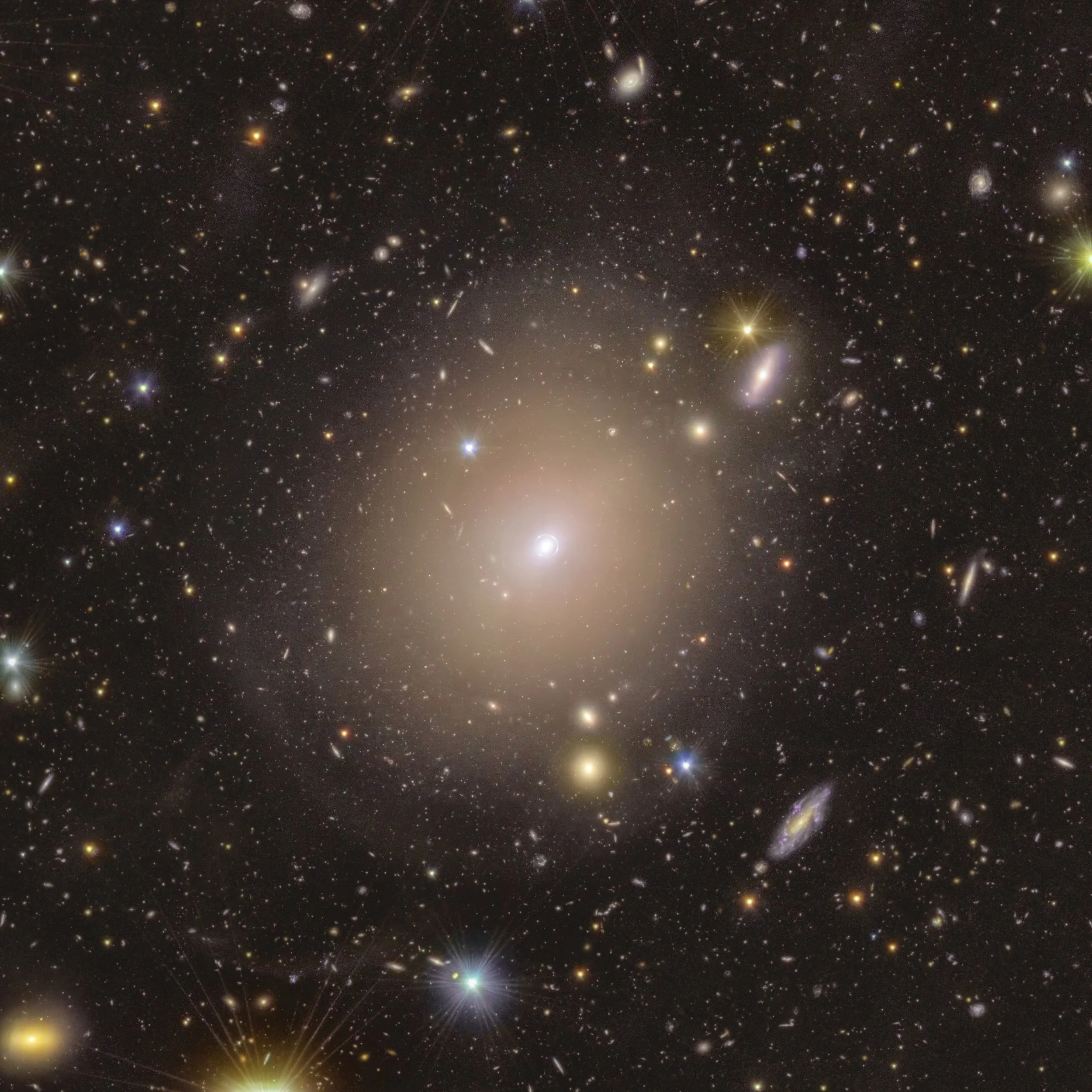
On March 19th, 2025, after over a year in space, the first major release of survey data from Euclid was made public. This dataset covered roughly 63 square degrees of the night sky, roughly the size of 300 full moons. Euclid observed about 26 million galaxies, some of which are as far as 10.5 billion light years away. 380,000 of those galaxies have been catalogued with the help of artificial intelligence and thousands of citizen science volunteers and experts.
Euclid identified about 500 unique instances of gravitational lensing. This phenomenon occurs in the presence of a massive object with extreme gravity. Lensing warps, distorts and stretches the spacetime surrounding the object. These objects are often black holes which don’t emit light, so the only way we can detect them is by observing the lensing effects they have on background galaxies they pass in front of. You can see a unique example of this in the image above where a galaxy’s own supermassive black hole creates an Einstein ring at its center.
Another exciting find was the identification of numerous low surface brightness dwarf galaxies, which are infamously difficult to spot.
To be clear, this survey was just from one week of observation at three patches of sky. Over the coming years Euclid will pass over these three regions tens of times. By 2030, Euclid is expected to have mapped out a third of the entire night sky. This will give astronomers a wealth of data to pour over for years to come in the aid of all kinds of research including galaxy morphology and distribution, which are central to Euclid’s primary mission.
If you want to learn more, you can read the European Space Agency’s press release here.
VERA RUBIN OBSERVATORY BEGINS MISSION
Image credit: NSF-DOE Vera C. Rubin Observatory
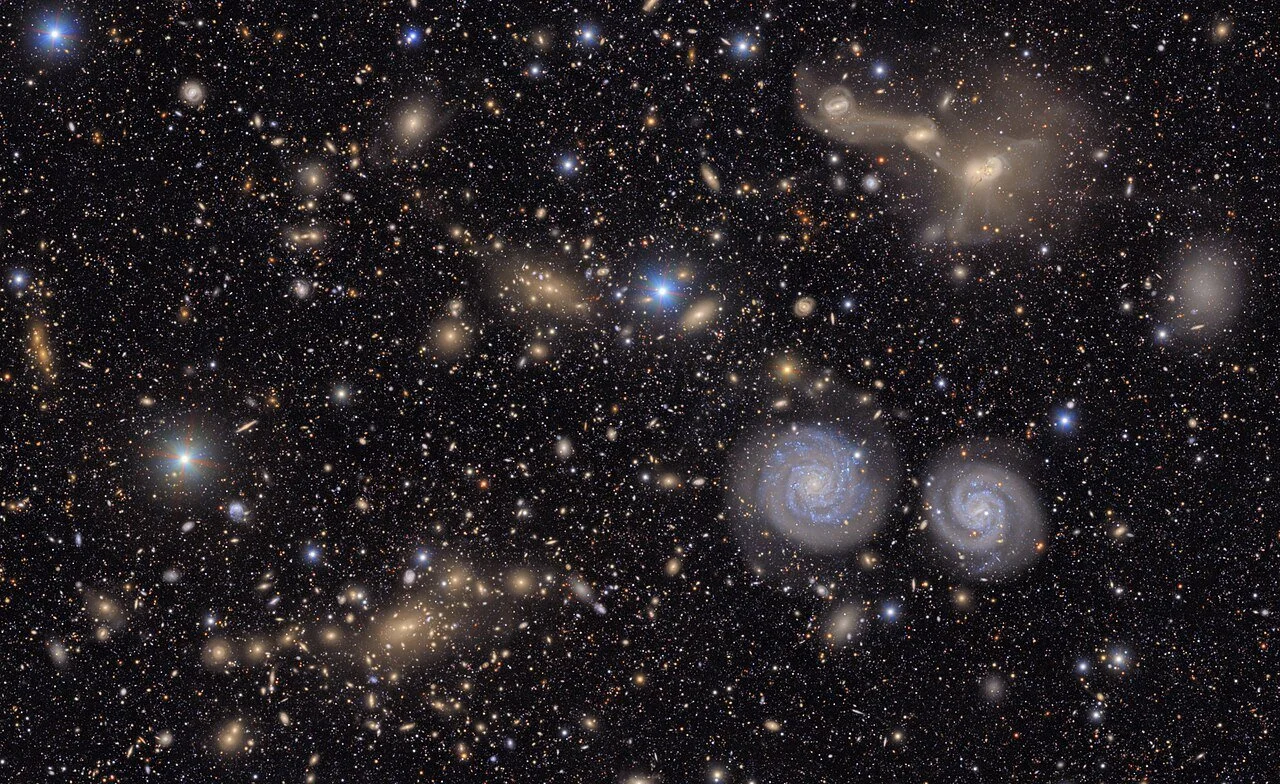
While we’re on the subject, another incredible new observatory released its first images to the public and they are equally stunning! The Vera C. Rubin Observatory (VRO) is a ground observatory that sits atop the Cerro Pachón mountain in central Chile. The region’s dry air and dark skies makes it one of the best observing locations on Earth. It is named after the famous astronomer whose study of galaxy rotation speed led to the hypothesized existence of dark matter. The observatory’s mission is to survey the southern sky in order to create a ten-year time-lapse record named the Legacy Survey of Space and Time (LSST).
VRO began preliminary test observations in June 2025 with the first public images released later that month. The images included millions of galaxies, thousands of newly discovered asteroids, as well as a highly detailed image of the Trifid Nebula and Lagoon Nebula in the Sagittarius constellation. In one of the images, astronomers discovered a stream of stars wrapped around and being dragged behind the M61 spiral galaxy. The stream is suspected to be the remains of a dwarf galaxy that passed too close and got swallowed up by M61. The stream is estimated to be 170,000 light years long! That’s almost twice the diameter of our Milky Way galaxy!
These images were captured using light gathered from the observatory’s 8.4-meter-wide mirror and photographed with its 3.2-gigapixel camera. And all of this was done with only 10 hours of observation. Imagine what it can do with 10 years of observations!
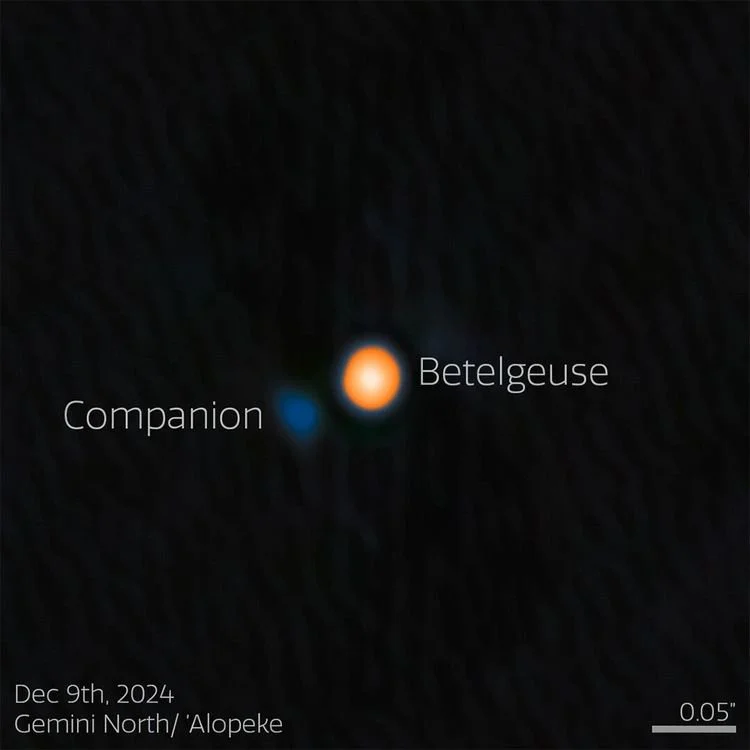
COMPANION STAR DISCOVERED AROUND BETELGEUSE
Image credit: International Gemini Observatory/NOIRLab/NSF/AURA, Image processing: M. Zamani (NSF NOIRLab)
Few stars in the night sky shine brighter than Betelgeuse, the red supergiant at the shoulder of Orion. Despite being at least 500 light years away, its immense size and brightness allow it to remain visible even in light-polluted skies. It is so large that the world’s biggest telescopes can even resolve the star’s disk!
Betelgeuse has long shown a slow cycle of brightening and dimming that could not be explained by internal pulsations. For decades, scientists suspected the star might host a smaller companion in a tight orbit, but telescopic searches failed to reveal one. This led to alternative ideas, including obscuring gas or material expelled by the star itself. That became the leading explanation for the 2019-2020 “Great Dimming” event, which seemed reasonable given the instability of red supergiants.
Still, this did not fully explain the regularity of the cycles. The century-old companion hypothesis remained plausible, but Betelgeuse was too bright to study nearby. Then, in 2025, they found it. A team at NASA’s Ames Research Center analyzed more than a century of data to predict when and where the companion might appear. They identified a brief window of a few months during which the star could emerge from Betelgeuse’s glare before vanishing again for three years.
The team first turned to space telescopes, hoping to escape Earth’s atmosphere, but failed to detect the star. They then used the ground-based Gemini North telescope in Hawaii. Although ground observatories must look through the atmosphere, they can be far larger than space telescopes because they don’t have to fit inside a rocket. Larger aperture gathers more light, improving clarity and contrast. The team also used the Alopeke speckle instrument, a camera which combines thousands of short exposures that can digitally sift out atmospheric distortion.
This approach revealed what astronomers had long suspected. A hot, bluish-white companion appeared exactly where predicted, orbiting close to Betelgeuse. The team of scientists named the companion star Siwarha, an Arabic phrase which means “her bracelet,” a reference to Betelgeuse’s Arabic name which means “the hand of al-Jawzā’.”
The companion is expected to reemerge in 2027, when scientists hope to learn more.
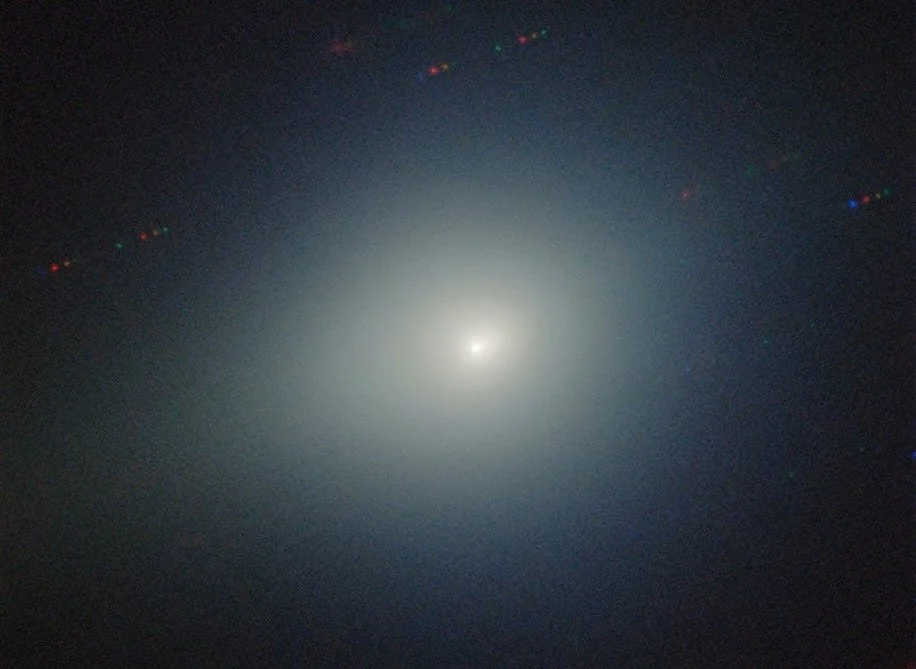
INTERSTELLAR ICEBALL TOURS THE SOLAR SYSTEM
Image credit: International Gemini Observatory/NOIRLab/NSF/AURA, Image processing: B. Bolin
2025 was an incredible year for comet observation. January featured G3 ATLAS which came within just 13.5 million km of the Sun (about a third the distance between the Sun and Mercury). A comet was observed to break up in fragments as it approached the Sun (K1 ATLAS) while another was disintegrated upon its closest approach to the Sun back in May (F2 SWAN). October featured two visible comets in the sky at the same time (A6 Lemmon and R2 SWAN)!
The comet that turned the most heads was undoubtedly 3I/ATLAS. Discovered in the summer by the same ATLAS telescope that discovered 2024 YR4, this comet caught the attention of scientists due to its unusually high speed and hyperbolic trajectory, which suggested it was of interstellar origins. 3I/ATLAS is only the third known object found in our solar system to have not come from here. It’s also likely the oldest comet ever discovered. Possibly older than our solar system by 3 billion years. Observations estimate the comet is about 5.6 km in diameter, covered with a substantial amount of water ice.
3I/ATLAS entered our cosmic neighborhood from the direction of Sagittarius. Based off its speed and direction, it likely would have passed within 5 AU (Sun-Earth distance) of the outgoing New Horizons probe back in late 2021. By the time of its discovery on July 1st, 2025, it had crossed Jupiter’s orbit. About three months later, it passed within just 0.2 AU of Mars. One of NASA’s Mars rovers on the planet surface even snapped a picture of the comet passing in the sky! By the end of October, 3I/ATLAS made its closest pass of our Sun, reaching within 1.3 AU. Earlier this month, the comet made its closest pass to Earth, reaching within 1.8 AU.
As of the publishing of this article, the comet is on a one-way trip back out of the solar system. Along the way, the comet is expected to make a close pass of Jupiter in mid-March 2026, coming within 0.35 AU of the planet. Perhaps the Juno spacecraft still orbiting Jupiter can image it? By 2028, it will cross Neptune’s orbit and begin eons of quietly floating through the darkness of the cosmos.
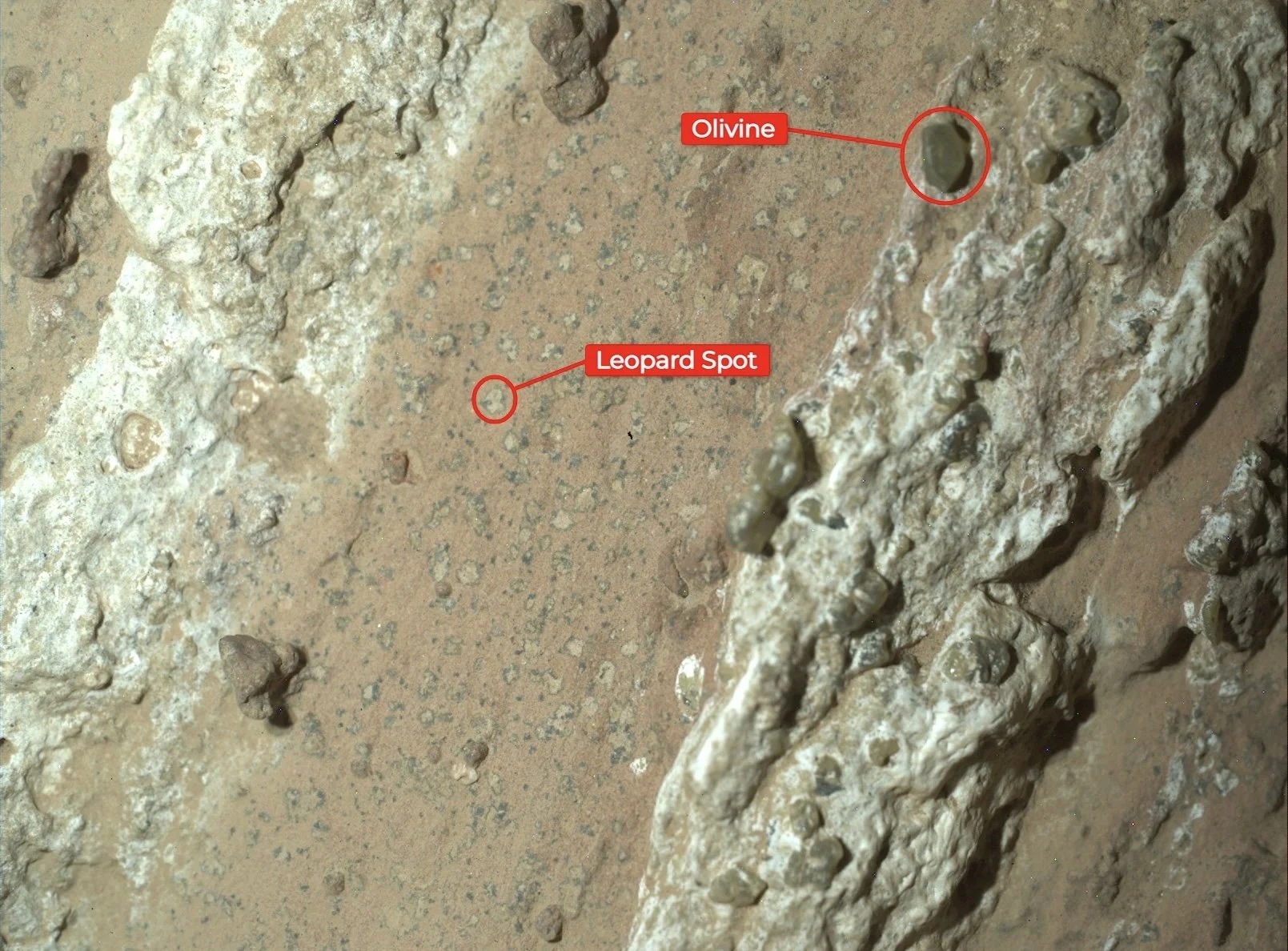
BIOSIGNATURES ON MARS
Image credit: NASA/JPL-Caltech/MSSS
NASA’s Perseverance rover has been exploring Jezero Crater on Mars since it landed in February 2021. This region is considered one of the most promising places to search for evidence of ancient microbial life. Orbital images show a striking fossilized river delta where water once flowed into the crater billions of years ago.
In September 2025, scientists released a study analyzing a mudstone-rich outcrop that Perseverance examined in July 2024. Nicknamed Cheyava Falls, the outcrop displays peculiar features called “leopard spots,” millimeter-sized, irregularly shaped nodules surrounded by thin, dark rings. They are enriched in iron phosphate and iron sulphide, reminiscent of vivianite and greigite. This has scientists intrigued as both can be formed through biological and non-biological processes.
Vivianite is a rare iron phosphate that often forms in waterlogged, oxygen-poor environments from decomposing organic matter. Microbes can accelerate this process by releasing phosphate that binds with dissolved iron, producing bluish crystalline coatings sometimes found on various fossils, including humans. However, vivianite can form without life around lakebeds and swamps where oxygen is depleted.
Greigite is a form of iron sulphide and has been observed to be produced both directly by microbial life which “breathe” sulfate the same way humans breathe oxygen. They “exhale” it as hydrogen sulfide which then interacts with iron in the environment. It is also true that greigite has been formed via volcanic reactions. While Jezero crater shows no signs of past volcanism, non-volcanic pathways are still possible as well.
The only true way to determine which process produced these compounds is to retrieve the rock samples from Mars and be studied under laboratory conditions. Perseverance has already collected many samples, and a future mission may one day bring them home for definitive testing. If life is found to have formed independently on another planet in our own solar system, it would prove that alien life not only exists but is likely incredibly common in the universe!
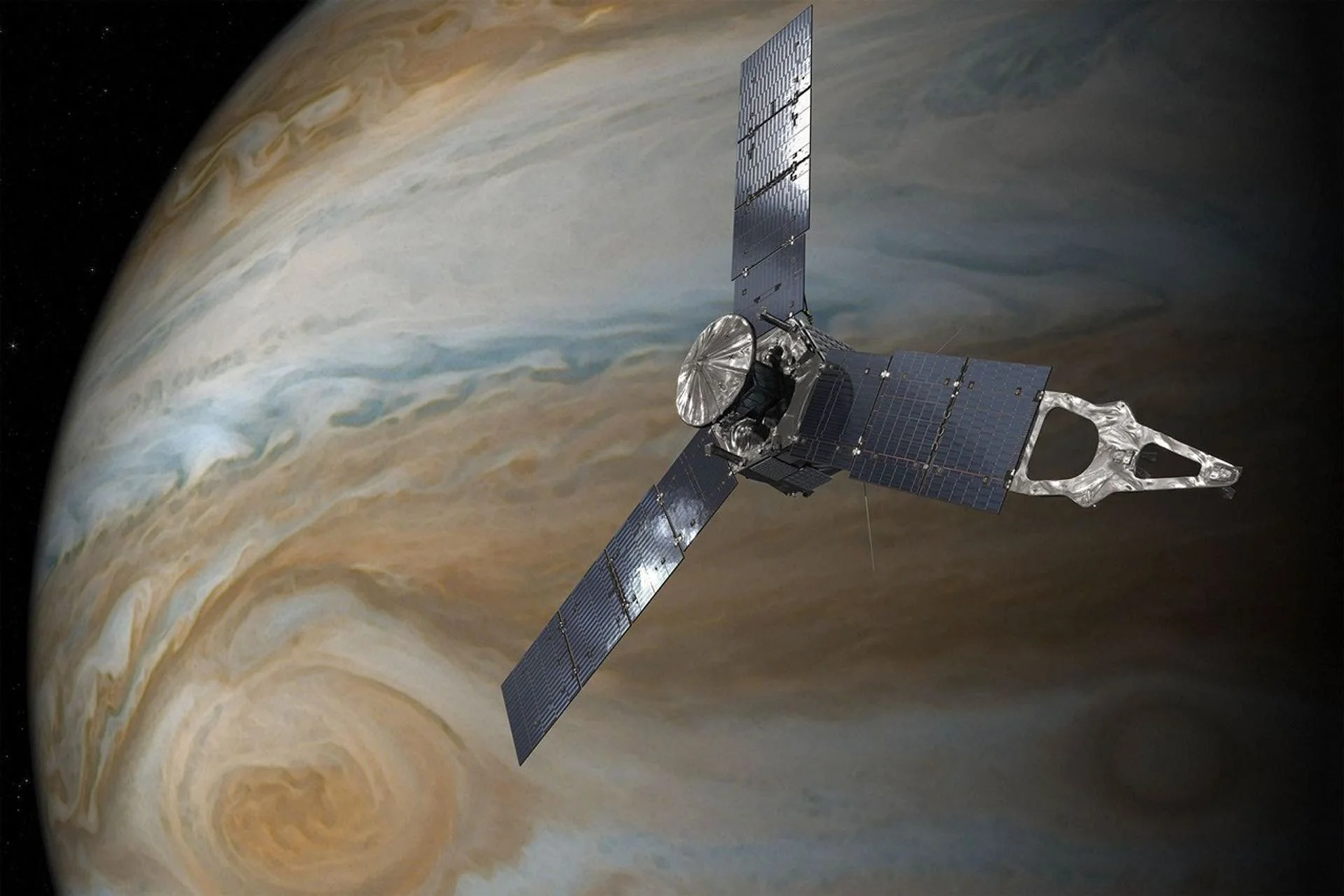
THE END OF JUNO?
Image credit: NASA/JPL-Caltech
The Juno spacecraft has been the paramount planetary science mission orbiting Jupiter since 2016. It was the first solar-powered spacecraft to orbit an outer planet and remains the most distant solar-powered spacecraft from Earth ever.
Over the last nine years of operation, Juno’s suite of science instruments has revealed the deep, complex nature of Jupiter’s atmosphere, interior and magnetic field. Its mission was originally slated to end in August 2021 but received a very welcome extension until September 2025. However, things have gotten a little weird. Despite reaching the end of its extended mission, Juno’s status remains shrouded in mystery.
Much of this uncertainty stems from the fallout of the government shutdown that began in October and the White House’s proposed 2026 budget cuts that could see NASA’s science funding cut in half. Should these cuts go through, Juno would be amongst numerous active missions to be on the chopping block. However, congressional committees in charge of appropriations have expressed interest in preserving Juno, Chandra, New Horizons, amongst others. We’ll just have to wait and see how it all plays out.

25th YEAR OF CONTINUOUS ISS OCCUPANCY
Image credit: NASA
Few things better represent humanity’s capacity for cooperation than the International Space Station. Conceived in 1993 as a joint venture between the United States and post-Soviet Russia, the ISS was envisioned to be a permanently crewed laboratory and observatory in low Earth orbit. Its modular design allowed it to be assembled piece by piece in space, beginning in 1998. Only two years after the first modules were placed in orbit, the station welcomed its first long-duration occupants.
This last November marked 25 years since those first arrivals. In that time, roughly 290 people from 26 nations have called the ISS their home, conducting thousands of microgravity science experiments. Over the last quarter of a century, the ISS has orbited the Earth 146,000 times (once every 90 minutes). As the station enters its twilight years, its legacy is becoming just as important as its ongoing science. The ISS is currently planned for deorbit in 2030, marking the end of one of the most ambitious engineering and diplomatic projects in human history. Don’t despair. This is more of a transition. There will no doubt be plans in the near future for the next generation of space laboratories coming from both governments and companies.
As we leave 2025 behind, let’s be grateful for all the awe and wonder we got to experience and let’s get excited for what’s to come! 2026 is shaping up to be quite a year as well so we will take a look ahead tomorrow! See you in the new year!