
What’s Ahead in 2026?
by Sam Atkins
Happy New Year! With 2025 in the history books, it’s time to look ahead to 2026. It likely won’t be hard to understand what makes this year so exciting. From ambitious planetary missions to the fateful return of humans to the Moon, there’s much to dive into. Let’s get to it!
THE ARTEMIS II MISSION
Image credit: NASA
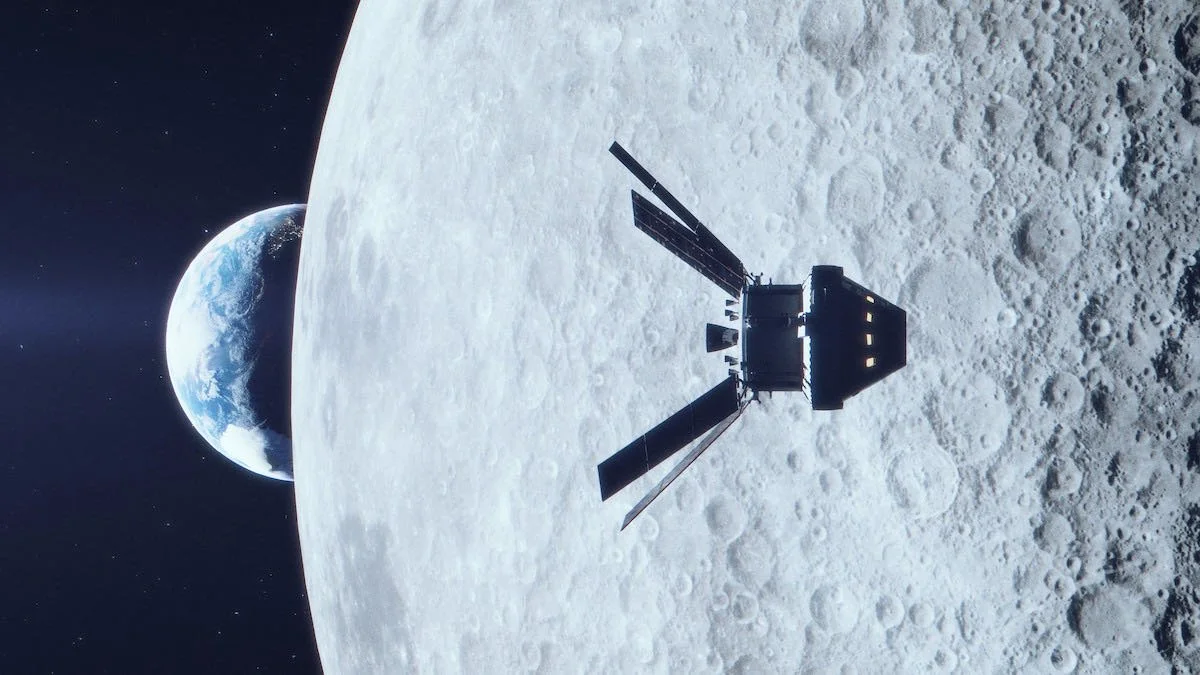
It has been just over 53 years since humans last visited the Moon. The political will to return was drained by a drop in public interest and the fall of the Soviet Union. In the decades since, we focused more on planetary exploration and establishing a presence in Earth orbit. That all changed in 2017 with the announcement of the Artemis program, a joint venture between NASA and partnerships with numerous other space agencies. The long-term goal of the Artemis program is to establish a permanent human presence on the Moon which will ultimately facilitate our ability to launch human missions to Mars.
We saw the first mission of this ambitious project come to fruition in November 2022 with the Artemis I mission. This involved the uncrewed flight test of the Orion spacecraft launched by the Space Launch System (SLS) rocket. In a nutshell, the spacecraft was sent to the Moon, performed two flybys and then returned to Earth. There was never an uncrewed flyby of the Moon during the Apollo program back in the 1960’s so this was a bit unique. The Artemis II mission on the other hand will much more resemble the Apollo 8-10 missions that acted as dress rehearsals for the Apollo 11 lunar landing. Four astronauts will be along for the ride as the Orion spacecraft takes them around the Moon.
Artemis II was planned for a September 2025 launch but a series of technical issues with life support systems and the heat shield resulted in the mission being pushed to an April 2026 launch window instead. However, NASA confirmed in September 2025. As of today, the mission is planned to launch on March 6th, 2026. Artemis II will be the first time humans have gone beyond Earth’s orbit in over half a century. We will take a deeper dive into this historic mission as we get close to the launch date. Until then, let’s cross our fingers that everything goes smoothly and safely.
Update: The Artemis II mission launched on April 1st, 2026. The Artemis II crew performed a lunar flyby on April 6th and returned to Earth safely on April 10th. You can read my in-depth article on the Artemis II mission here.
SATURN & NEPTUNE REVISITED
Image credit: Fifth Star Labs - Sky Guide
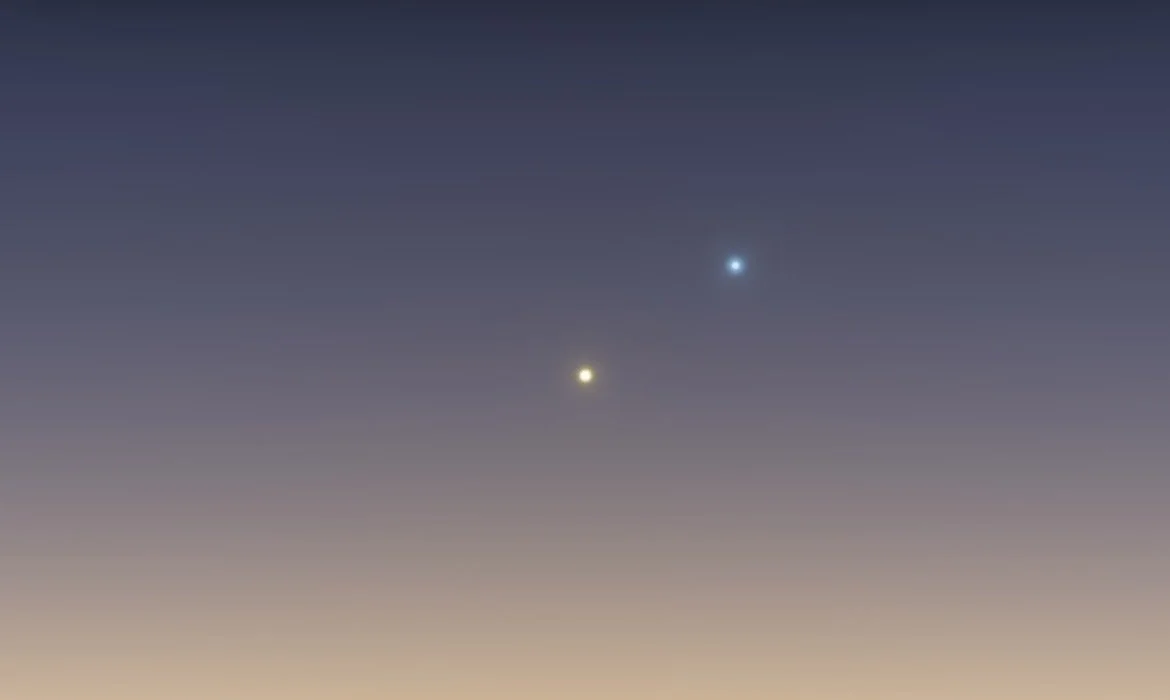
While conjunctions with the inner planets of the solar system are relatively common, conjunctions between two outer planets are quite rare due to their sluggish orbits. In July 2025, we got a conjunction between Saturn and Neptune. This was to be the first in a pair of conjunctions, with Saturn passing Neptune, entering retrograde orbit and then passing Neptune again. The second conjunction will occur this February 20th, visible for a brief time after sunset. After that, these two planets won’t meet in our skies again for 35 years. That’s about 30 years for Saturn to make a full revolution around the Sun and another 5 years to catch up with Neptune.
Remember, however, that while Saturn is visible to the naked eye, Neptune is not. You will need a telescope to see it. This is a rare opportunity so don’t miss out if you can help it.
TEASED BY ECLIPSES
Image credit: Christina Koch/NASA
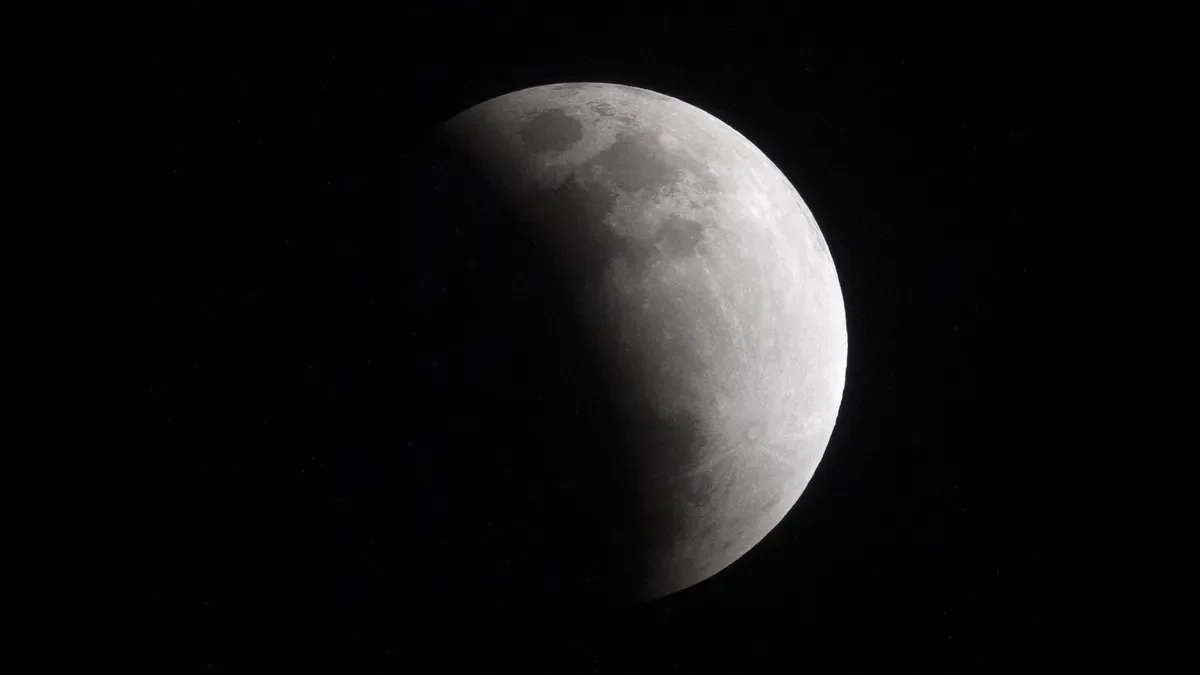
Throughout the year, we can expect to glimpse two lunar eclipses and a solar eclipse. However, all three of these will be marred by inopportune timing and/or location.
In the case of the March 3rd lunar eclipse, totality won’t be reached until forty minutes before the Moon sets and thirty minutes before the Sun rises. If you can find a view of the western horizon cleared of obstructions just before dawn, you can get a quick show but not much more than that.
In the case of the August 12th solar eclipse, the Sun will be high in the afternoon sky. However, from our position in Maryland, the Moon will only cover a maximum of 5% of the Sun. This will be amusing to watch with the proper eye protection but if you expect to be wowed, you’ll need to book a trip to the United Kingdom or Iceland.
In the case of the August 28th lunar eclipse, the best show is promised. While only a partial lunar eclipse, the Moon is certainly expected to darken and the entire event will be visible from Maryland skies after the late summer heat has cooled. This lunar eclipse will be the last of an ‘almost’ tetrad, a set of four total lunar eclipses within two consecutive years. It should be a fun show and hopefully makes up for the ceiling of clouds we were met with during the March 2025 lunar eclipse.
3I/ATLAS PASSES JUPITER
Image credit: NASA’s Eyes on the Solar System
The interstellar comet, 3I/ATLAS, was certainly one of the biggest astronomy stories of 2025. Discovered last July, its high speed and hyperbolic trajectory quickly identified it as not originating from our solar system. For the remainder of the year, we tracked 3I/ATLAS as it crossed through the inner solar system, making a particularly close pass of Mars. Less than two weeks prior to the publishing of this article, 3I/ATLAS made its closest pass of Earth as it makes its way back out of the solar system.
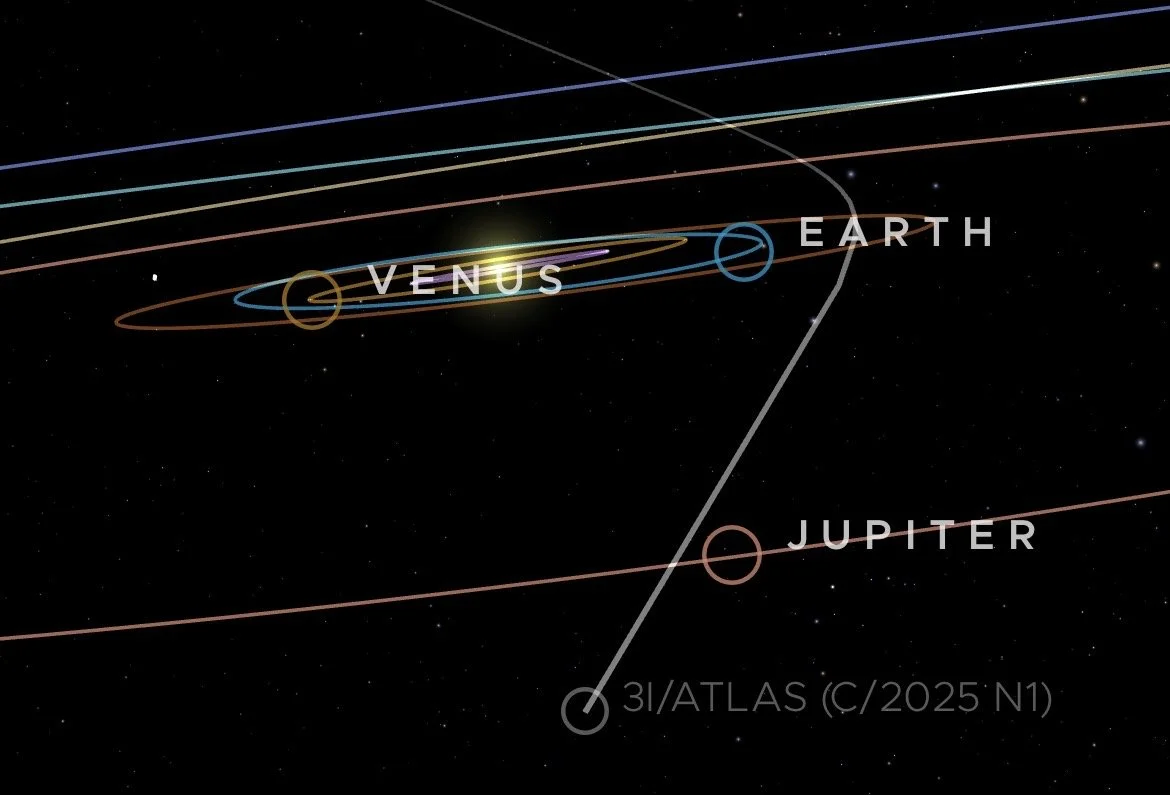
However, it has one more item on its itinerary before it disappears forever. In mid-March 2026, the comet will pass within 54 million km of Jupiter and just 50 million km from the orbiting space probe Juno. This may be the last opportunity for NASA to get a close photograph of this interstellar visitor. After the comet’s pass of Jupiter, it will take until 2028 for it to pass the orbit of Neptune and return to the cold and dark reaches of the outer solar system. Its trajectory will have it moving towards the feet of the Gemini twins. Who knows how many more millions of years it will be before this giant iceball will encounter another star system.
FIRST COMMERCIAL SPACE STATION LAUNCH
Image credit: Vast
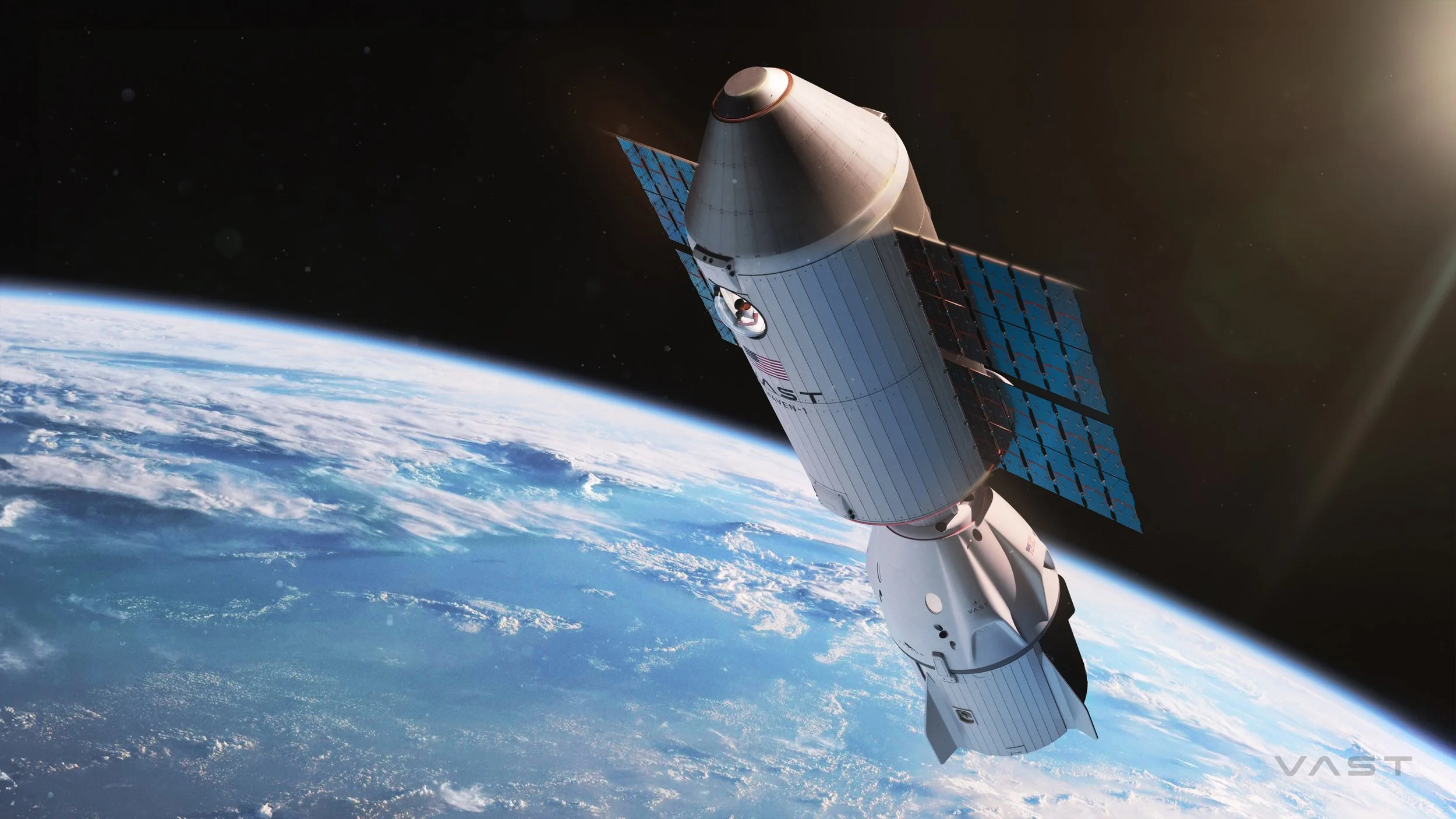
With the International Space Station recently celebrating its 25th anniversary and scheduled for decommissioning in 2030, many are asking what comes next. While government space agencies will no doubt remain central to that conversation, the private sector is emerging as a major player in space exploration and industry. One such contender is Vast, a California-based aerospace startup, which is developing what is set to become the first commercial space station ever launched.
Haven‑1 will feature a state-of-the-art laboratory for microgravity research, much like the ISS. However, there are notable differences. The station is considerably smaller, just slightly larger than the spacecraft that will ferry crew to and from Earth. Its compact size limits it to four astronauts at a time for two-week missions, compared with the ISS’s standard six-month expeditions. This small design was intentional, enabling fast development at lower cost while providing a modular platform that can be expanded and upgraded over time.
The laboratory itself also has a modular design, allowing for customization to specific experiments. These experiments will span a broad range of commercial endeavors from universities, start ups and private researchers.
Unlike the ISS, Haven‑1 is designed with human comfort in mind, including personal sleeping pods and a communal table for meals and collaboration. It also offers amenities previously unavailable on space stations, such as high-speed broadband internet via SpaceX’s Starlink network.
Update: Haven-1 has been delayed to a Q1 2027 launch.
THE MOON OCCULTS JUPITER
Image credit: Fifth Star Labs - Sky Guide
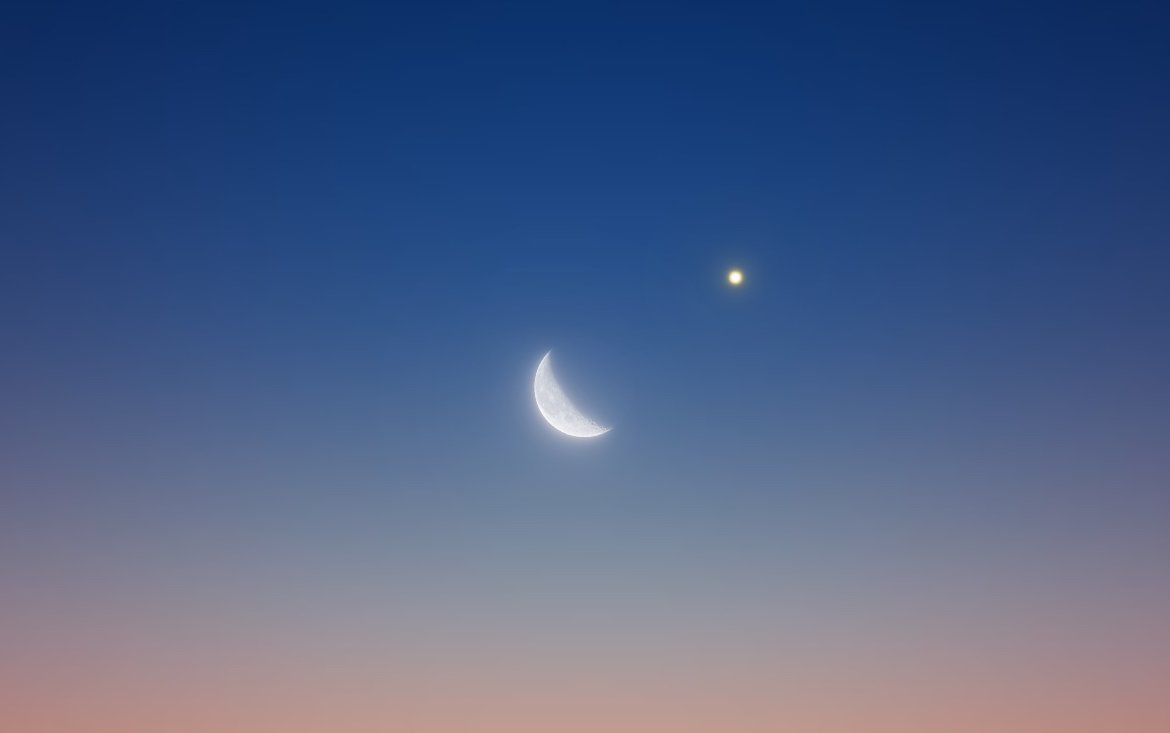
One of the cooler things that will be visible in the sky this year is the Moon passing in front of Jupiter. These instances are known as occultations (kind of like a transit, except in this case, the larger object is in the foreground).
Before sunrise on October 6th, you will see the crescent moon emerging over the eastern horizon, with Jupiter appearing as a point of light below it. Jupiter will slip behind the illuminated side of the Moon just a few hours after they rise. About an hour later, Jupiter will emerge from behind the shadow side of the Moon, like a performer walking into the spotlight. Jupiter will be on the far side of the Sun and won’t be particularly bright but will still be visible to the naked eye. However, this will be best enjoyed through a telescope.
VOYAGER 1 REACHES ONE LIGHT DAY FROM EARTH
Image credit: NASA’s Eyes on the Solar System
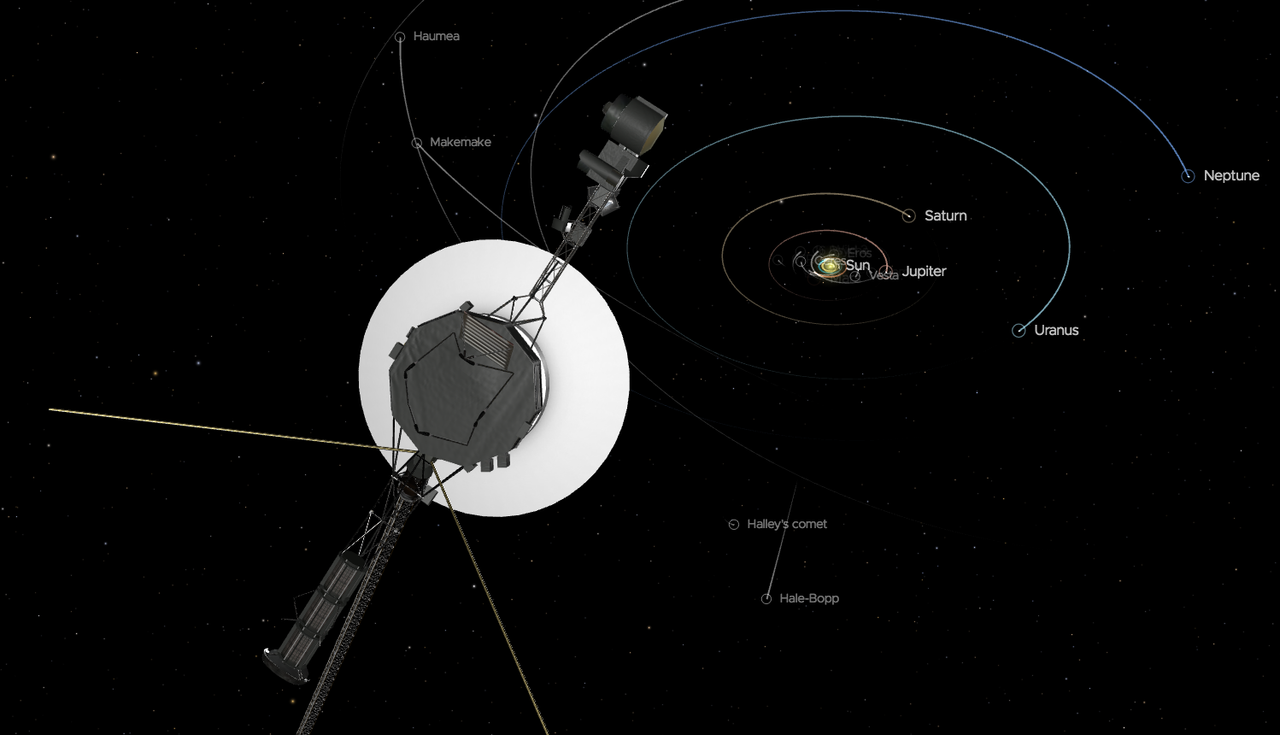
The twin Voyager probes launched in 1977 with the goal of exploring the outer solar system, including the four giant planets Jupiter, Saturn, Uranus and Neptune. While Voyager 2 went on to visit all four, Voyager 1 made a beeline for interstellar space immediately upon passing Saturn. Since then, Voyager 1 has been traveling for decades at a speed of 61,000 km/h, roughly in the direction of the Ophiuchus constellation. It entered interstellar space in 2012 and, as of the publishing of this article, Voyager 1 is currently about 25.5 billion km from Earth. That’s 4.25 times the average distance of Pluto from the Sun.
Late this year, the Voyager 1 space probe will reach an historic milestone in its journey as the furthest man-made object. On November 13th, 2026, Voyager 1 will reach one light day from Earth. That is to say that Voyager 1 is so far from Earth that it takes light from the Sun a full 24 hours to reach it where it only takes 8 minutes to reach Earth. That also means that any radio communications between Voyager 1 and Earth takes 24 hours each way.
As far as Voyager 1 is, it’s still quite far from reaching the nearest star. It must travel the same distance 364 more times to reach a full light year from Earth and the closest star from our solar system, Proxima Centauri, is 4.25 light years away. That means that Voyager 1 took 49 years to travel 1/1551 of the required distance (if it were going in the right direction). It would take 76,000 years to make the full journey. Still, one light day is the furthest distance any man-made object has ever travelled from our home world and by all expectations, Voyager 1 will remain the furthest object for quite a long time.
BEPICOLOMBO ENTERS MERCURY ORBIT
Image credit: ESA/BepiColombo/MTM
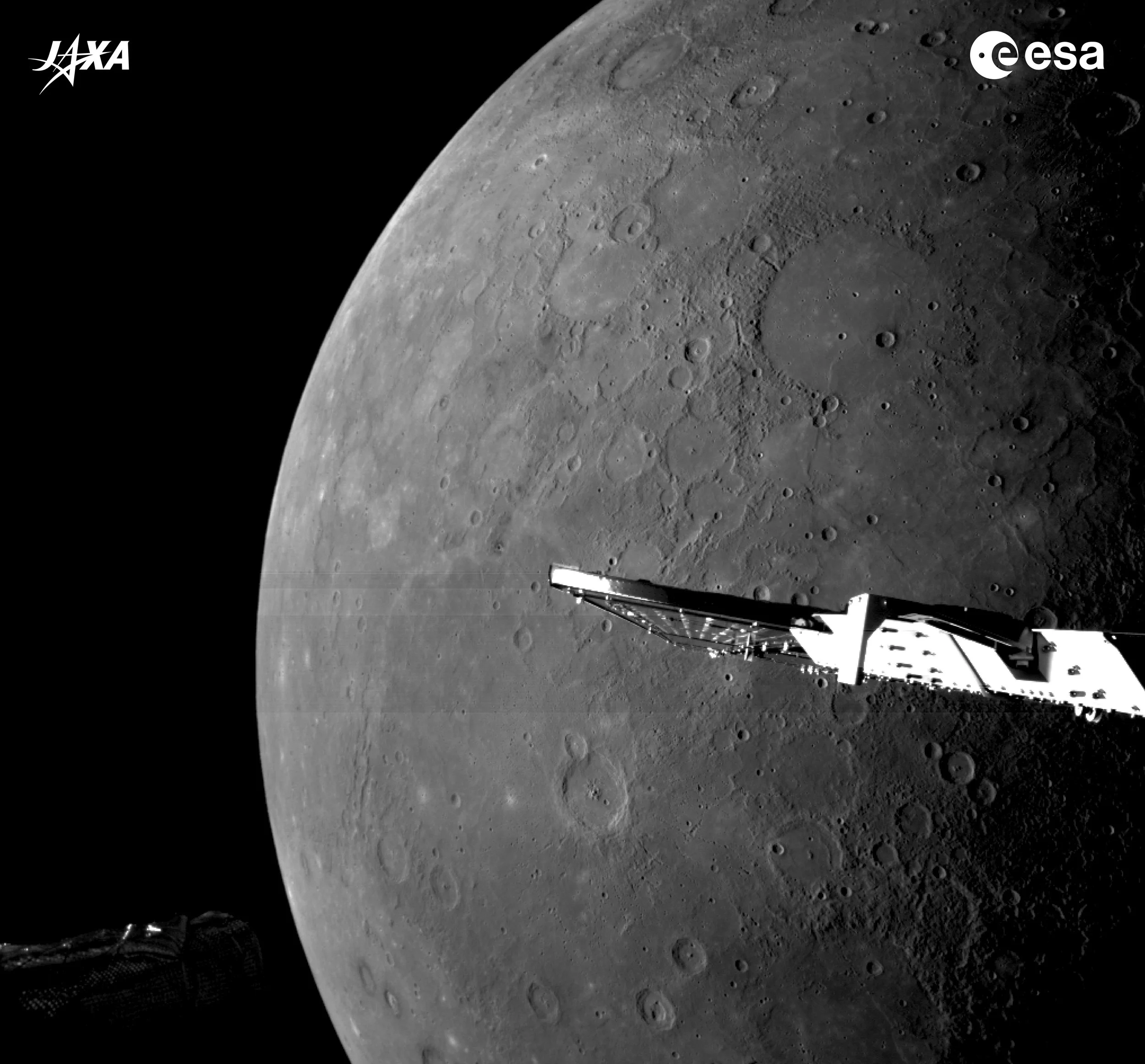
Launched in 2018, the BepiColombo mission is a joint venture between the European Space Agency (ESA) and the Japan Aerospace Exploration Agency (JAXA). The mission is to put two satellites into orbit around Mercury in order to conduct a comprehensive study of the planet’s surface, interior, magnetosphere, and how powerful solar winds from the Sun affect it all. The mission is aptly named after the 20th century Italian astronomer Giuseppe “Bepi” Colombo who first explained Mercury’s 2:3 spin-orbital resonance and pioneered using Mercury and Venus for gravity assist trajectories. Because of his calculations, gravity assists are standard practice in modern space missions.
The BepiColombo mission has used a similar series of gravity assists to get to Mercury. After entering heliocentric orbit, it performed an Earth flyby in 2020 to head toward Venus, followed by two Venus flybys in 2020 and 2021 to approach Mercury’s orbit. It then completed six Mercury flybys from 2021 to 2025, slowing its relative velocity while collecting scientific data. The spacecraft now remains near Mercury, sharing a similar solar orbit. Delayed by thruster power issues, BepiColombo spacecraft is set to finally settle into a polar orbit around Mercury in November 2026. At that point, the two orbiters will separate and adjust to their own orbits.
We know surprisingly little about Mercury and it is the least explored of the four terrestrial planets. It wasn’t until 2011 that the first spacecraft (MESSENGER) was able to enter into orbit around it. This is largely due to the planet’s proximity to the Sun. Hard to observe near the Sun’s glare, hard to reach due to the Sun’s powerful gravity, and hard to orbit close due to the surface’s scorching temperature. Hopefully, BepiColombo is up to the task of uncovering the planet’s many mysteries.
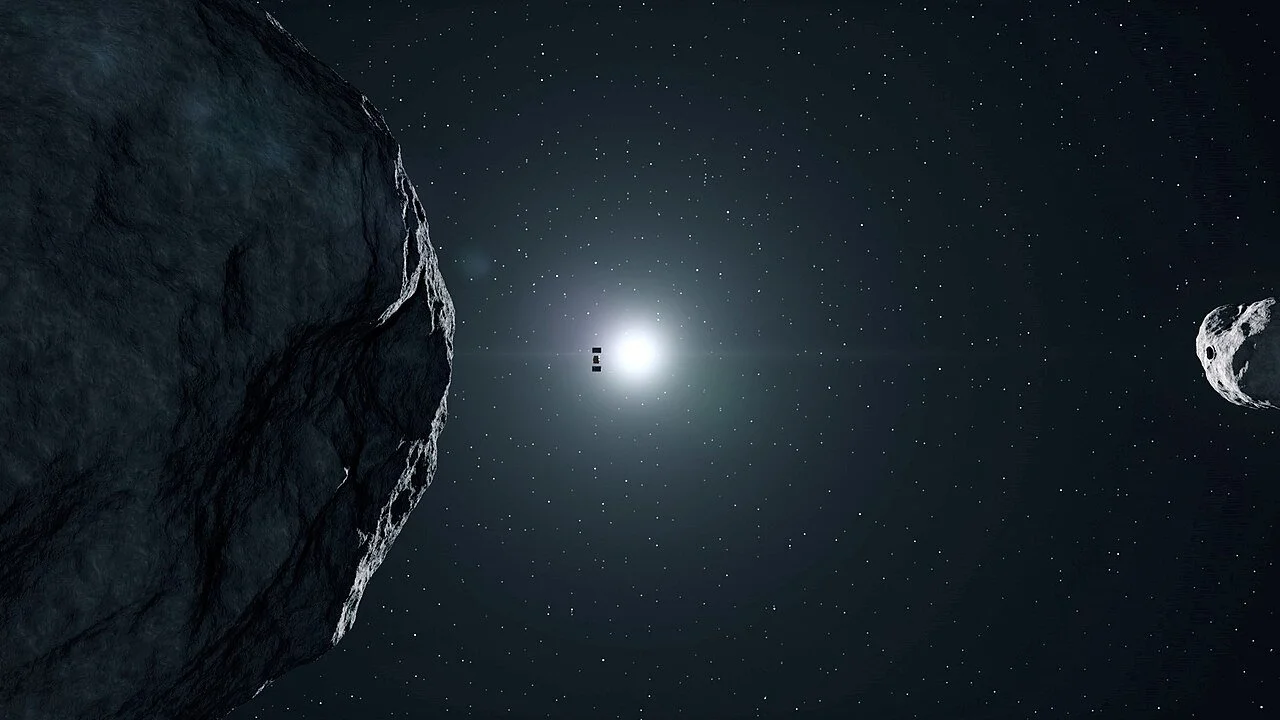
HERA REACHES DIDYMOS
Image credit: ESA - Science Office
In 2022, NASA’s DART mission reached its culmination when it intentionally collided a spacecraft into an asteroid to assess how such an impact would deflect the asteroid’s path. The target was an asteroid named Dimorphos, which is part of a binary system with a larger asteroid named Didymos. While the spacecraft did deploy a nanosatellite prior to collision in order to observe the impact from afar, a more in-depth investigation of the aftermath is needed.
The ESA launched the Hera mission in October 2024 to send a spacecraft out to the asteroid belt and investigate the aftermath. This is part of a broader effort to develop methods and technologies to address the dangers of rogue asteroids that could potentially impact Earth. The Hera spacecraft passed Mars in March 2025 for a gravity assist. It’s expected to arrive at the Didymos binary asteroid system in November 2026 where it will spend the following six months measuring the crater, the momentum transferred by the impact and the expanding debris cloud.
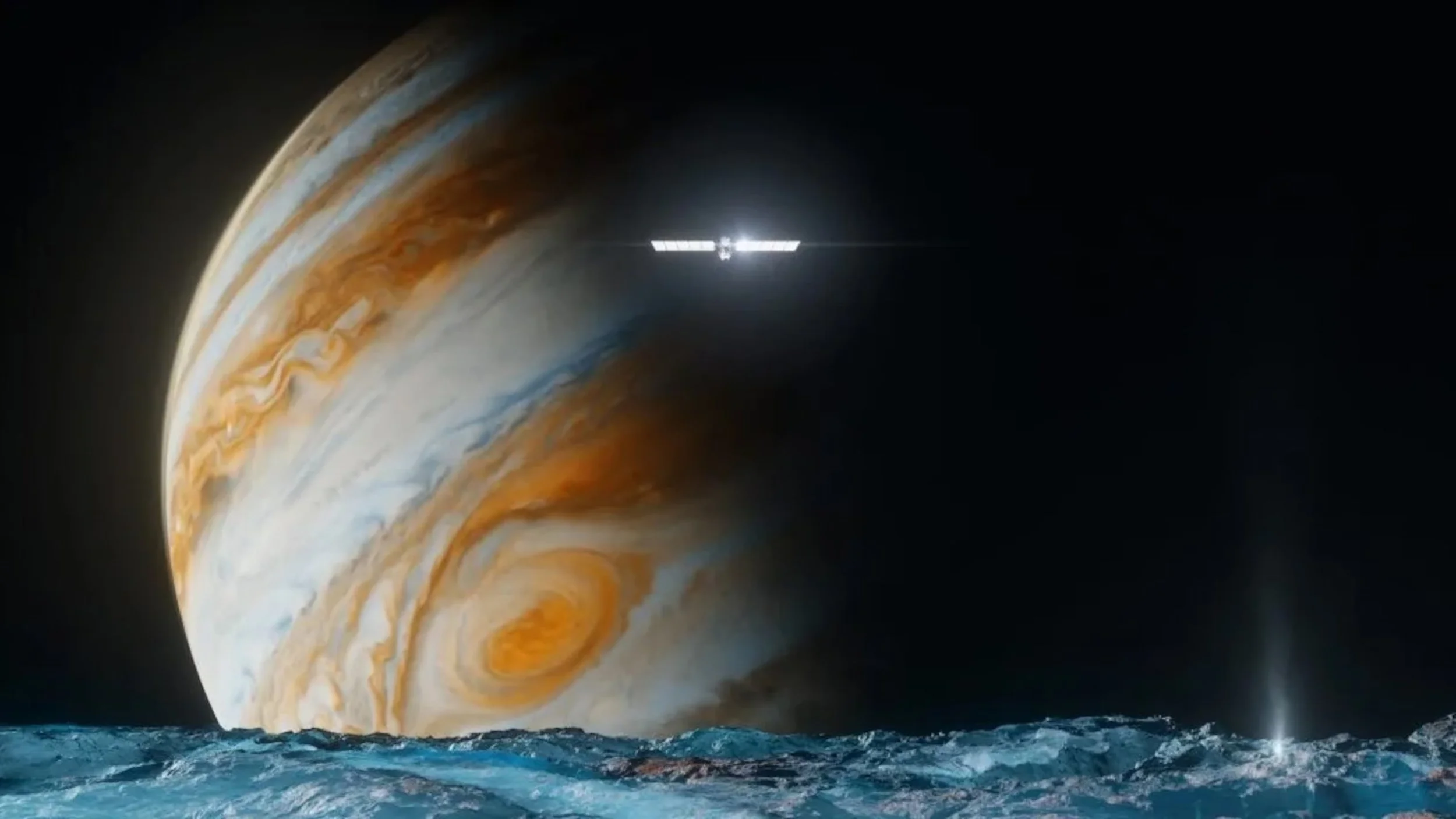
EUROPA CLIPPER PASSES EARTH
Image credit: NASA/JPL-Caltech
The Europa Clipper space probe launched in October 2024 with the mission to enter orbit around Jupiter so that it can study its icy moon, Europa. Observations from Hubble back in 2012 revealed that Europa was ejecting plumes of water vapor out from its south pole, reaching hundreds of kilometers into space. This suggested that the moon’s frozen crust was concealing a subsurface ocean. Typically, where there is liquid water, there could be life and that is what Europa Clipper going to go find out.
In spring of 2025, Europa Clipper reached the first milestone of its nearly five-and-a-half year journey, a gravity assist with Mars. To simply launch from Earth and shoot straight for Jupiter would require an incredible amount of energy, which requires more fuel, which makes the probe heavier. This becomes quite an inefficient use of resources. Instead, physicists calculated a trajectory that allows the gravity of the various celestial bodies in the solar system to do the heavy lifting for them. By passing close through Mars’ gravitational field, the probe gains a significant amount of speed and momentum without the need for more fuel.
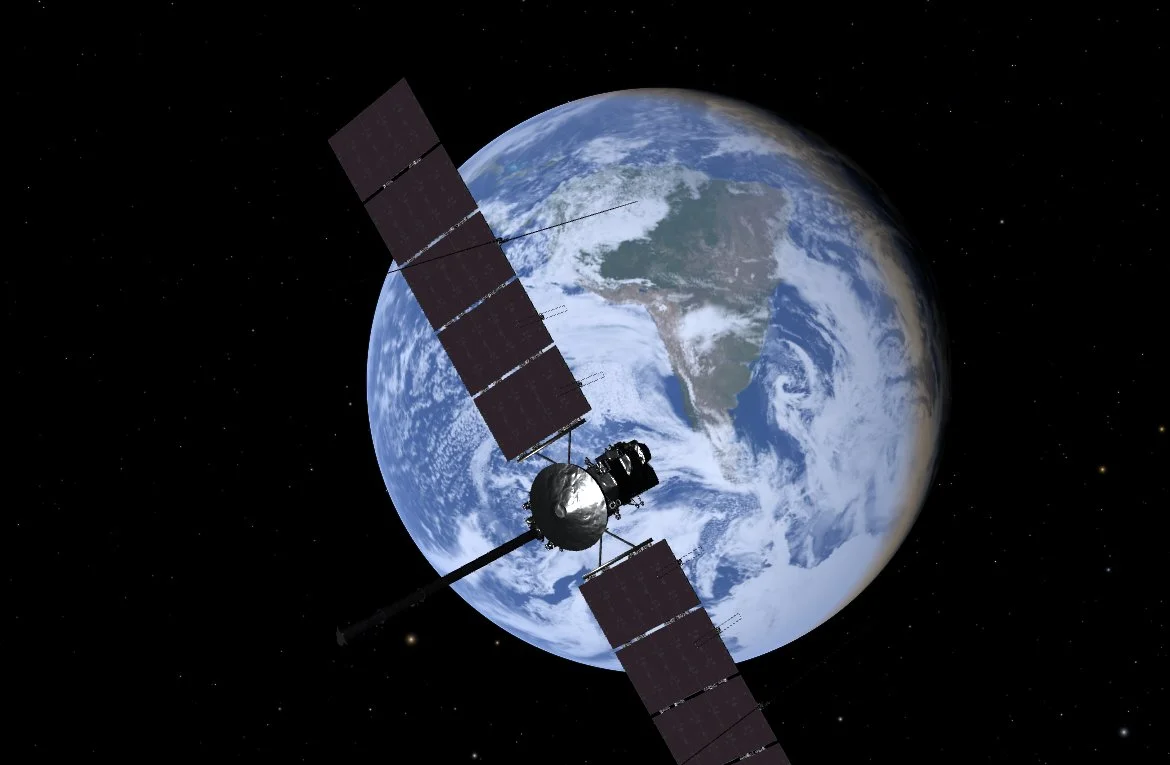
Image credit: NASA’s Eyes on the Solar System
The gravity assist with Mars sent Europa Clipper into a wide arc around the Sun. In fact, on December 3rd, 2026, it will come all the way back around to Earth where its journey began and use our planet for a second gravity assist. At its closest, Europa Clipper will pass within 3,300 km of Earth and reach a speed of nearly 53,000 km/h. While the probe will be too small to be visible to anyone on Earth, the probe itself will likely get really good images of Earth as it passes by.
You may wonder why one would spend over two years floating around just to come back to Earth. Well, between the momentum gained by the gravity assists with Mars and Earth, Europa Clipper would then be heading to Jupiter with significantly more speed than when it first left and will reach Jupiter using a fraction of the fuel it would have needed to gain enough speed to go straight there. Europa Clipper is expected to arrive at the Jupiter system in April 2030.
I’ll remind you as we come closer to each of these and give you a deeper rundown of what’s going on. If anything changes, I’ll be sure to update you when I can. I’m excited for another great year and hope you all are looking forward to it as well! See you around!