
THE UNIVERSE
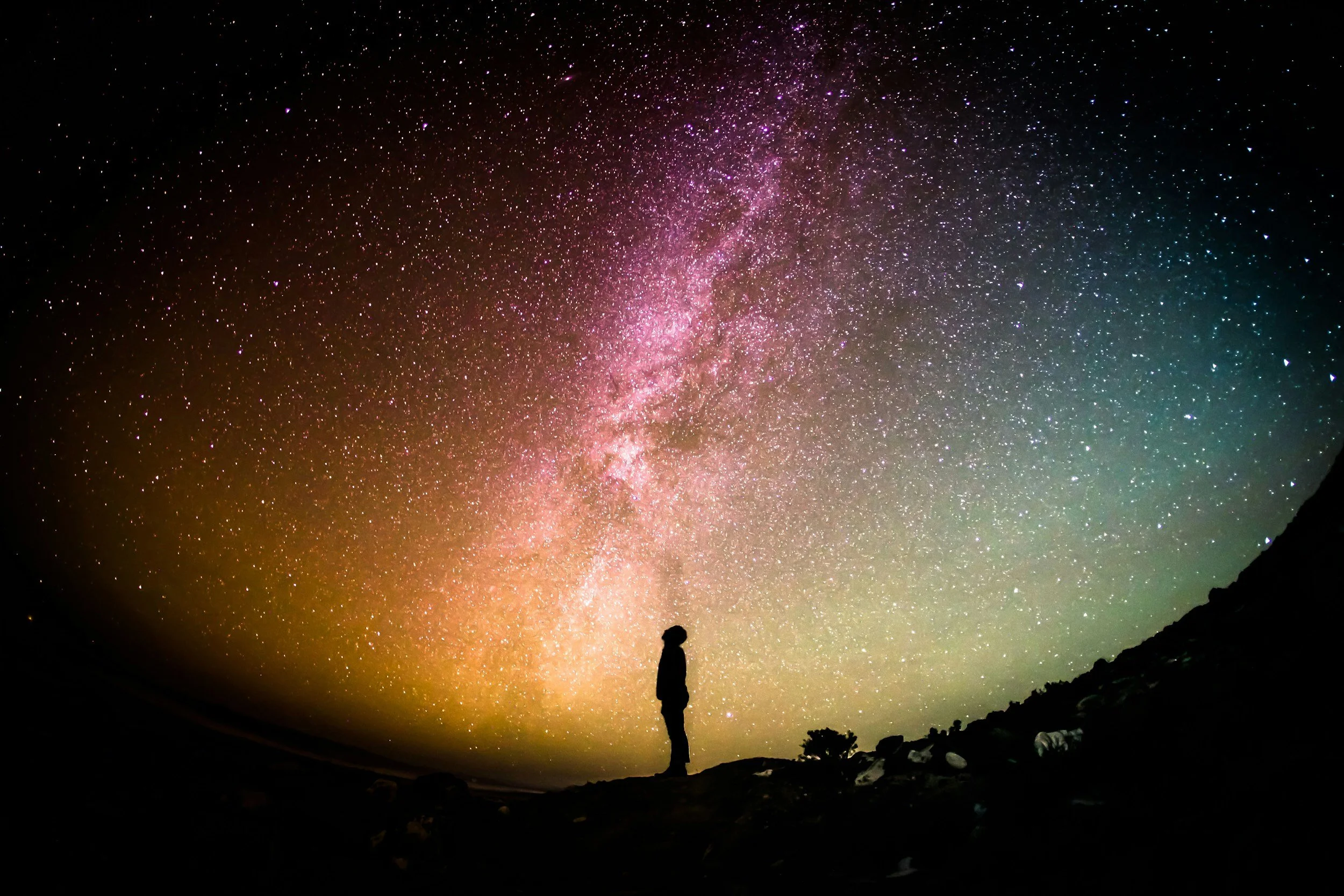
Our conception of what the universe is has changed significantly since the dawn of humanity. For tens of thousands of years, prehistoric people knew nothing but to look at the night sky and wonder what all those twinkling lights were against the endless dark. It wasn’t until the 16th century that natural philosophers (what scientists used to be called) began to recognize that Earth was just one planet amongst many planets around the Sun, which itself was a star amongst many stars. Just a century ago, astronomers still debated whether anything existed outside our Milky Way galaxy. Even today, we look to the edge of the observable universe and are mystified by what might lie beyond where we can’t see. Our conception of the universe has changed, and it almost certainly will again.
To many people, the idea of the universe can feel distant and abstract. Countless stars, galaxies and all manner of cosmic events come and go, often without our notice and feel disconnected from our everyday lives. You may think, “we are down here, and the universe is up there,” and it may lead one to question:
Why does studying the universe matter?
There is an understandable tendency to answer this question by appealing to the pragmatic, such as technological innovations and asteroid defense. While that’s all well and good, it doesn’t capture the true scope of either the universe or our most noble ambitions. There must be more to it. Something deeper. Imagine a civilization gifted this unique and beautiful world and the opportunity to not only marvel at the cosmos around it but to know it. Imagine that civilization choosing instead to occupy itself with fighting over resources and borders and ideology, only to vanish like a shooting star, its existence unnoticed. Now, imagine that civilization makes a different choice. Looking out from its “tiny mote of dust suspended in a sunbeam,” it resolves to elevate itself. It asks questions and pursues answers. Then, the answers found reveal new questions; ones we didn’t even know before to ask. This is transformative.
THE STRUCTURE AND SCALE OF THE UNIVERSE
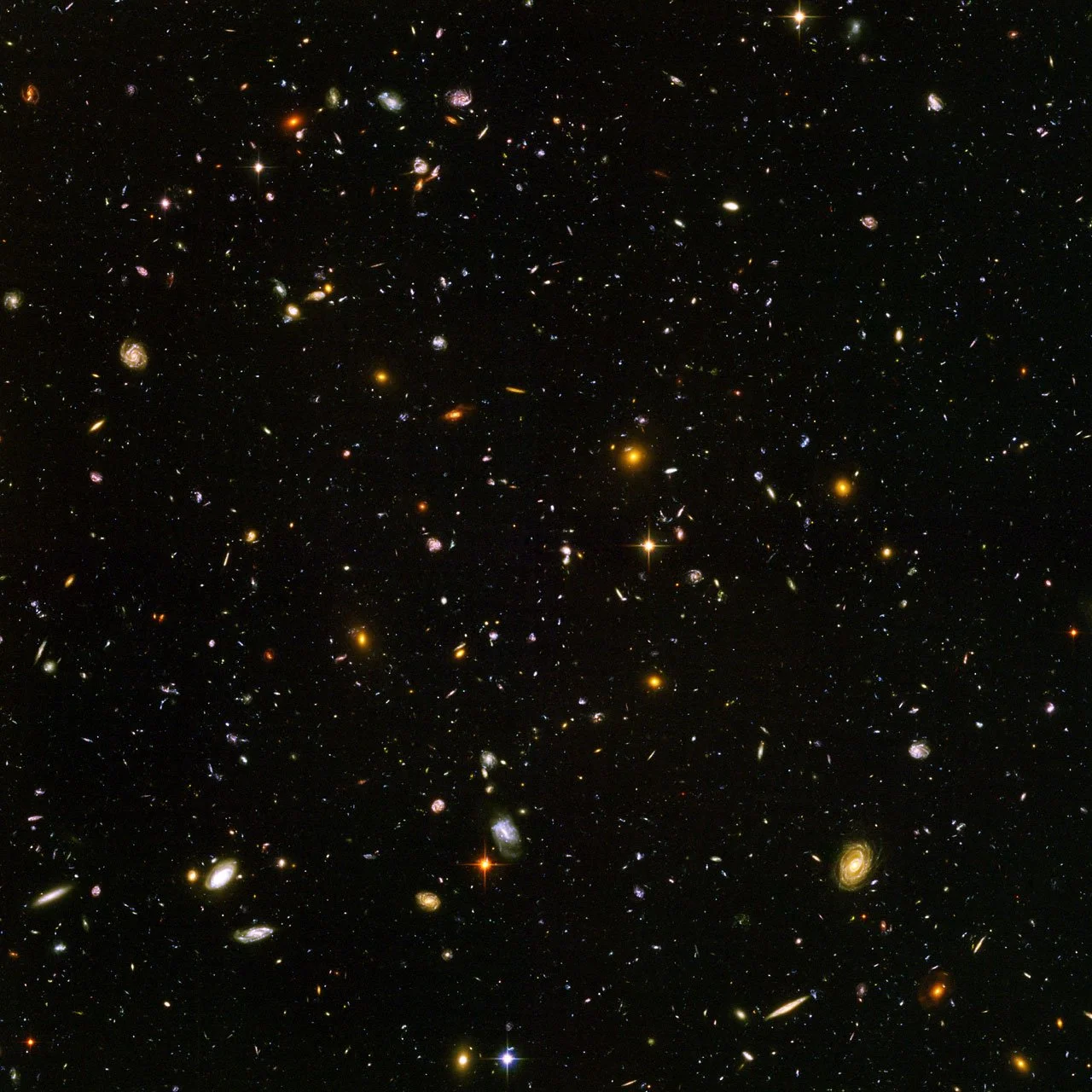
When looking at deep field images of space from advanced telescopes, you’re met with something mesmerizing: countless galaxies spilling across the darkness, each with its own shape, size, and color. The longer you study them, the more details emerge. Their beauty, diversity, and scale stir the imagination of what else might be out there. Yet these images may also portray something else: a universe out of control. Some regions resemble crowded battlefields where colliding galaxies tear each other apart under their shared gravity, while others stretch into vast, unbroken blackness where nothing seems to happen at all. How could such exquisite beauty arise from such disorder? In truth, scientists have found significant patterns in this chaos on the grandest scales, a cosmic web that governs how galaxies are distributed throughout the universe.
In the solar system primer, we learned that we live on Earth, one of eight planets amongst billions of other bodies orbiting a star we call the Sun.
In the galaxies primer, we learned that our solar system occupies one of the arms of a spiral galaxy we call the Milky Way. We also learned that our galaxy is part of a group of galaxies we call the Local Group, which is itself part of a collective of galaxy groups called the Virgo Supercluster.