EARTH
The cradle of humanity.
Distance from the Sun: 150 million km (1 AU or 8.3 light minutes)
Diameter: 12,750 km
Rotation period: 24 hours
Orbital period: 365.25 days
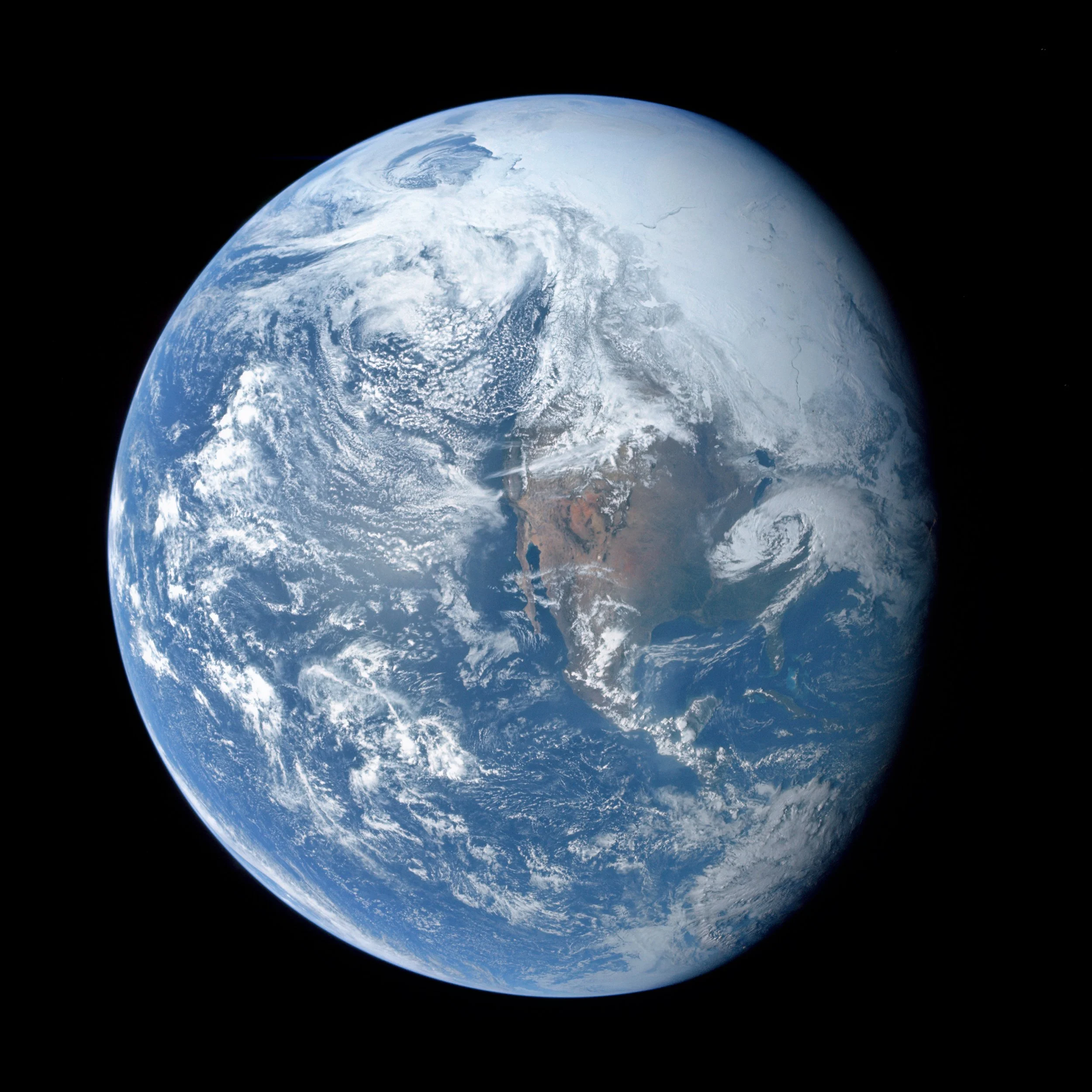
Where to even begin? Even introducing this planet feels like a Herculean undertaking. In astronomy, we spend so much time looking up and out into the vast cosmos that we sometimes forget that we, and the world beneath our feet, are part of it. And what a world it is. Could any planet in the entire universe have more relevance and importance to us than the one we are born on, live our lives on and will almost certainly die on? This isn’t just a planet. Earth is our home.
It’s weird because we figured out other planets in our solar system were planets long before we figured out our own planet was. People watched the night sky for thousands of years, eventually picking up on the fact that five particular “stars” appeared to travel around the sky in recognizable patterns. This is why they were called “planets” by the ancient Greeks, which means “wanderers.” Earth, on the other hand, was simply seen as the center of the universe around which everything revolved. In a sense, it was an appropriately human way of looking at the cosmos: we placed ourselves at its center because, from where we stood, it certainly looked and felt like we belonged there. We would eventually free ourselves of that notion when we adopted the heliocentric model, in which Earth is just one of many planets orbiting the Sun, which itself is one star among many stars.
Earth’s orbit puts it comfortably within the nearer part of the Goldilocks zone, a range of distances from the Sun where temperatures could allow water to remain liquid. About 70% of Earth’s surface is covered in liquid water, an essential ingredient for life as we know it, making the Goldilocks zone an important starting point when considering whether a planet could be habitable. But it is not a hard boundary. Earth wouldn’t suddenly become incapable of supporting life if it were somewhat closer to or farther from the Sun. After all, its orbit naturally carries it closer and farther away throughout the year. Even Mars, which orbits about 78 million km farther from the Sun on average, is considered by many astronomers to lie within the Goldilocks zone. Mars also demonstrates why distance alone is not enough: a planet’s potential habitability depends on many other factors, including the density and composition of its atmosphere, the strength of its magnetic field, and the activity level of its star. We’ve been scouring our galaxy for exoplanets for decades now, and we have found varying degrees of potential habitability. We’ve even found biosignatures on other worlds that might signal the presence of life, but confirmation is still out of our grasp. As things stand, Earth is the only known planet in the observable universe that is known to harbor life. We have found many Earth-like worlds, but not another Earth.
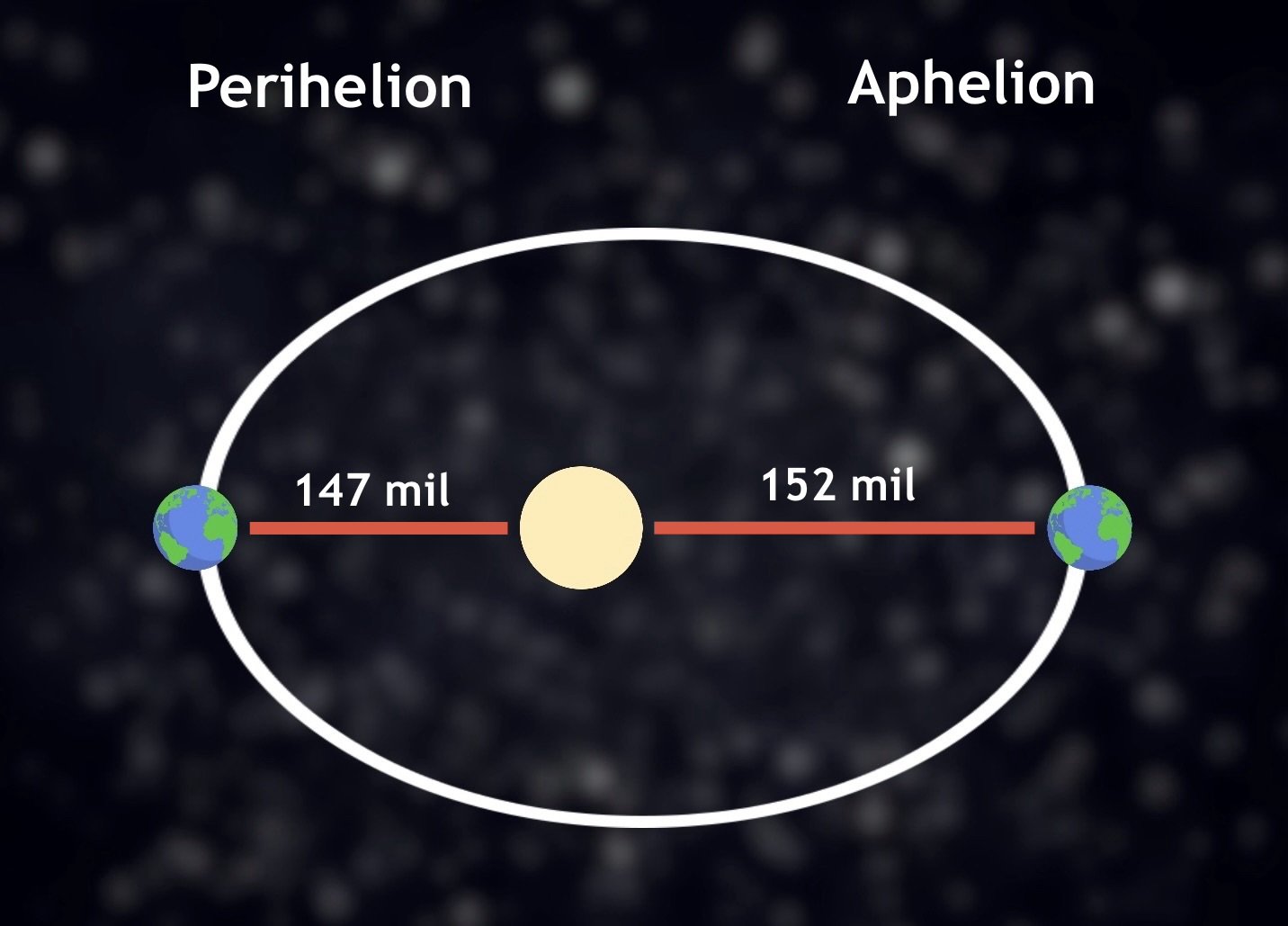
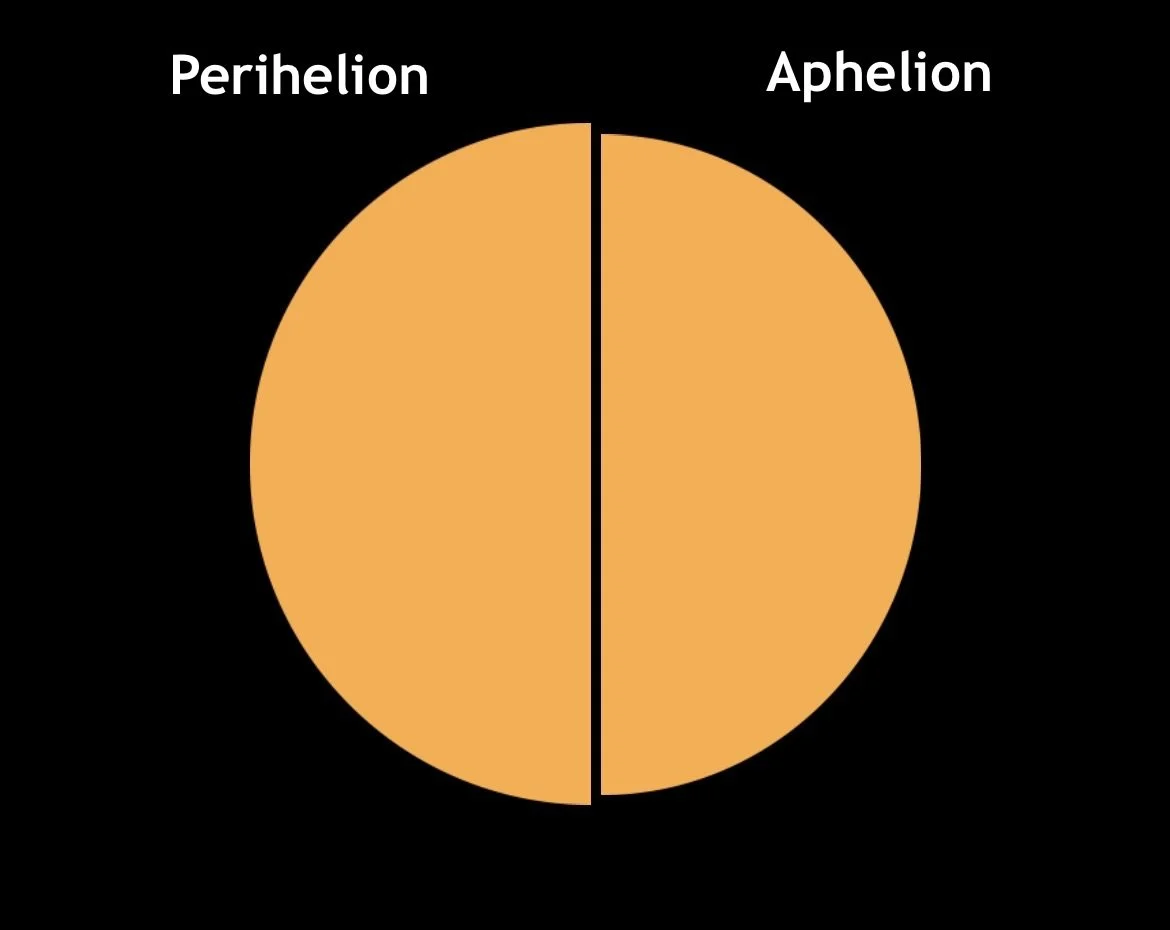
The reason Earth’s distance from the Sun changes throughout the year is because its orbit, like all other planets, is elliptical. This means that it’s not a perfect circle but slightly stretched, oval-shaped, with the Sun located just off center. This means that there are some points in Earth’s orbit where it is closer to the Sun, with the closest point known as perihelion, and other points where it is further away, with the furthest point known as aphelion. The difference in distance to the Sun between perihelion and aphelion is about 5 million. This subtly changes how large the Sun appears in our sky by a difference of about 3%. The average distance at about 150 million km (93 million miles), which is the basis for the astronomical unit (AU).
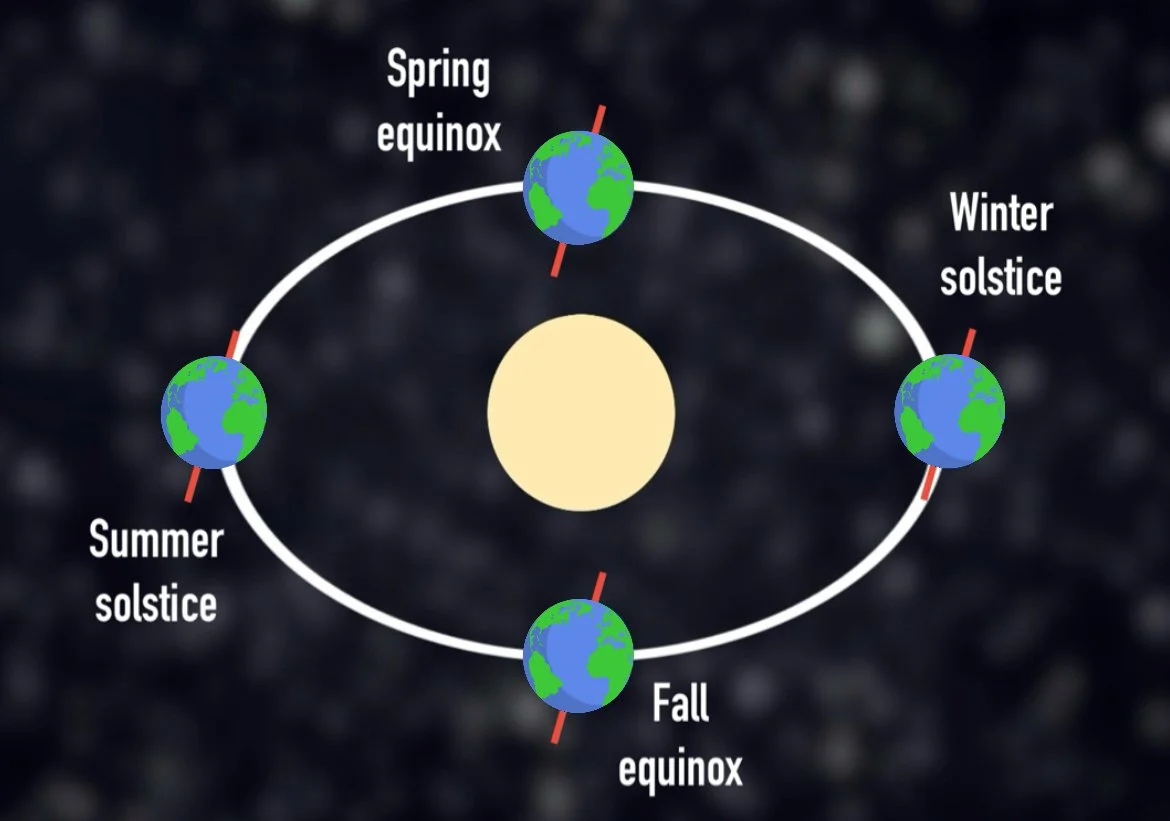
Counterintuitively, it is during the winter months that Earth is closest to the Sun and the summer months when it is furthest. Thus, it is not distance from the Sun that causes the seasons. Earth is tilted on its rotational axis at an angle of 23.5° with respect to its orbital plane. When one of the poles of its axial tilt is angled towards the Sun, that marks that hemisphere’s summer solstice. At the same time, the other pole is tilted away from the Sun, marking the winter solstice. When a hemisphere is tilted towards the Sun, it receives sunlight at more direct angle, concentrating more energy in a smaller surface area and it spends more time in the daylight. This results in warmer weather. When a hemisphere is tilted away from the Sun, it receives sunlight at more oblique angle, spreading its energy across a larger surface area, and it spends more time on the night side. This results in cooler weather. In between the solstices are the equinoxes, when the axial tilt is perpendicular to the direction of the Sun, marking the transitional seasons of spring and fall.
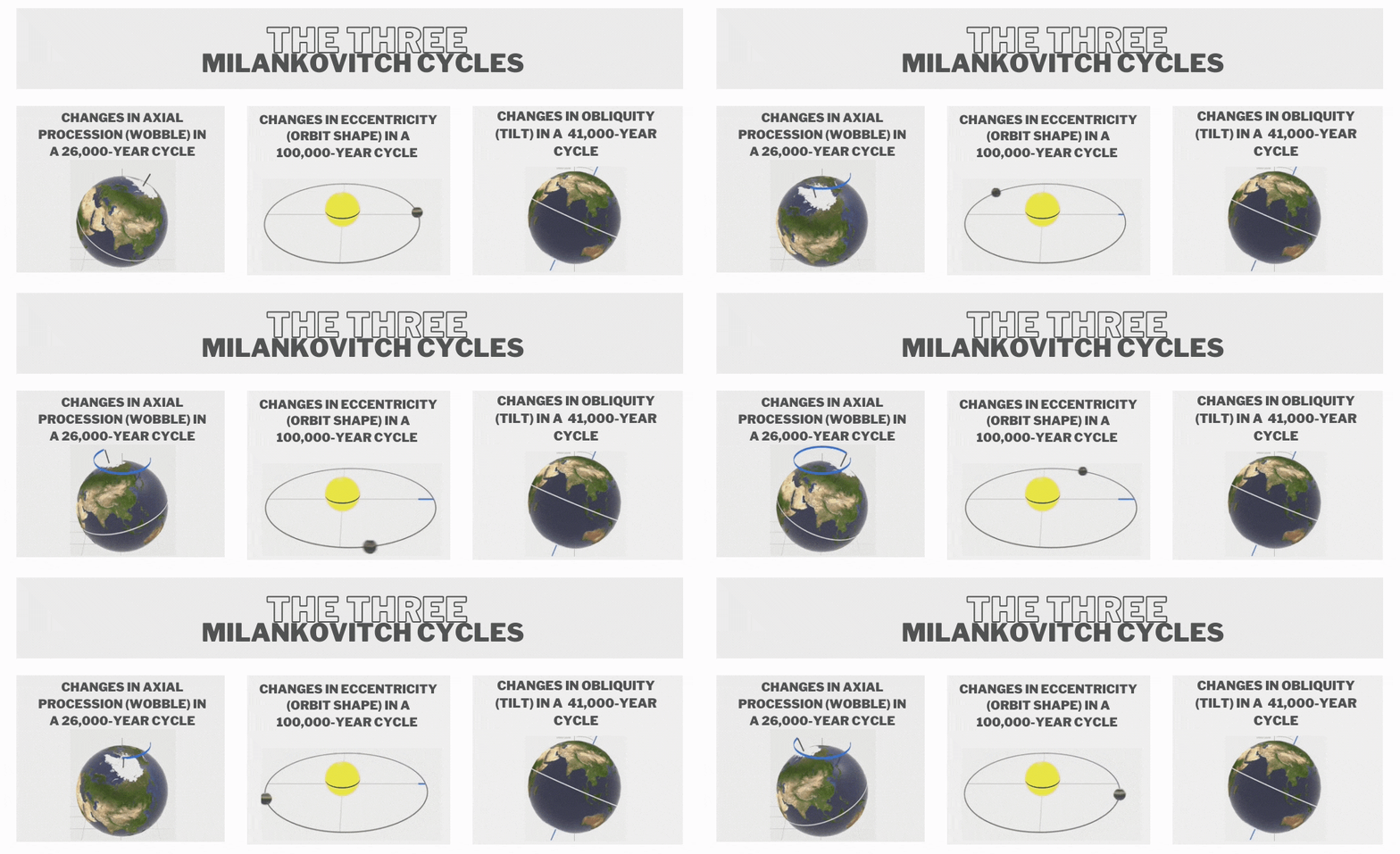
The parameters of Earth’s orbit and axial tilt are not static. There are three main ways in which they fluctuate over time, called Milankovitch cycles.
The eccentricity of Earth’s orbit, how stretched it is, changes subtly between more circular to more elliptical due to gravitational influences from other planets. This alters how far the Earth is from the Sun, and therefore how much energy it receives during different times of the year. This happens in roughly 100,000-year cycles.
The obliquity of Earth’s axial tilt, how tilted Earth is with respect to its orbital plane, also changes. Over a roughly 41,000-year cycle, the tilt oscillates between 22° and 24.5° (of which Earth is halfway between). As you might imagine, the more tilted Earth becomes, the more extreme the seasonal changes are throughout a year.
The precession of Earth’s axial tilt sees it drift around like a spinning top. The north pole is currently oriented fairly close towards Polaris, the North Star. Over a roughly 26,000-year cycle, Earth’s axis slowly traces a wide 47° circle around the northern hemisphere, sometimes passing through other stars before ending up back near Polaris again.
Over the span of these different cycles, the amount and distribution of solar radiation Earth receives changes. Their combined effects can produce conditions particularly favorable for the growth of large ice sheets, especially when summers in the northern hemisphere become cool enough for winter snow to persist and accumulate. These orbital changes, amplified by climate feedback, help drive the cycles of Earth’s ice ages.
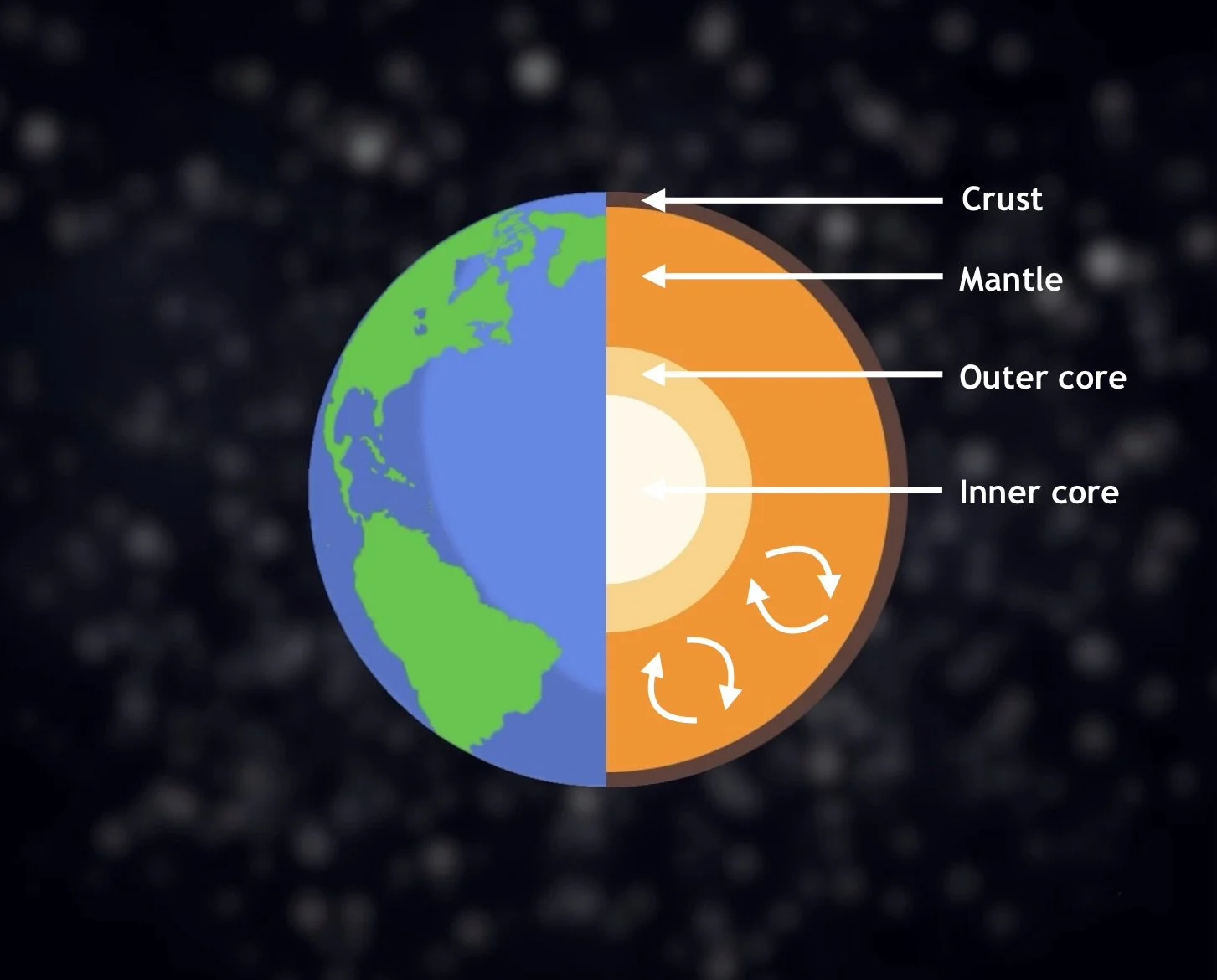
Earth is the largest and most massive of the terrestrial planets and the densest object in the solar system. That’s right, the densest object. While the Sun is no doubt much, much more massive than Earth, that mass is spread out over a significantly larger volume. In fact, the majority of the solar system’s planets are denser than the Sun, but Earth beats them all at about four times denser than the Sun on average, with Mercury coming in at a close second.
The biggest contributor to Earth’s density is its heavy metallic core, which is composed primarily of iron and nickel and contains about a third of its mass. The inner core is solid and about as hot as the surface of the Sun. The planet’s gravity pulls the surrounding mass inward toward the core at the center. This immense pressure raises the temperature to 5,000-6,000°C, well beyond the melting point of iron. However, the weight of the entire planet is so crushing that the iron cannot actually become liquid. The outer core is also made primarily of iron and nickel, and it is only slightly cooler than the inner core. However, because it endures much less pressure, it is able to melt into a liquid. Think of the outer core as an ocean of molten metal churning around the solid metal sphere, which is the inner core. The fact that the outer core is liquid is very important because it can flow. The deeper parts of the outer core are hotter than the material above them, causing the molten metal to circulate in convection currents. This convection is also assisted by Earth’s rotation into more structured motions through the Coriolis effect. As this electrically conductive metal moves through Earth’s interior, it generates electric currents. These currents produce Earth’s magnetic field in a process known as a dynamo (more on this shortly).
Beyond Earth’s outer core is the mantle. Easily the largest layer in Earth’s interior, the mantle is made not of molten metal but silicate rock. The mantle is incredibly hot, but its vast depth gives it a tremendous temperature range. It reaches nearly 4,000°C at the deepest boundary above the core and cools to just 1,000°C near the crust. Despite these extreme temperatures, the mantle is mostly solid. This might seem to rule out convection, since we normally associate convection with liquids and gases. But mantle rock behaves very differently from rocks on Earth’s surface. Under the immense heat and pressure found deep within Earth, solid rock can slowly deform and flow, much like an extremely thick fluid. It does not flow quickly enough for us to see it happening, but over millions of years, the movement becomes substantial. This process is incredibly relevant to our lives here on Earth's surface as it is ultimately responsible for the mountain formation, volcanic eruptions and earthquakes and much more.
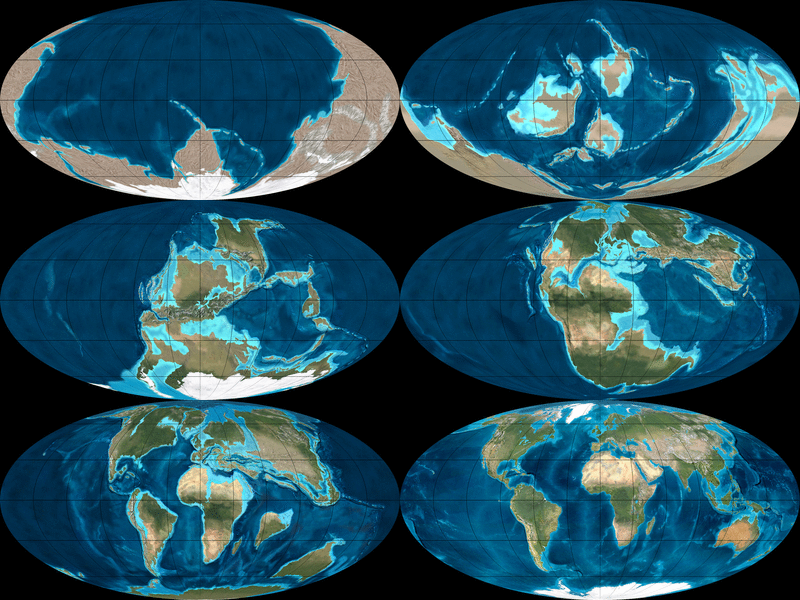
The shift of tectonic plates has continuously reshaped Earth’s surface. The continents we recognize today are not permanent features, but pieces of a planet that has been rearranging itself for billions of years. Continents have drifted apart and collided with one another, opening and closing oceans. At several points in Earth’s history, much of the planet’s landmass came together into enormous supercontinents, only to later break apart and disperse once again. The most famous and recent example is Pangaea, which brought nearly all of Earth’s major landmasses together into one, colossal landmass. Its assembly began roughly 335 million years ago, as drifting continents collided and fused. By about 250 million years ago, Pangaea had reached its greatest extent, surrounded by the vast global ocean Panthalassa. Around 200 million years ago, while dinosaurs roamed, it began to break apart. Its fragments would be sent on journeys that eventually became the arrangement of continents we see today. Given tens of millions of years more, the continents will once again reconfigure themselves into a radically different world.
Above the mantle lies Earth’s outermost layer, the crust. This remarkably thin shell of solid rock forms the planet’s surface, where all known life has lived out its existence. The crust’s thinness varies considerably between the ocean basins and continents. The oceanic crust is only about 7 km thick, while the continental crust averages roughly 35 km, though it can be double that under mountain ranges.
Earth’s crust is attached to the rigid uppermost mantle, forming the lithosphere, which is divided into enormous tectonic plates. These plates fit together like pieces of a vast, irregular puzzle, carrying continents and ocean basins along with them. Beneath the lithosphere lies the asthenosphere, a hotter and weaker region of the upper mantle that can slowly deform, or change shape and flow, over geological timescales. This allows the rigid plates above it to move slowly across the asthenosphere, although only by a few centimeters per year. As the plates move, they interact with one another in three main ways.
Sometimes they collide. When continental plates collide, they compress and push upward to form mountain ranges. For example, the Himalayas were formed when the Indian Plate collided with the Eurasian Plate. When ocean plates collide, they instead push downward to create deep trenches. For example, the Mariana Trench was formed when the Pacific Plate collided with the Mariana Plate.
Other times the plates are pulled apart. This opens up a rift from which magma deep in the mantle can well up and cool to form new lands.
Plates can even grind along each other and that friction generates earthquakes. For example, California experiences frequent earthquakes because the San Andreas Fault Line, where the Pacific Plate and the North American Plate meet, slices right through the U.S. state.
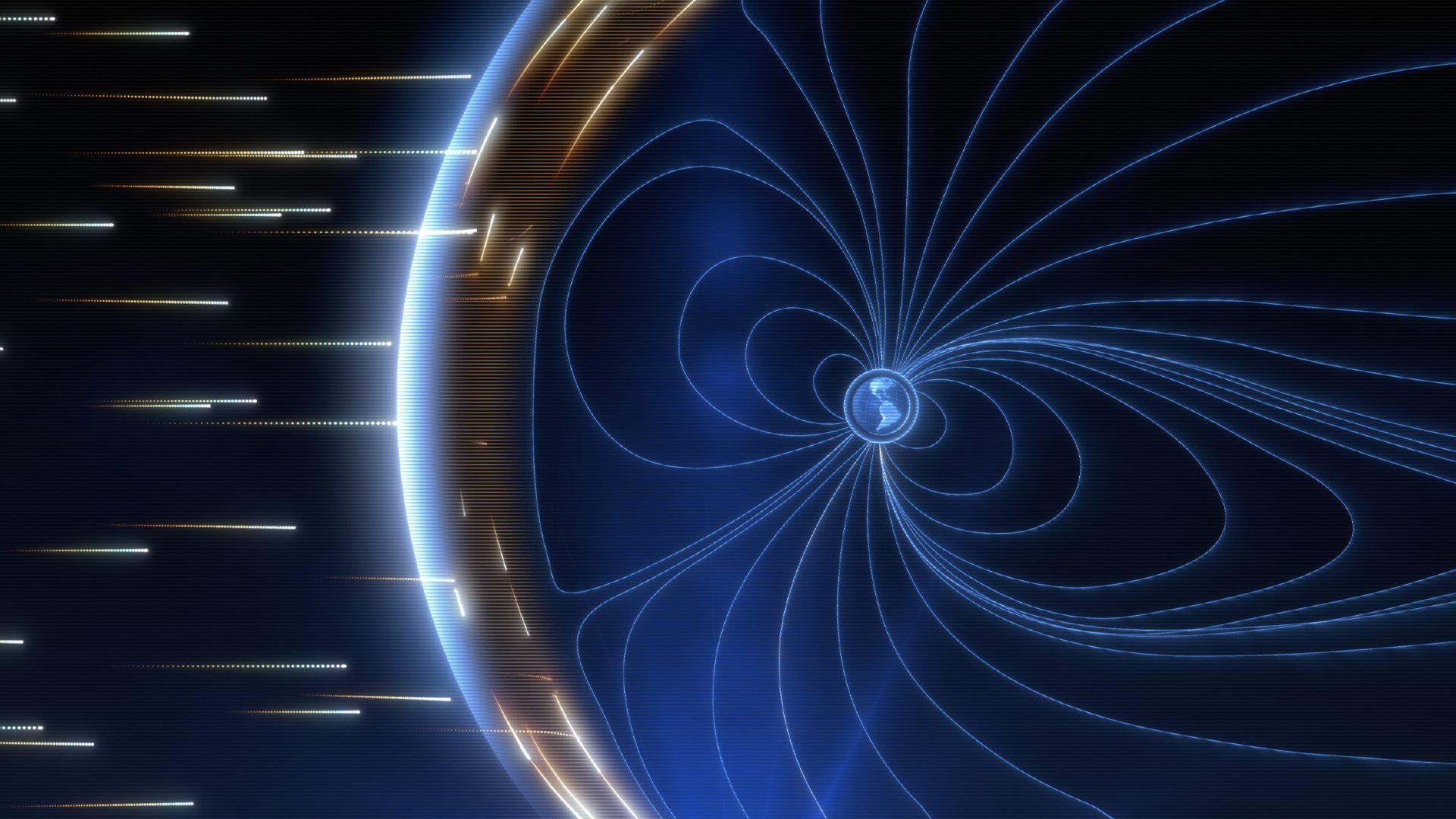
Earth’s magnetic field is roughly dipolar, closely resembling the structure of a bar magnet but on a much larger scale. Invisible field lines extend out from the planet’s interior through one of its poles, curve out into space and reenter the planet’s interior through its opposite pole. On the dayside, this magnetic field can reach out tens of thousands of kilometers while reaching out hundreds of thousands of kilometers on the night side. The Sun continuously emits a steady stream of charged particles in all directions, known as the solar wind. Earth’s magnetic field encounters this surge of charged particles and, rather than allowing them to pummel the Earth, it deflects most of them around Earth, creating a vast region called the magnetosphere. This significantly reduces how much of Earth’s atmosphere is stripped away, it traps some charged particles to form the Van Allen radiation belts, and guides some charged particles down to Earth’s poles, ionizing the atmosphere and generating beautiful light displays, called aurorae. It should be noted that this magnetic field is not static. The magnetic poles drift, the strength of the field varies, and occasionally undergoes a complete reversal.
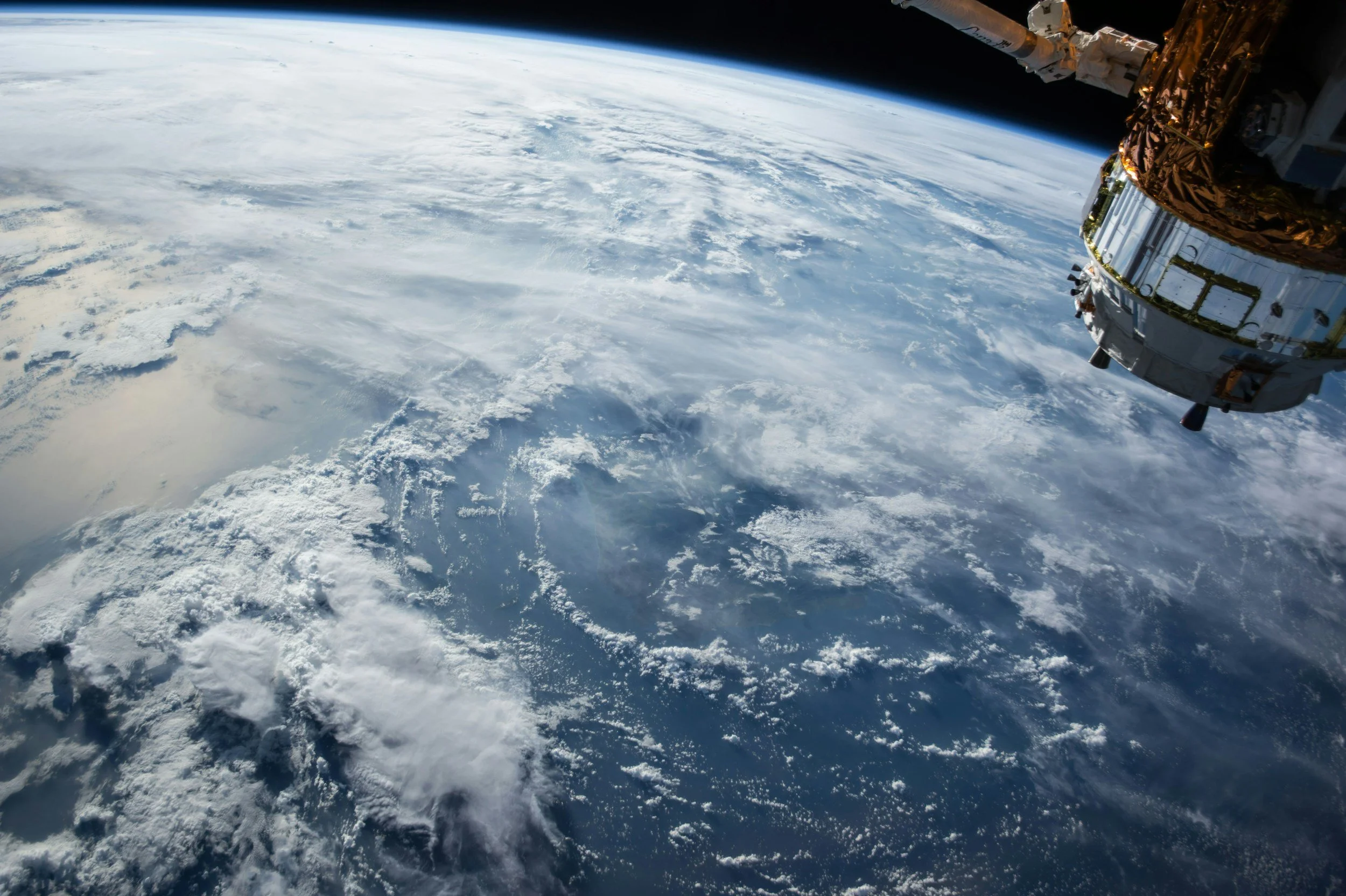
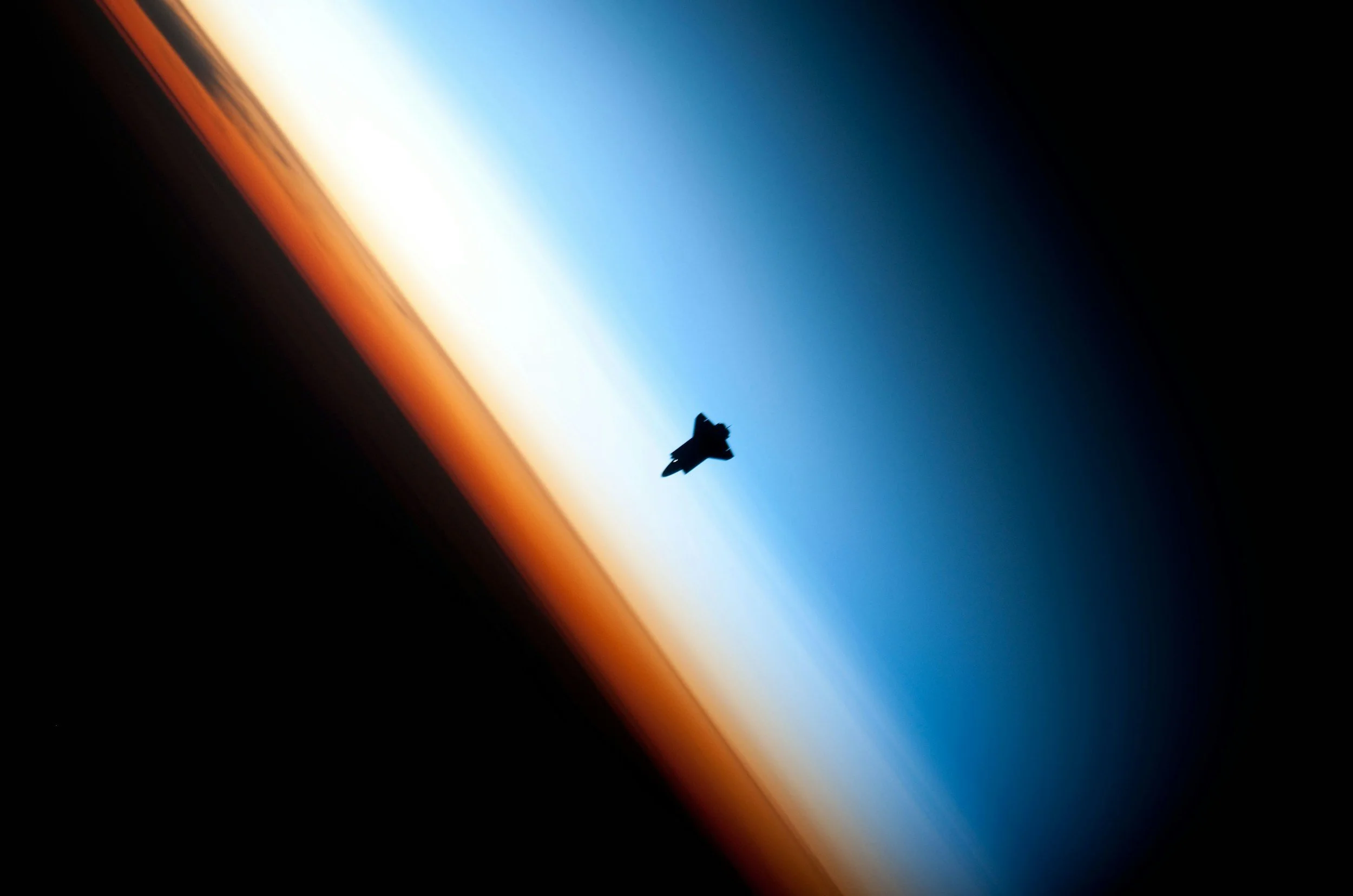
Earth’s atmosphere is a layer of gas resting on top of the crust, held to the planet by gravity. It is one of the primary reasons that Earth is able to support life as it provides breathable air, keeps the planet warm, and shields the surface from dangerous radiation. It’s made up of mostly nitrogen and oxygen (78% and 21% respectively) and a trace assortment of other gasses and water vapor.
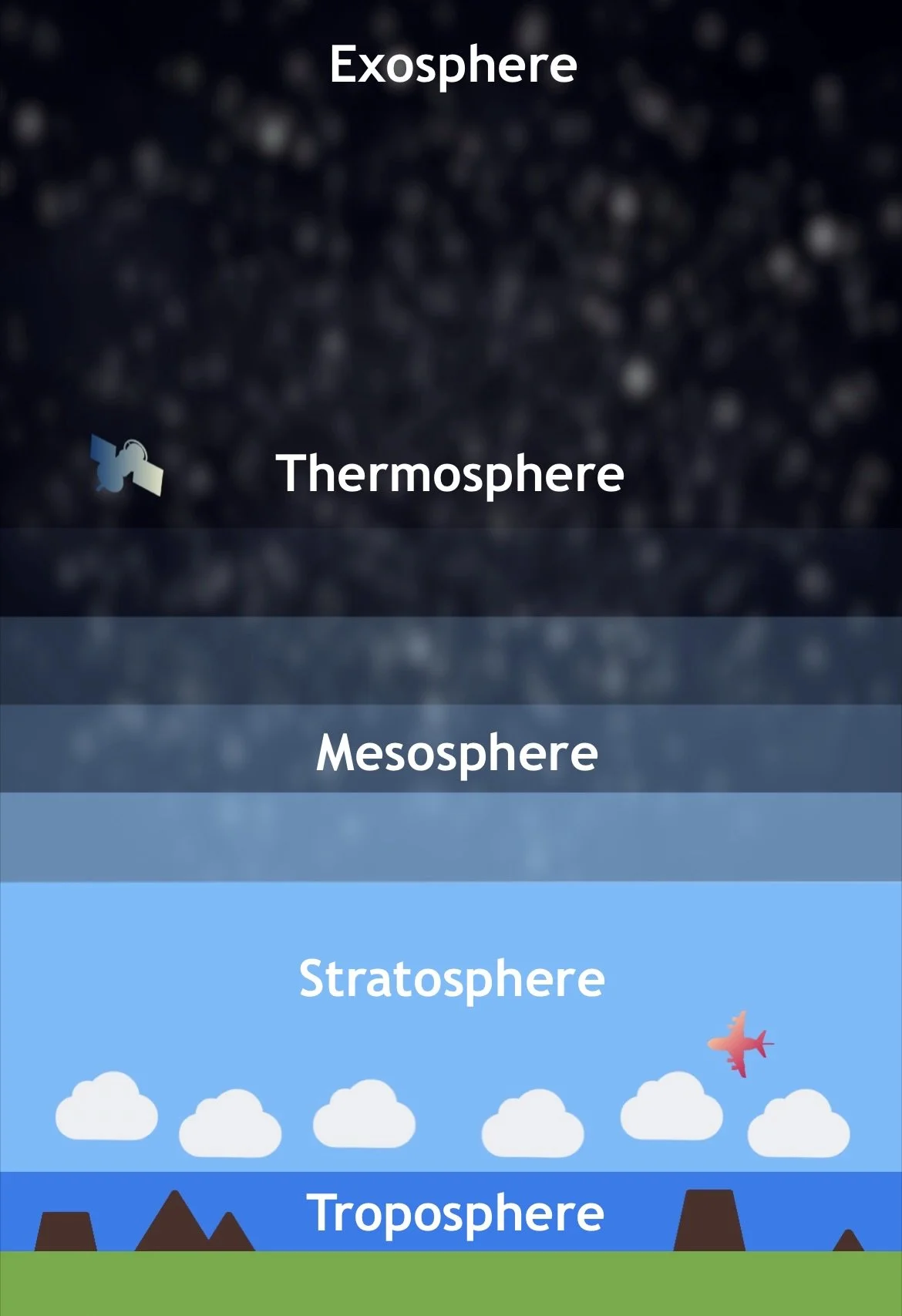
Like many other planets, Earth’s atmosphere is organized into distinct layers that become progressively thinner with altitude.
The troposphere is the lowest and densest layer, spanning an average height of only 12 km but containing 80% of the atmosphere’s mass. This is where we live and where almost all weather occurs. Air warmed by Earth’s surface becomes less dense and rises, while cooler, denser air sinks to replace it, creating convection currents that drive much of the atmosphere’s weather. Differences in air pressure push air across the surface, producing wind. Rising air also carries water vapor upward, where it cools and condenses into clouds. When water droplets and ice crystals grow heavy enough, they fall as precipitation in the form of rain or snow. In thunderstorms, collisions between ice crystals and water droplets transfer electrons between them. Lighter particles tend to be positively charged and carried higher by updrafts, while heavier particles tend to be negatively charged and sink lower. As this separation generates an electric field strong enough to overcome the insulating properties of the air, the energy is rapidly discharged as lightning, a flash of superheated plasma that reaches temperatures several times hotter than the surface of the Sun! The lightning rapidly heats and expands the surrounding air, producing the sonic boom we hear as thunder.
The stratosphere lies above the troposphere, reaching heights of about 50 km. The much thinner air makes it ideal for commercial airplanes to cruise through. Unlike the troposphere, the stratosphere gets warmer with altitude because its ozone layer, a region of elevated ozone (O₃), absorbs much of the Sun’s harmful ultraviolet radiation, converting it into heat. Without this protection, sunlight would cause significant damage to living organisms’ DNA, increasing the risk of sunburns and cancer. Human-made chemicals such as chlorofluorocarbons (CFCs) can release chlorine and bromine that destroy ozone, producing a seasonal “hole” over Antarctica. International efforts to phase out these chemicals have put the ozone layer on a gradual path toward recovery. Because the upper stratosphere is warmer than the air below it, rising air loses its buoyancy. This significantly reduces convection and makes the stratosphere relatively stable and dry, although polar stratospheric clouds can form under exceptionally cold conditions.
The mesosphere is a frigid layer that reaches to about 85 km high where the air cools to just −90°C (−130°F), the coldest temperature of Earth’s atmosphere. The air here is much too thin for airplanes and weather balloons to reach. This makes it very difficult to study as the only way to take measurements is through brief and infrequent samplings by sounding rockets. Despite how thin the air is, it is still much denser than in the layers above, allowing most incoming meteoroids to be vaporized here. They leave behind trails of water vapor and dust that can form the highest clouds in the atmosphere, called noctilucent clouds. These fleeting, wispy streaks appear over the horizon as they catch the reflection of sunlight during summer twilight.
The thermosphere is a vast layer spans hundreds of km and, like the stratosphere, gets hotter with altitude. In fact, the individual molecules get extremely hot with temperatures reaching as high as 2,000°C (3,600°F). This is because it’s the first layer to really start absorbing extreme unfiltered ultraviolet and X-ray radiation from the Sun. However, you wouldn’t feel it. You’d actually be freezing because this layer is so incredibly thin that there aren’t enough molecules to transfer that heat to your body. It is through this layer that the Kármán line designates the officially recognized beginning of outer space at 100 km above the surface. Most satellites and space stations travel through the thermosphere in low Earth orbit. This is also where charged particles from the solar wind collide with the atmosphere to produce aurorae. While there’s no hard divisions between any of the atmospheric layers, the thermosphere transitions into the exosphere particularly gradually.
The exosphere is the outermost layer surrounding Earth, spanning from about 600 km above Earth’s surface to an incredible 10,000 km away where it slowly blends into the vacuum of space. The atmosphere here is so thin that some scientists consider it more a part of interplanetary space than Earth’s atmosphere. It is mostly composed of atoms like hydrogen and helium, which can travel hundreds of kilometers without colliding with each other. It is also home to many high-orbit satellites used for communications, weather observation, and other purposes.
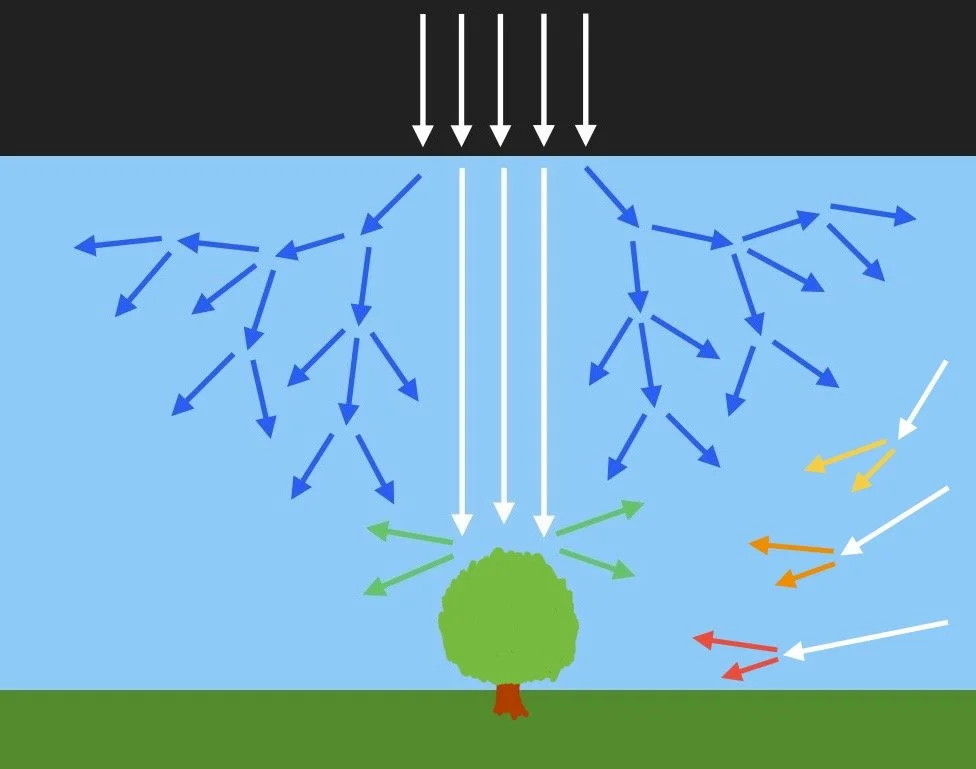
“Why is the sky blue?”
The short answer is that different colors within light passing through Earth’s atmosphere are reflected by the various molecules in the air. Blue light gets scattered the most.
The longer answer involves an understanding of how light works and interacts with matter. As you may know, light, also called electromagnetic radiation, comes in a spectrum of different wavelengths, some longer and some shorter. Human eyes perceive the different wavelengths as colors. Blue and violet light have the shortest wavelengths while red light has the longest. When all wavelengths are present together, we see white light. When no wavelengths are present, we see black which is the absence of light.
As white light from the Sun reaches Earth and passes through the atmosphere, the different wavelengths begin bouncing around the sky as they make contact with various atmospheric particles. This scattering increases as the wavelength of light decreases. Because blue light has the shortest wavelength, it is scattered more and so the sky appears blue in the daytime. This effect is called Rayleigh scattering. When the Sun is low in the sky during sunrise and sunset, the light has to travel further through the Earth’s atmosphere. We don’t see the blue light because it gets scattered too much. The red light gets scattered too but not as much – so the sky appears red. Eventually when the sunlight fades entirely, the sky turns black.
Closer look: Despite violet also being scattered like blue light, it is at the furthest edge of the visible light spectrum and is more difficult for our eyes to pick up, so we notice the blue light more.
Earth features a significant diversity of biomes across its landmasses, large naturally occurring communities of flora and fauna occupying a major habitat. While biomes are heavily influenced by their latitude, they are chiefly characterized by their temperature and rainfall.

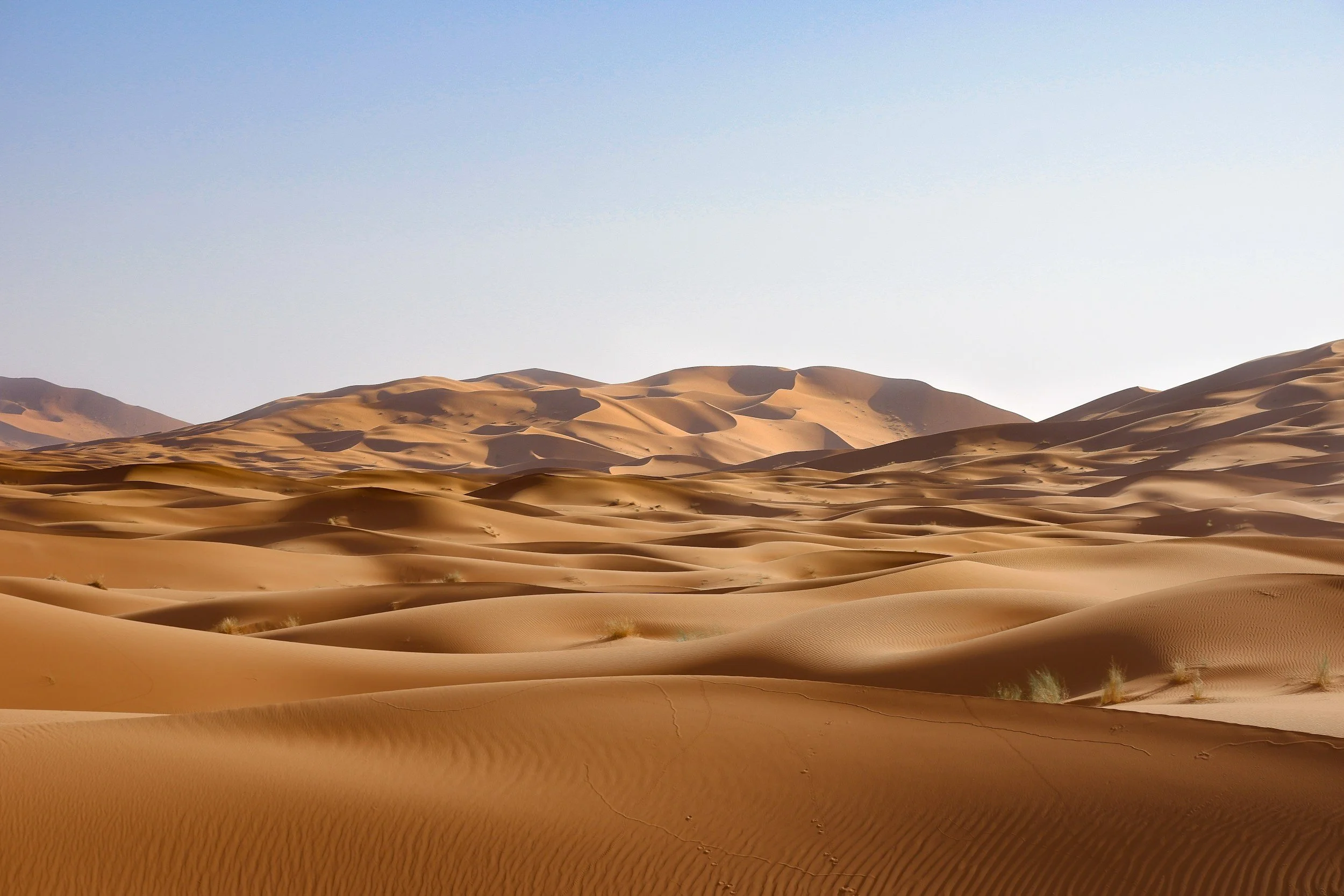
Near the equator are the tropical biomes.
Rainforests are dense, warm forests of tall evergreen trees that hug the Earth’s equator. They receive heavy rainfall throughout the year and are home to more than half the world’s plant and animal species. Rainforests are vital for the health of Earth’s climate as they absorb massive amounts of carbon dioxide, regulate global and local weather patterns and support biodiversity. The biggest concentrations of rainforests on the planet are the Amazon Rainforest in South America, the Congo Rainforest in Africa, and the Southeast Asian rainforests.
Deserts in tropical latitudes are hot, arid regions with some of the lowest rainfall and plant-life on the planet. These lands are sculpted by strong wind erosion and very occasional flash floods, often forming flat stony plains or rolling waves of sand dunes. Despite their barren climate, these regions support a surprising diversity of hardy life, adapted to survive under extreme conditions. The biggest concentrations of deserts on the planet are the Sahara Desert in Africa, the Arabian Desert in western Asia, and the Great Australian Desert.
Around mid-latitudes are the temperate biomes.
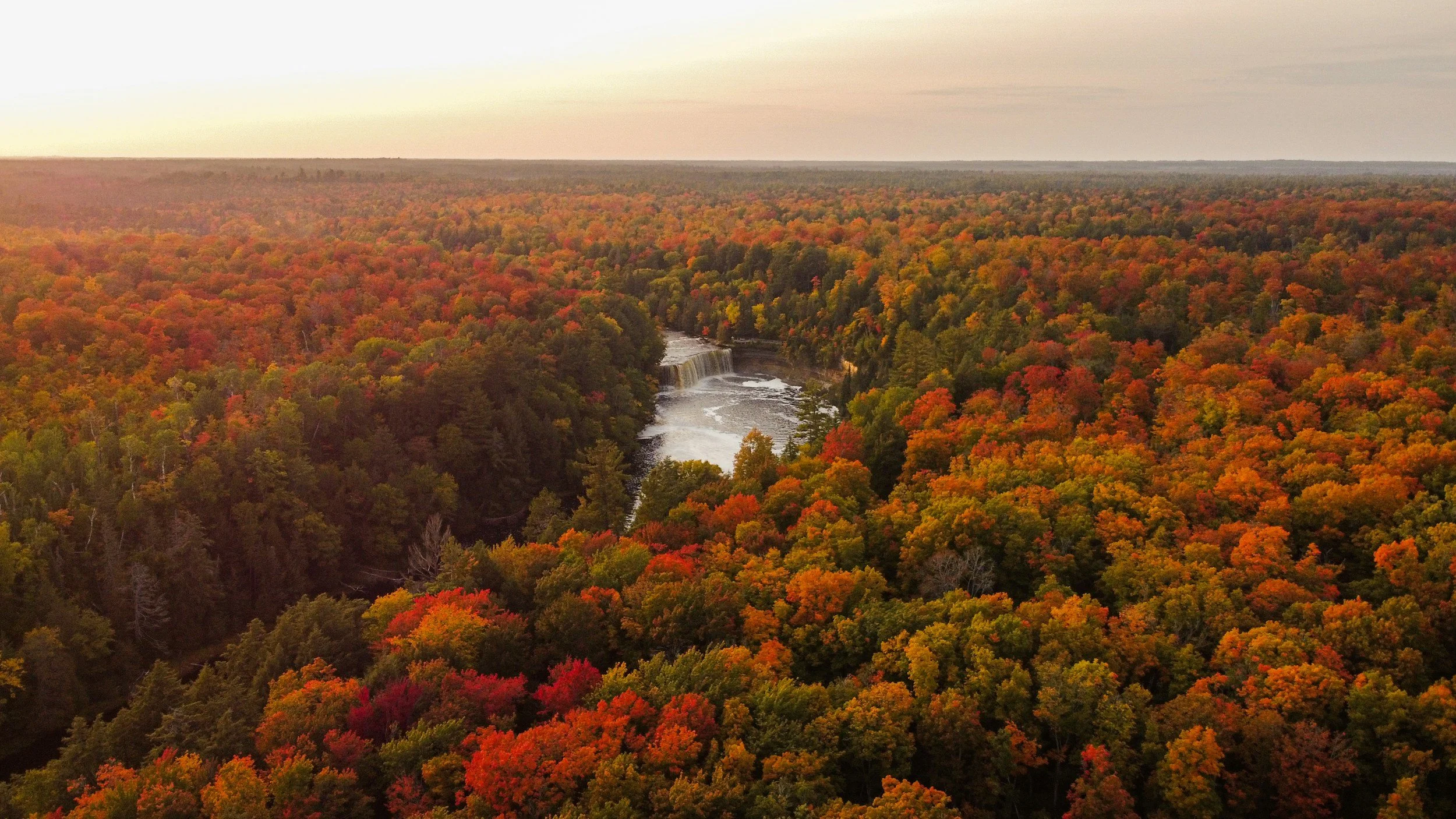
Deciduous forests are forests of broadleaf trees that shed their leaves each year, usually during the colder months. They have moderate to abundant rainfall throughout the year and experience distinct seasons, including warm summers and cool to cold winters. They are home to a wide variety of plants and animals, many of which are adapted to the changing conditions. Deciduous forests are found in eastern North America, Europe, and eastern Asia.
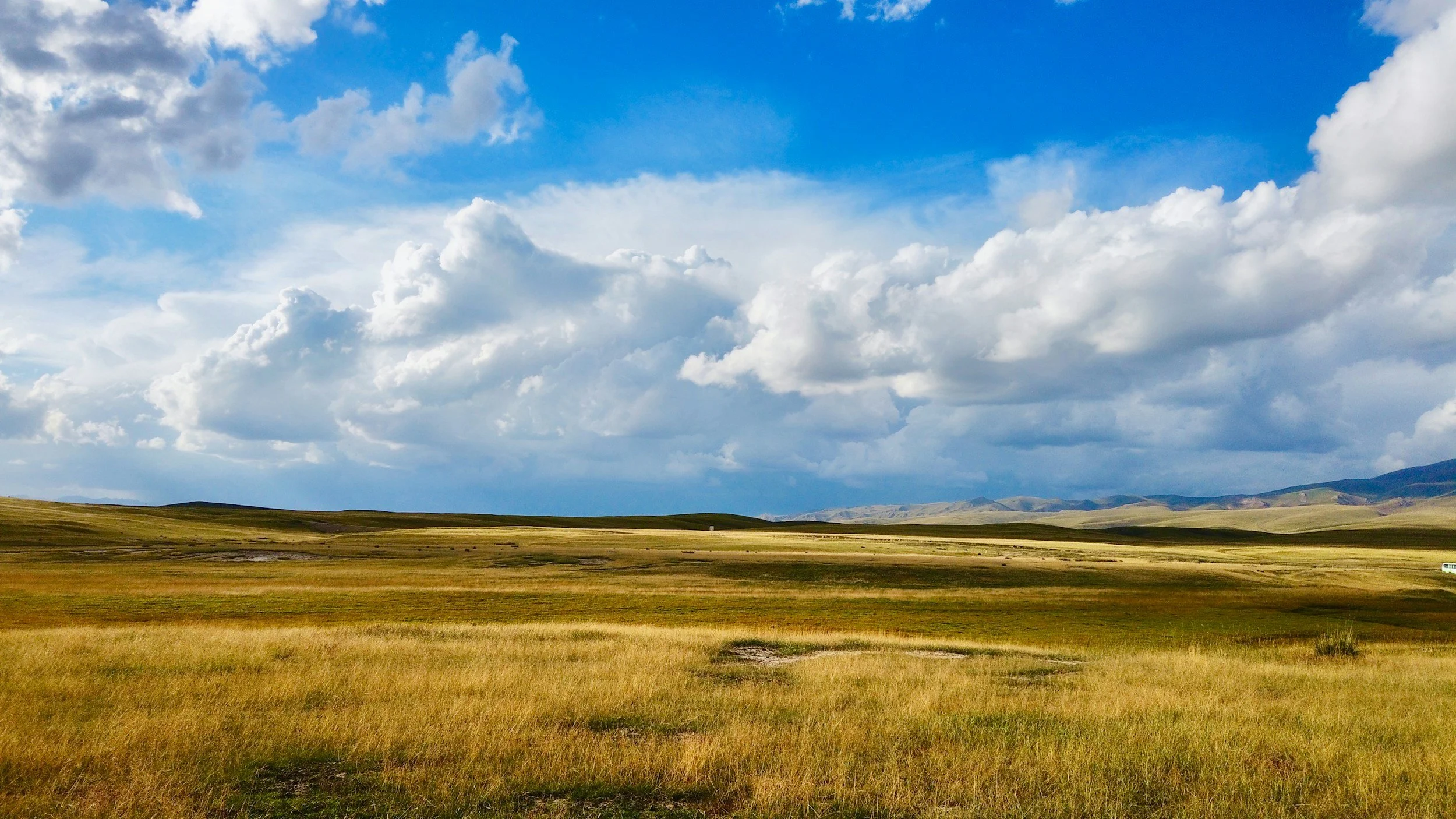
Grasslands are vast, open ecosystems found across the interior parts of continents. They are dominated by grasses, fertile soil, and flowering plants. They grow few trees because rainfall is generally too mild and seasonal to support dense forests. They are home to a diverse array of grazing animals, predators, birds, and insects, adapted to periodic drought and wildfires. The great grasslands of North America are called prairies, while the grasslands of Eurasia are commonly called steppes. They are broadly similar, though steppes are generally drier, with shorter vegetation and fewer trees.
Closer to the polar latitudes are the polar biomes.
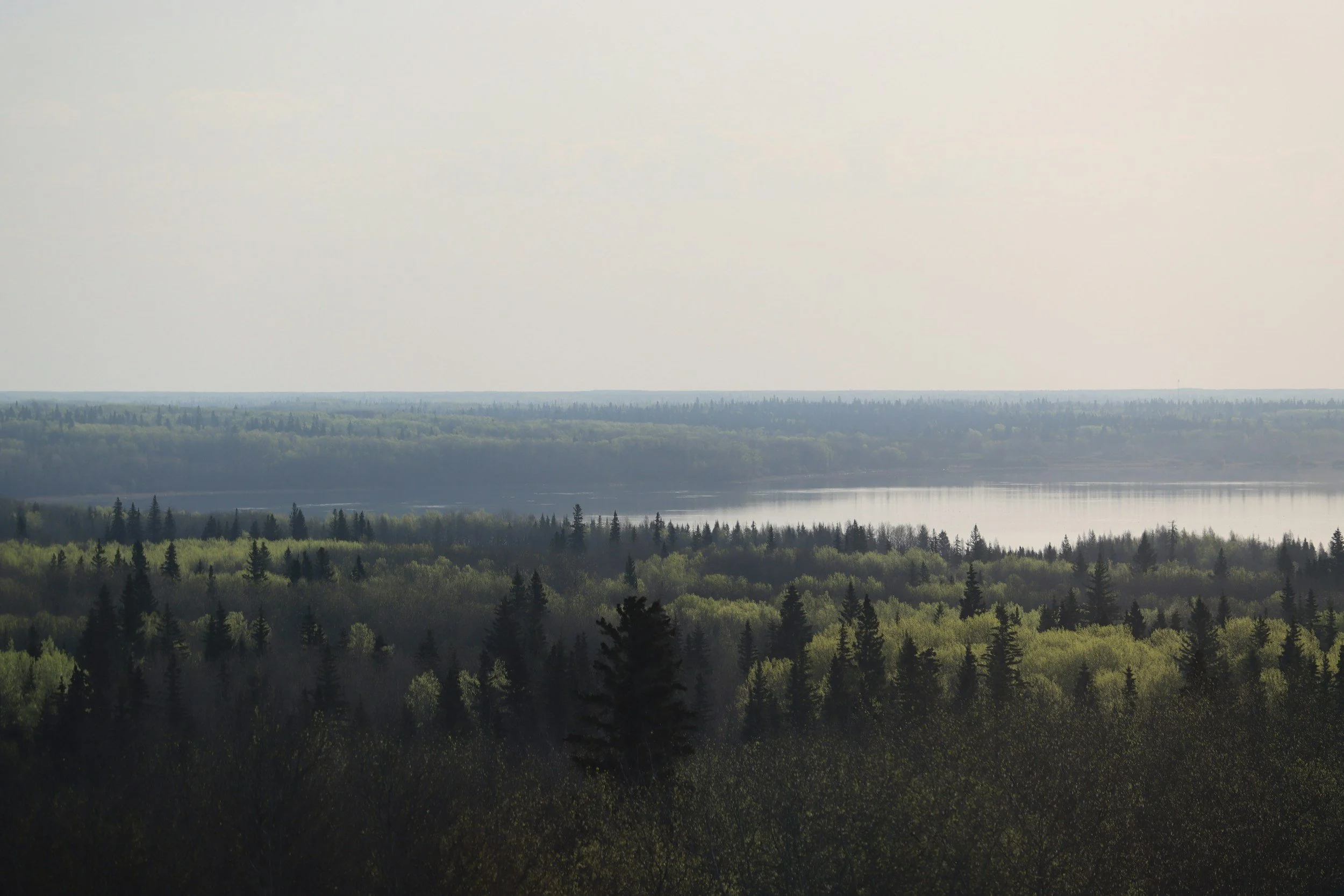
Boreal forests, also known as taigas, are forests of evergreen conifer trees. Their needle-like leaves and cone shapes help them adapt to the long, freezing and snowy winters. During the warmer months the ice thaws and they become boggy. Unlike the rainforests in tropical latitudes, boreal forests are home to a less diverse population, largely consisting of hefty, furred creatures and migratory birds. They are the largest land biome in the world, spreading across Alaska, Canada, Scandinavia and Russia (especially Siberia).
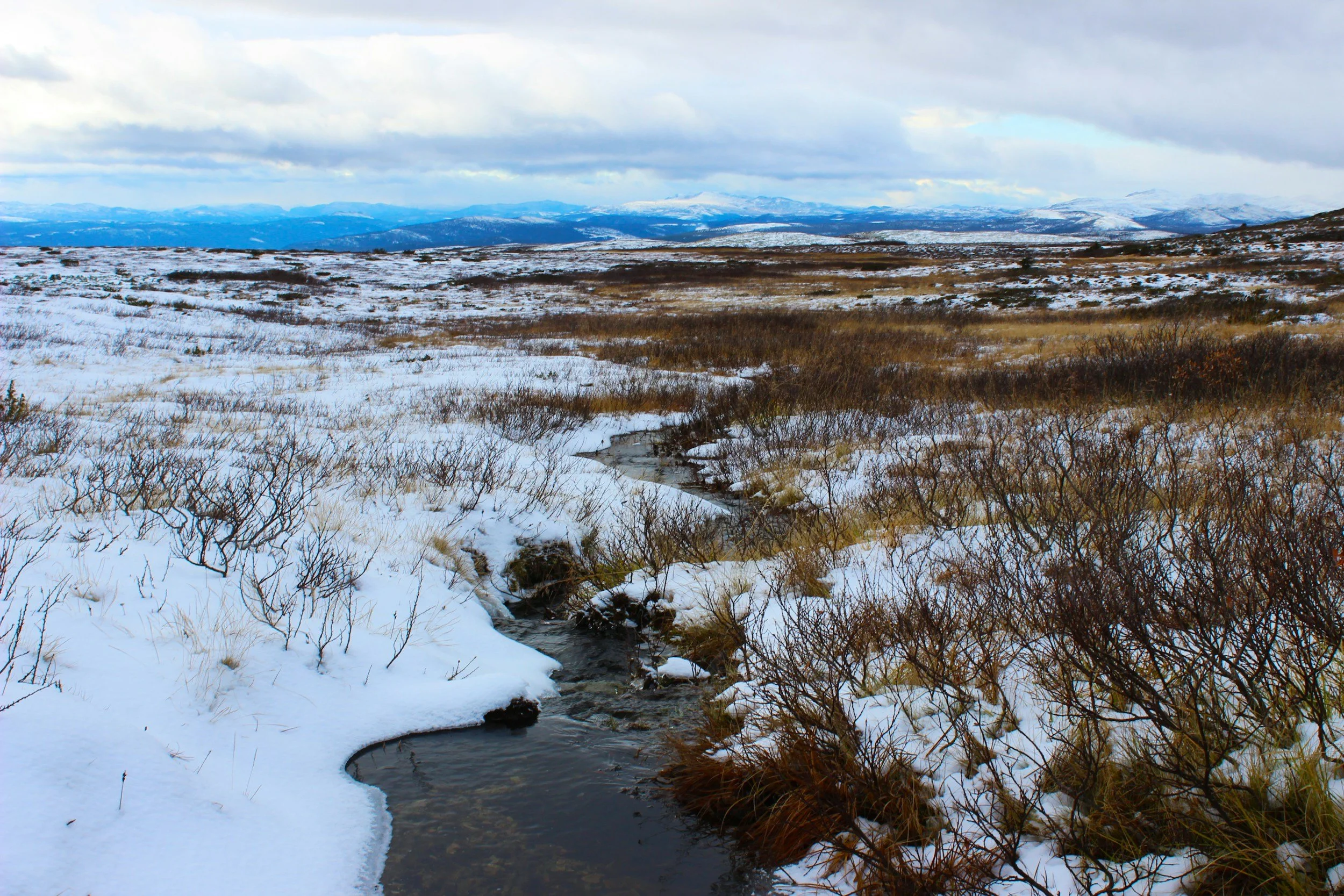
Tundras are sometimes referred to as ‘cold deserts’ due to their low rainfall, but their year-round freezing temperatures don’t allow water to evaporate. The soil remains in a near constant state of permafrost. For a few months out of the year, they experience nearly 24 hours of daylight and with brief but rapid growth of low-lying grasses, mosses and plants. This leaves little room for animal diversity as well. Tundras are found at the northernmost coasts of North America and Russia, as well as the southern coasts of Greenland.
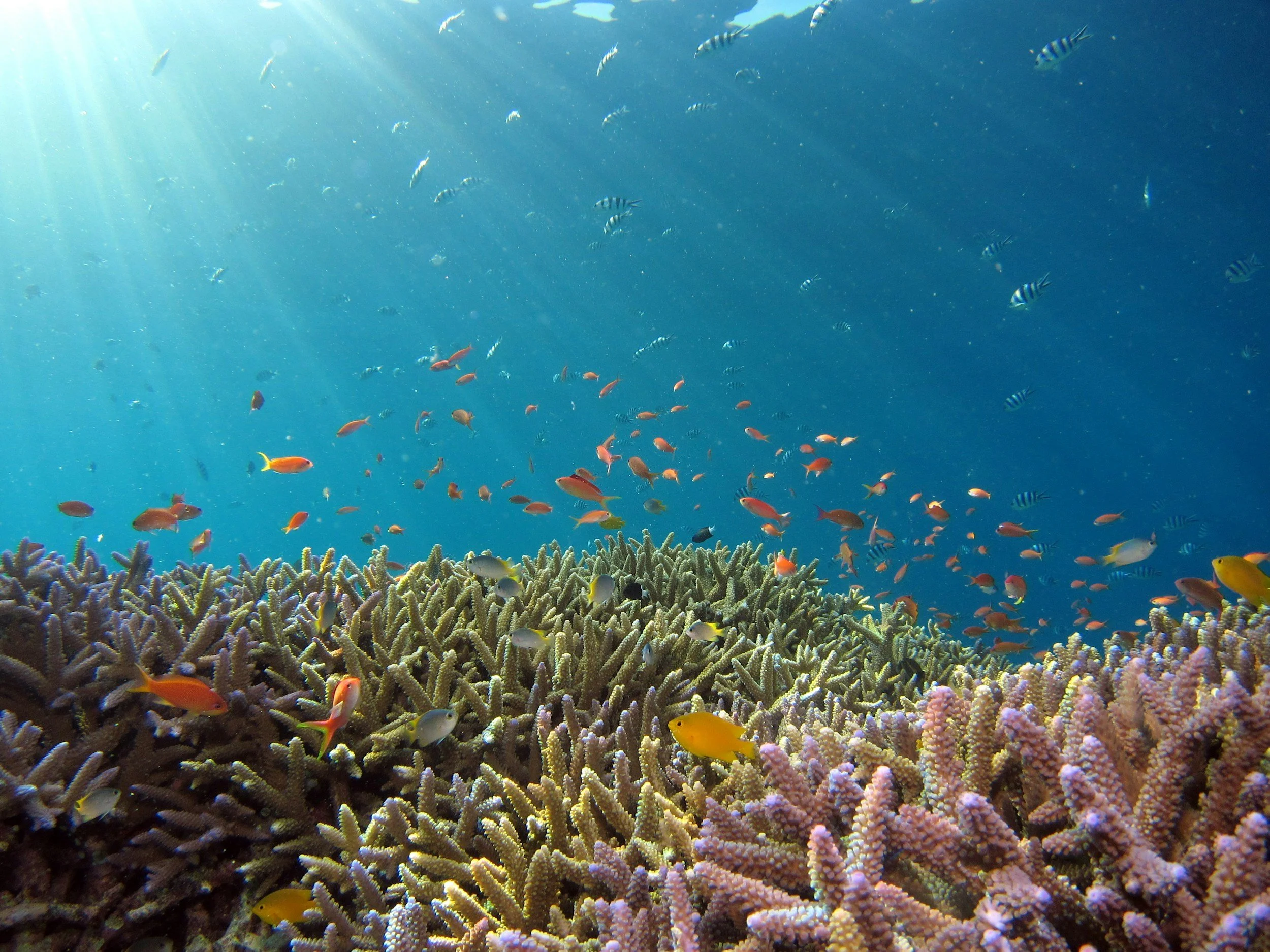
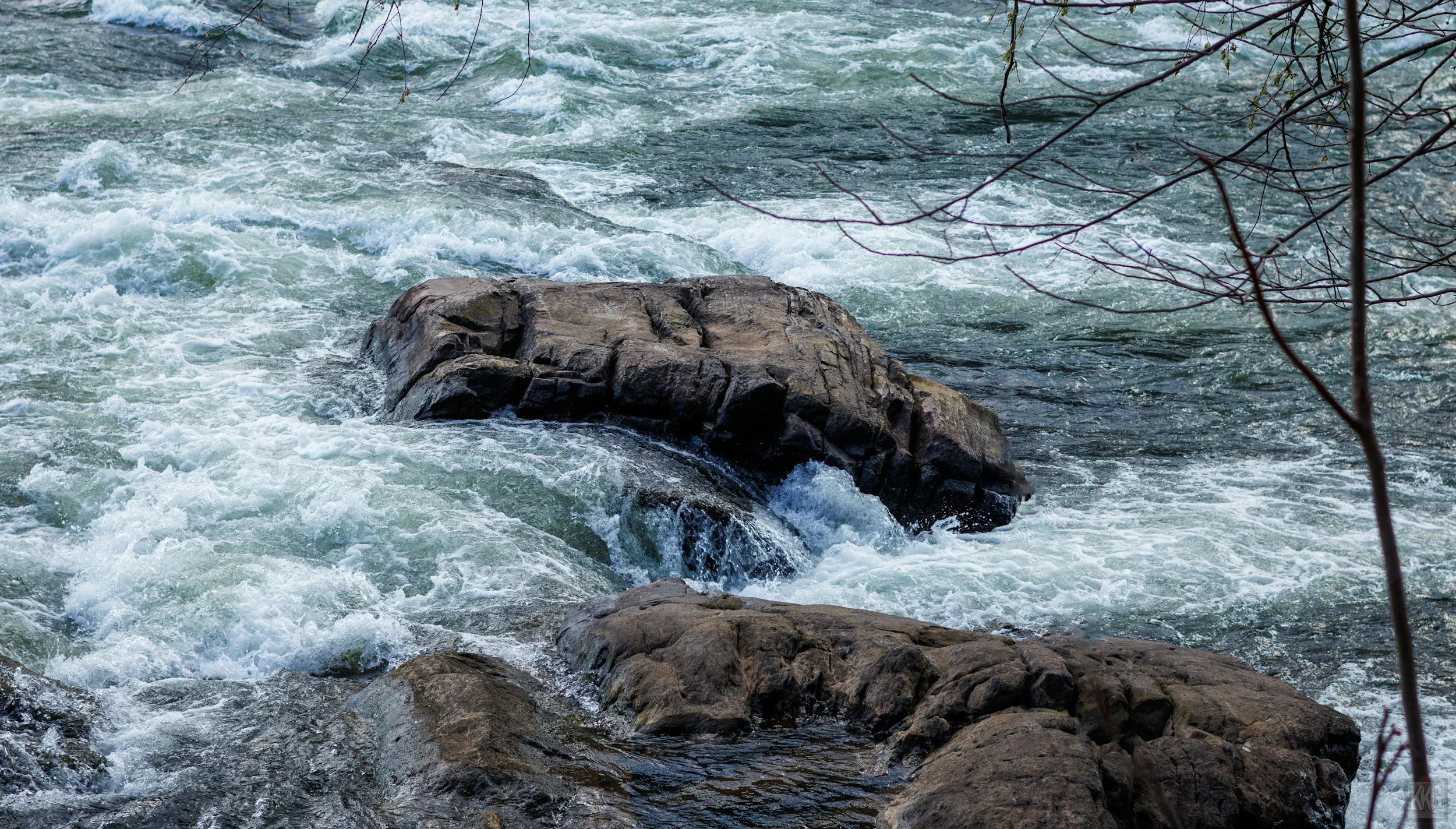
Aquatic biomes cover about 70% of Earth’s surface and are divided between two main groups.
Marine biomes contain saltwater. They make up the vast majority of aquatic biomes, including all the oceans and seas. These are incredibly expansive and diverse, ranging from sunlit coastal waters to the dark depths of the deep ocean. Coral reefs are warm, shallow ecosystems built by colonies of animals called corals. Kelp forests are cool, nutrient-rich waters dominated by large seaweeds and algae which provide shelter. Far from the coasts, the open ocean is bustling with plankton, fish and marine mammals. Towards the ocean floor we find strange creatures living in complete darkness that can endure extreme cold and pressure.
Freshwater biomes are distinguished by their very low salt concentrations and include many sources of drinking water. They make up a small minority of Earth’s aquatic ecosystems but can be broadly divided by how water behaves in them. Flowing water like rivers and streams provide cleaner, more oxygen-rich water that transports nutrients and fish downhill before emptying into a larger body of water. Standing water like lakes and ponds allow nutrients to settle and foster aquatic plant and algae growth as well as provide stable habitats for fish, amphibians and insects. Wetlands like marshes, swamps and bogs are more complex ecosystems than simple ponds, supporting specialized water-tolerant vegetation and saturated soils.
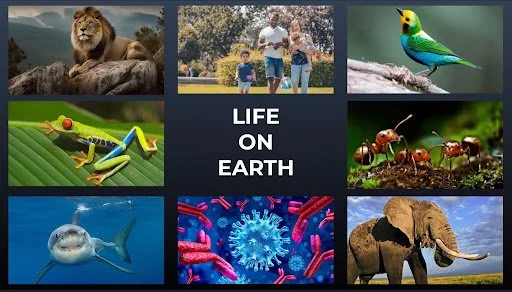
Finally, returning to what makes Earth truly unique: Without contest, the most important thing about Earth is that it is currently the only known planet to host life. More than that, it hosts diverse and complex life across all of its various biomes. Life can be organized into a hierarchy of increasingly specific categories called taxa, such as plants, fungi and bacteria. Some of the most exciting and exotic forms of life are those from the animal kingdom. Animals take forms both big and small, from microscopic organisms to heavy, lumbering beasts much larger than humans. The number of species that currently exist easily ranges in the millions, the vast majority of which are invertebrates like worms, insects and squids.
Life began almost as soon as it was able, at least 3.5 billion years ago (no more than a billion years after Earth formed). While the origins of life remain mysterious, there appear to be particular ingredients to life including: an energy source (heat from sunlight or geothermal vents), particular elements (carbon, hydrogen, oxygen and phosphorus), and lastly, water (which is abundant in liquid form on Earth’s surface). It began as the simplest single-celled organisms, microbes that largely congregated around boiling thermal vents at the ocean floor and absorbed nutrients from their surroundings to sustain their function. Evolution here was a slow crawl even in geological time. It was about 1.6 billion years ago that the first evidence of simple multicellular life appeared, which we now know developed independently multiple times to preempt several branches of life. This life was fundamentally different from its Archaean predecessors in that cells could specialize.
It wasn’t until just 538 million years ago that an intense surge in the diversity of life occurred, known as the Cambrian explosion. It was here that most of the major animal groups we know today first appear in the fossil record.
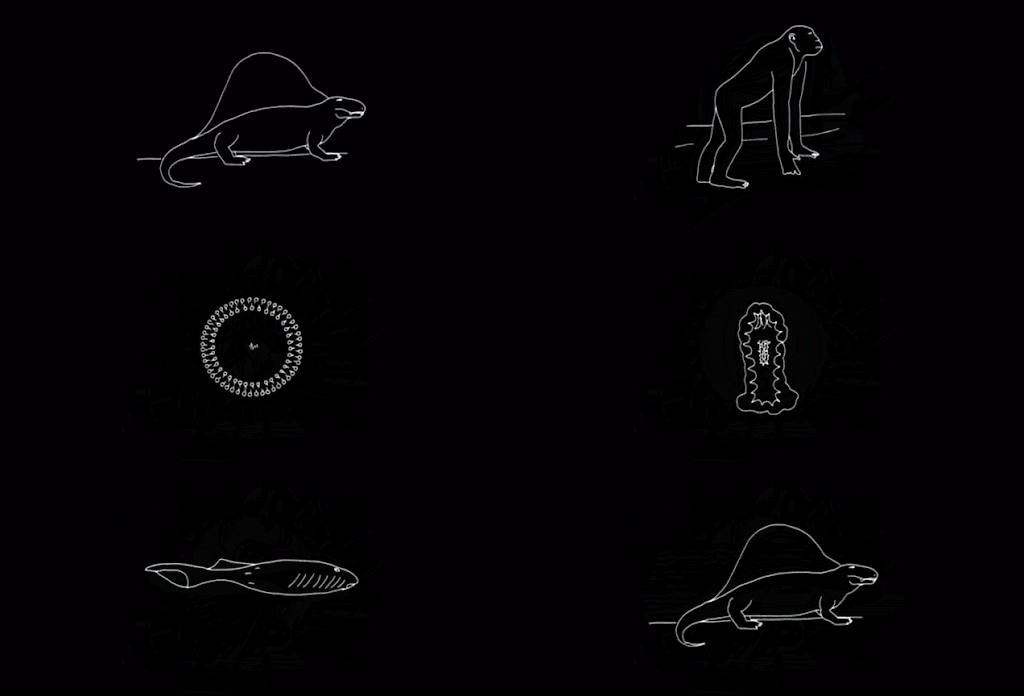
The mechanism by which life on Earth became more complex and diverse is that of evolution. Each living organism is shaped by a unique genetic makeup that influences many of the traits that make it what it is. These genes get passed on to its offspring, often imperfectly so, and reshuffled with those of its mate. This combination of genes, along with occasional mutations, creates a creature that is different from its parents, if only subtly. But small changes can accumulate over time to produce big changes. At different rates, descendants of an organism can diverge from their ancestor in either form or behavior, but often both.
One of the most important mechanisms of evolution is natural selection. This describes the process by which change over time affects an organism’s ability to survive in a particular environment. This change can be in the creature itself or a change in the environment. Perhaps the creature develops thicker, stronger digits at the end of its limbs, grows colorful feathers, or develops a vulnerability to a particular disease. Perhaps the environment gets hotter, a developing mountain range separates one population from another, or a new predator or competitor enters the ecosystem. If a trait is advantageous, the organism is more likely to thrive and reproduce, and its numbers will grow. If a trait is disadvantageous, the organism is less likely to survive and its numbers will dwindle.
What ultimately matters is reproductive success: individuals that leave more surviving offspring tend to contribute more of their genes to future generations. It should also be understood that mutations do not arise with the express purpose of adapting to a particular environment. They just are what they are and the environment acts as a filter for which ones better facilitate reproduction. As long as a new trait doesn’t interfere with that basic principle, it is possible for the trait to sustain, even if it is redundant. On a large enough time scale (usually hundreds of thousands to millions of years), these small incremental changes lead to the extinction of some species who can’t keep pace with the changing world around them and the preservation of others who can, often with some populations gradually branching off into a completely new species altogether. This is known as speciation.
Periodically throughout Earth’s history, there have been mass extinction events that saw a significant number of species disappear forever in a geologically short amount of time. This would often be triggered by a sharp change to the planet’s climate such as prolonged volcanism that many organisms could not adapt to or some cataclysmic event such as the meteor which wiped out the non-avian dinosaurs 66 million years ago. Scientists estimate that 99% of all species that have ever existed on Earth are now extinct.
Many scientists today believe that we are currently undergoing a mass extinction event brought on by the domination of Earth by one species: humanity.
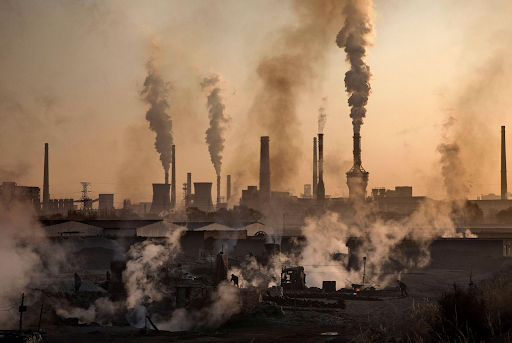
Humanity has been engaged in heavy industry for only a few hundred years. These advancements in technology have transformed our lives in countless positive ways, making us healthier, safer, more connected and capable than ever before. It’s even allowed us to become the first species on the planet to explore space! However, everything always comes at a cost.
The burning of fossil fuels to power machines has become integral to modern civilization. A side effect of this industrialization has been the exponential increase of carbon dioxide pumped into Earth’s atmosphere. To be clear, carbon dioxide at the right levels has an important role in the stability of the atmosphere and has numerous sources of natural emission. Without its presence, the Earth’s temperature would drop to below freezing. That being said, that delicate balance is being disrupted by the excess production of carbon dioxide by humans. Carbon dioxide is a greenhouse gas that is effective at trapping heat from the Sun that enters Earth’s atmosphere where much of it would otherwise be reflected off the surface and back into space. A rapid rise in the average global temperature has been measured over several decades (average rate of 0.17°F per decade since 1901) and has been linked to the effects of the mass burning of fossil fuels.
Closer look: To see an extreme case of a runaway greenhouse effect, we need only look at Earth’s neighboring planet, Venus, which is shrouded in a very thick atmosphere made up of 98% carbon dioxide. This traps the closer Sun’s heat, making the planet hot enough to melt lead. But Earth doesn’t need to get this bad before we humans need to start worrying about it.
Over time, the consequences of this will be dire for future generations: dangerous heat waves, intense forest fires and storms, food shortages, mass migration crises, extinction of animals, melting of the polar ice caps, rising sea levels, acidification of the oceans. Remember: We don’t only want to preserve lives, but we want to preserve lives worth living, free of the pain and hardship that climate change threatens us with. Actions to curb these destabilizing effects must be swift and decisive. These solutions should begin with the broad adoption and development of renewable energies (solar, wind, geothermal, etc.) and nuclear energy in the production of electricity and heat, transportation and construction.
Space colonization is not reality yet.
We only have one Earth.
We must preserve and protect it.
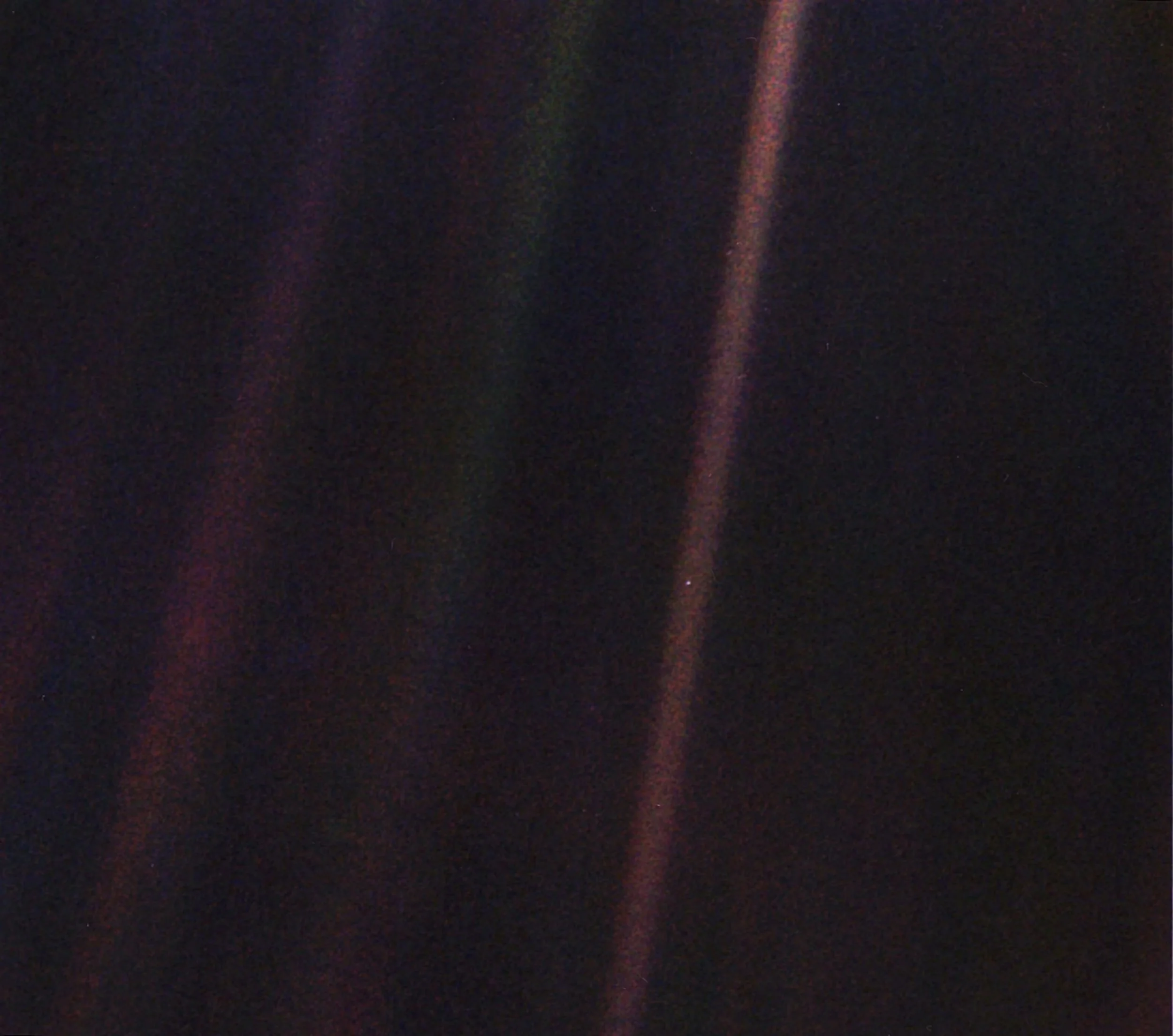
In 1980, the Voyager 1 space probe performed a flyby of Saturn, the last leg of its primary mission. While its twin went on to visit Uranus and Neptune, Voyager 1 was diverted onto a trajectory that broke from the orbital plane and carried it toward interstellar space. In 1990, Voyager 1 reached over 6 billion km (40 AU) from the Sun, about the average distance of Pluto. At this point, the legendary science communicator Carl Sagan had convinced NASA to turn the space probe around to capture one last family portrait. The image shown here is part of the broader mosaic produced and remains arguably one the most important in all of human history.
No words can appropriately capture the majesty of this image, titled the “Pale Blue Dot,” as what Carl Sagan himself said beginning with: “Look again at that dot. That’s here. That’s home. That’s us.” You should check out the entire monologue for a sobering reminder of our place on this “mote of dust suspended in a sunbeam.”
THE MOON
Distance from the Earth: 384,400 km
Diameter: 3,475 km
Rotation period: 27.3 days
Orbital period: 29.5 days
The Moon is Earth’s only natural satellite and the innermost moon in the solar system, being that Mercury and Venus don’t have any. It is also the fifth-largest moon in the solar system behind Jupiter’s Ganymede, Callisto, and Io, as well as Saturn’s Titan. At about a quarter of Earth’s diameter, the Moon is the largest in the solar system relative to its planet’s size. The Moon orbits farther from Earth than its large appearance in our sky suggests. It is actually 30 Earths away. You could fit every other planet side by side between them. The width of Saturn’s rings would only cover two-thirds the distance. If the Earth were the size of a standard globe, the Moon would be about the size of a baseball orbiting 30 feet away.
Ever-present in our sky for as long as we have existed, the Moon is undoubtedly the third most important celestial object to humanity, behind the Earth and Sun. It is often thought of as the Sun’s counterpart, as they are the two largest and brightest objects in our sky. If the Sun defines the day, the Moon surely owns the night, right? Well, half the time it does. A surprising number of people don’t know that the Moon is visible in the daytime just as often as it is visible at night. It’s just harder to see because more of its shadow side is visible on the day side, while the Sun’s radiance more effectively obscures the Moon behind the opaque atmosphere. The reason we see the Moon sometimes in the day and sometimes at night is because it orbits around the Earth. In fact, this is what makes something a satellite: orbiting a planet. If the Moon orbited the Sun, it would be considered a planet just like Earth.
We should consider ourselves lucky that it stuck around. Can you imagine what it would have been like if the Moon never existed? It has shaped the development of every civilization on the planet. The Moon illuminates the dark, drives the tides that circulate nutrients along coasts, serves a timekeeper, and has long aided navigation across the seas.
There are different ideas to explain how the Moon came to be. The most widely accepted hypothesis involves a Mars-sized object called Theia that collided with Earth early in its formation, creating a ring of debris that eventually coalesced into what is now the Moon. It is also suggested that this collision could have caused Earth’s 23.5° axial tilt.
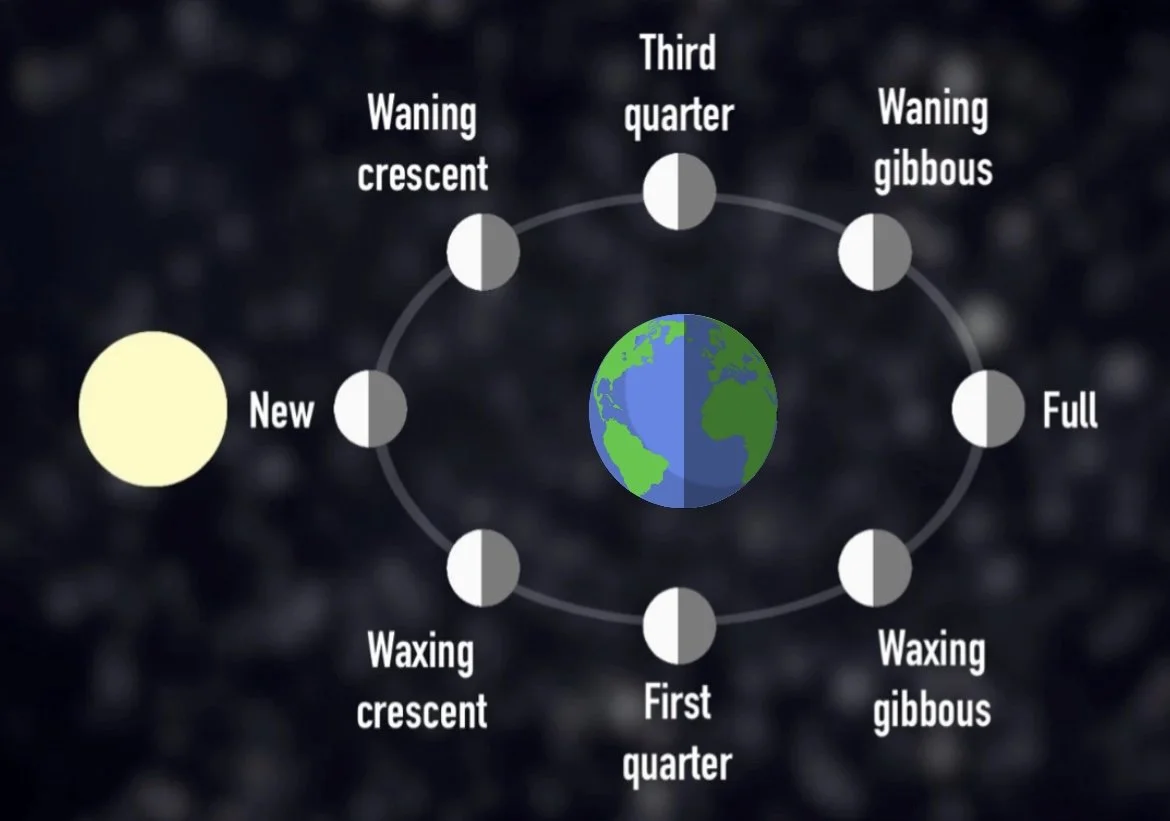
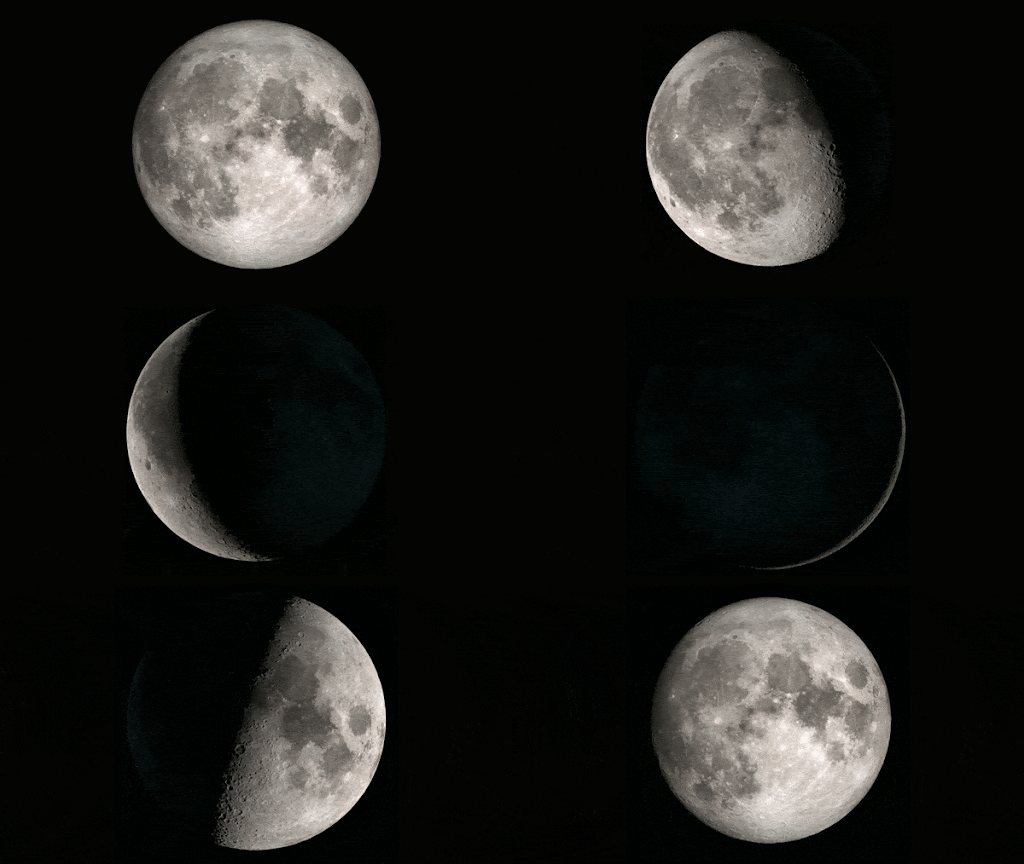
As the Moon moves counterclockwise around Earth, its angle relative to the Sun changes, and therefore so does how much of its dark side we see (not to be confused with the far side). These shifting shadows across the Moon are known as lunar phases. They are as follows:
New moon - ‘new’ marks the beginning of a new lunar cycle as the moon passes the Sun in the daytime sky
Waxing crescent - ‘waxing’ refers to the moon ‘growing’ into a crescent shape
First quarter - the evening moon is half lit, marking the first quarter of its cycle
Waxing gibbous - ‘gibbous’ refers to a hump as the moon grows to a convex shape
Full moon - the moon is opposite the Sun and fully illuminated
Waning gibbous - ‘waning’ refers to the moon diminishing in light
Third quarter - the morning moon is half lit, marking the third quarter of its cycle
Waning crescent - the moon diminishes to a crescent shape before returning to a new moon once more
It takes just under a week to go from one major phase to the next (ex. first quarter to full moon) and just under a month to complete a full lunar cycle. Ancient people studied these cycles to help develop sophisticated calendars. This allowed communities to plan their harvests and mark holidays.
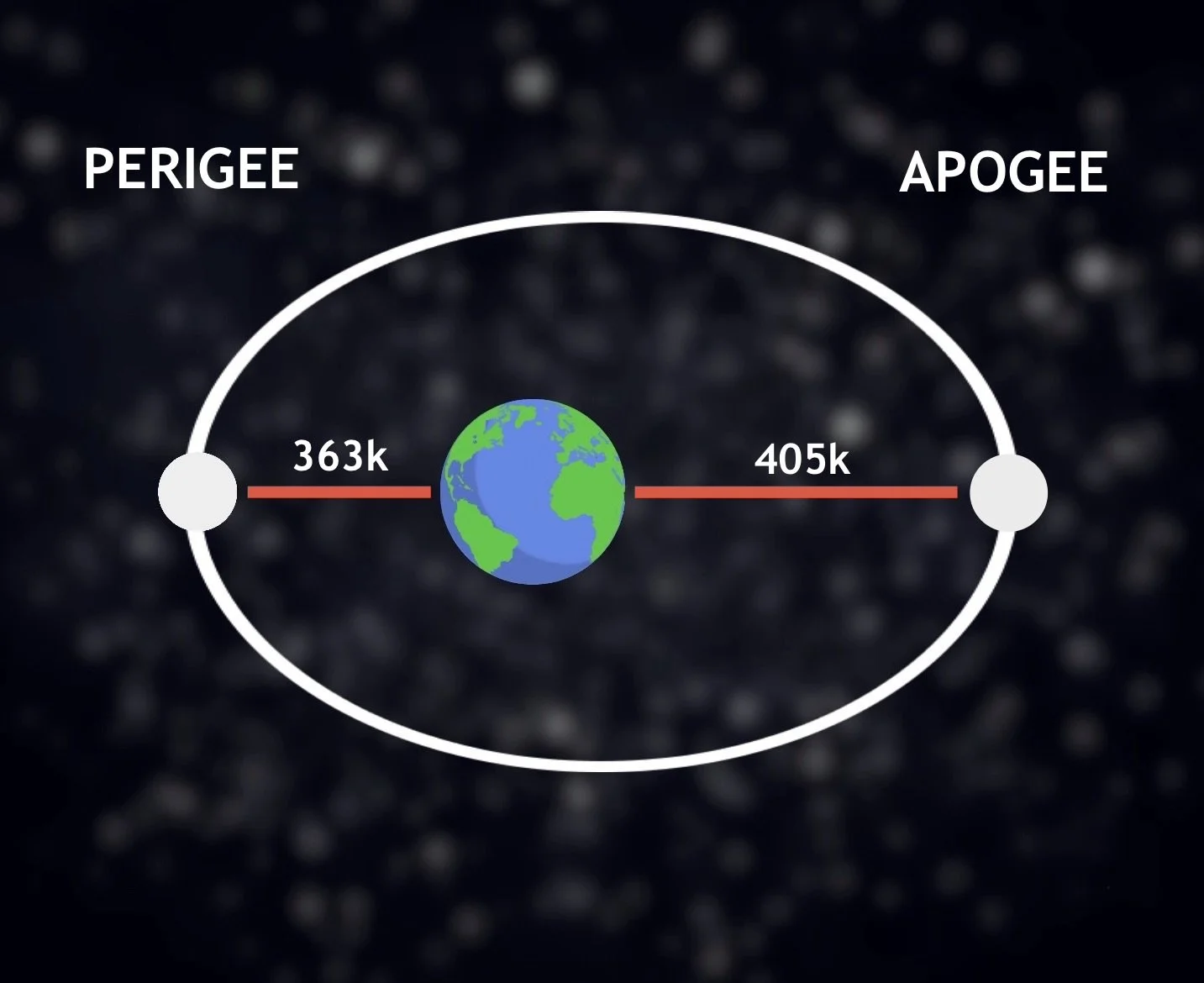
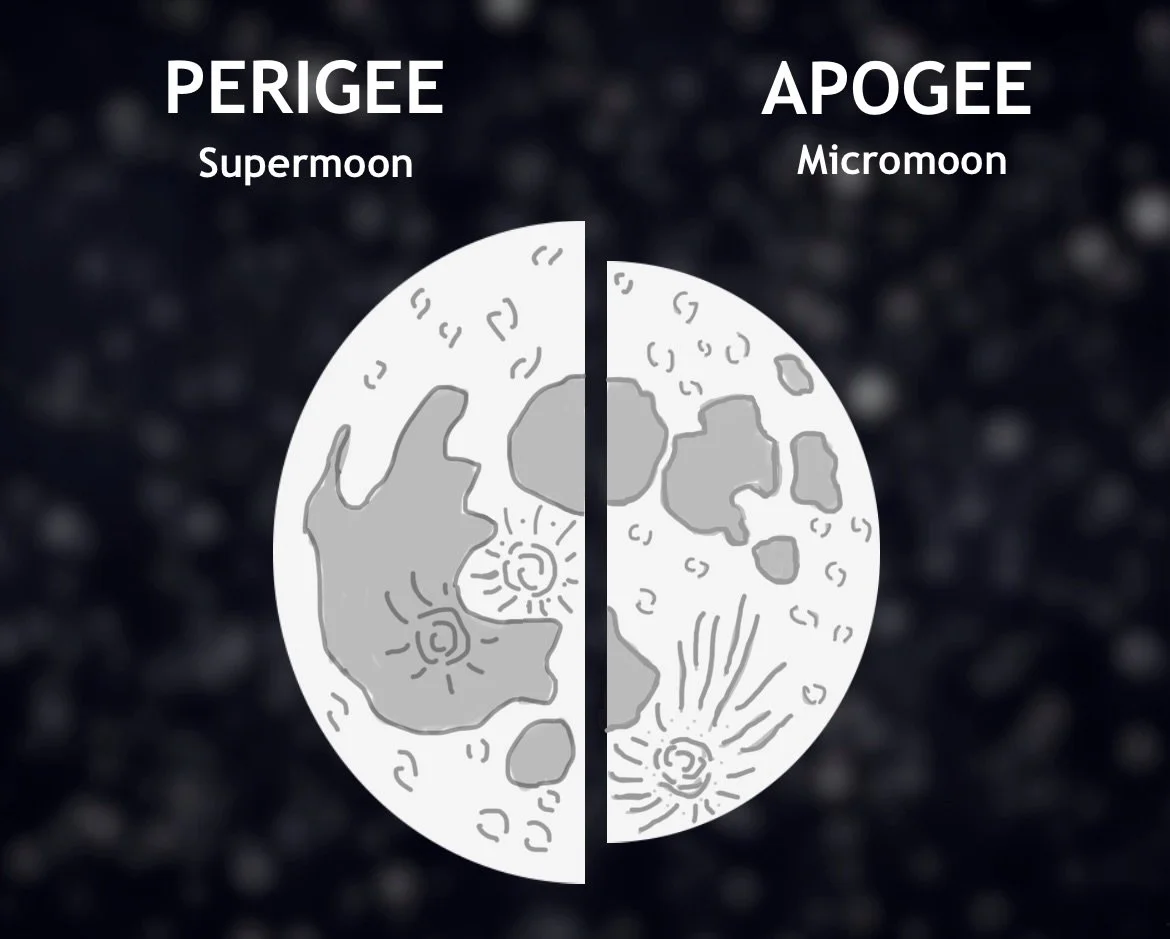
Just like the planets, the Moon has an elliptical orbit, meaning it is not perfectly circular. Sometimes the moon will be full while also being at perigee (closest point to the Earth). This is called a supermoon, and it is 14% larger than when the moon is at apogee (furthest point from the Earth), which is called a micromoon.

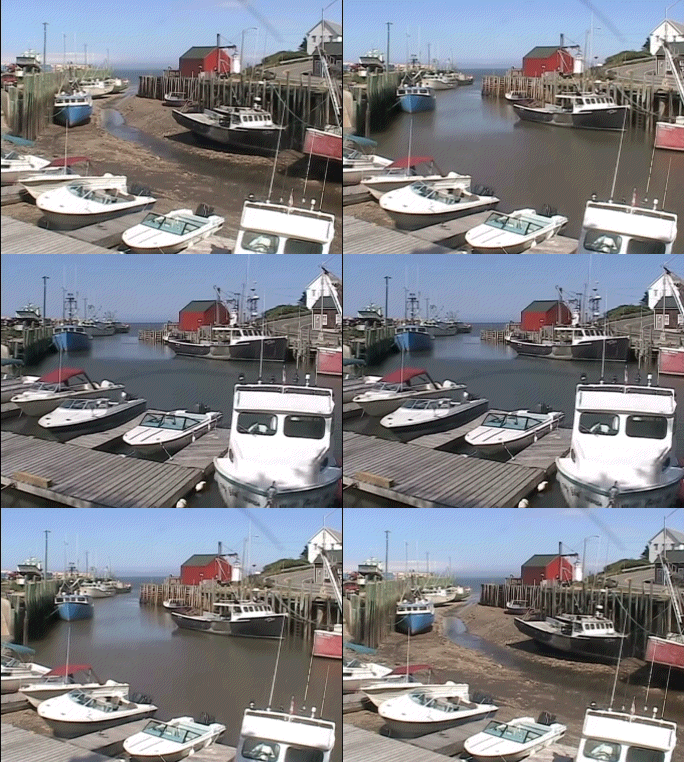
Gravity weakens with distance which means the Moon’s gravity pulls on the near side of Earth harder than the far side, stretching it. This is called a tidal force and all objects with gravity produce it to varying degrees. The tides are the cause of the twice-a-day rising and falling of water levels in the Earth’s oceans, seas and rivers (shown above).
Additionally, because the relaxing of the tides is not immediate, the Earth’s rotation puts its tidal bulge slightly ahead of the moon. Its offset mass actually gravitationally yanks the Moon forward somewhat, causing the latter’s orbit to expand outward. The Moon drifts about 4 cm from Earth every year. Likewise, the Moon’s mass pulls back on the Earth’s tidal bulge, slowing the planet’s rotation and making the days longer. The day has been getting longer by about 0.0016 seconds each century.
The Earth also exerts tidal forces back on the Moon.
You’ll notice something about the Moon that we don’t see with any planets. The Moon always shows the same face to us here on Earth. Don’t be fooled. The Moon is rotating, but it rotates at the same rate that it orbits the Earth. This is what it means to be tidally locked. As the name suggests, this is the result of tidal forces from the Earth stretching the Moon and then tugging back on the bulges to slow its orbit (check out the gravity primer for a closer look at this phenomenon).
As the Moon changes distance from Earth throughout its orbit, there is a subtle change in its speed. When it’s further from Earth, it’s slower and when it’s closer to Earth, it’s faster. This causes its tidally locked rotation to pull ahead and fall behind in a cyclical nature. This perceived swaying of the moon as it pulls toward and away from the Earth is called libration (shown at the beginning of the Moon section).
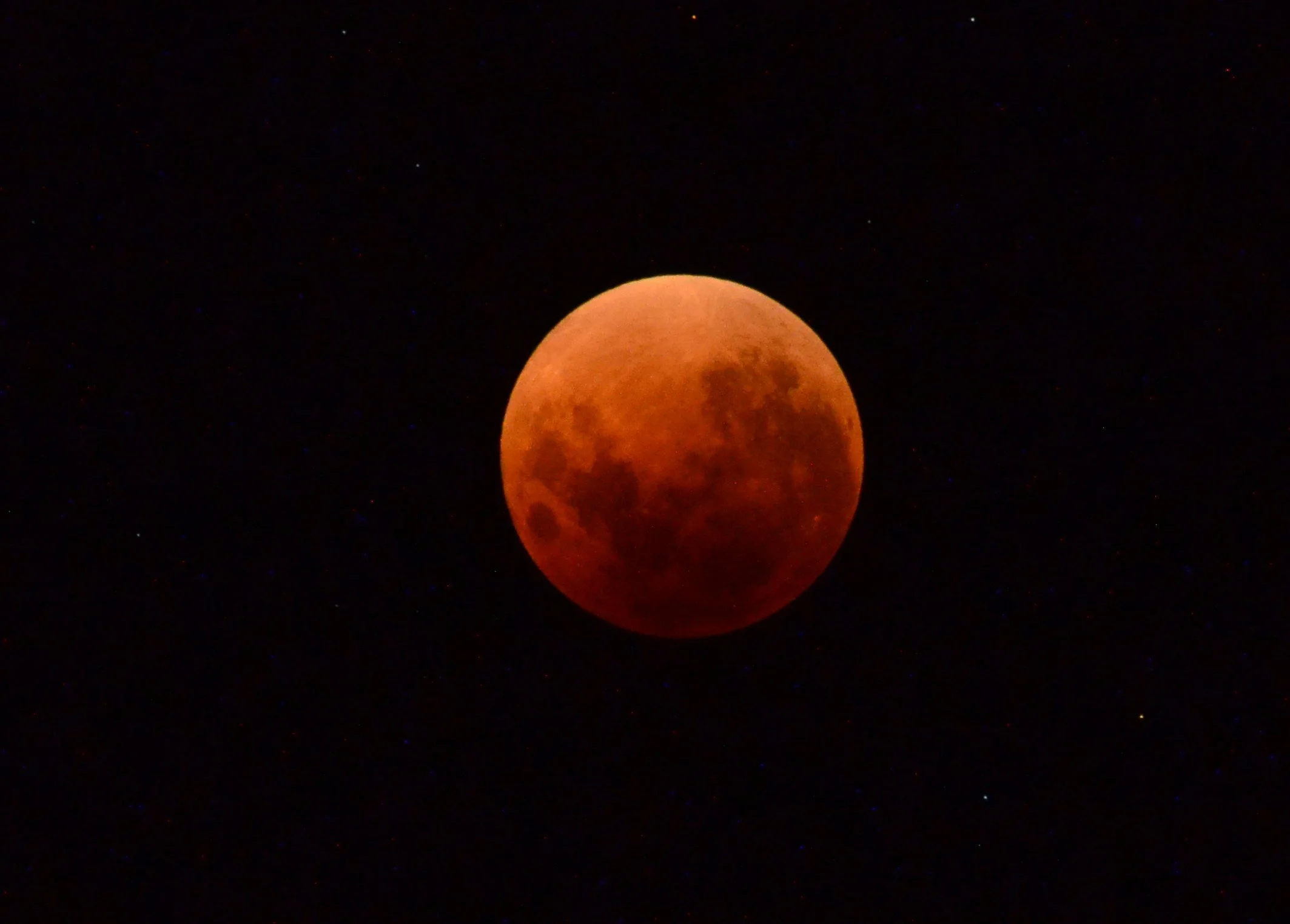
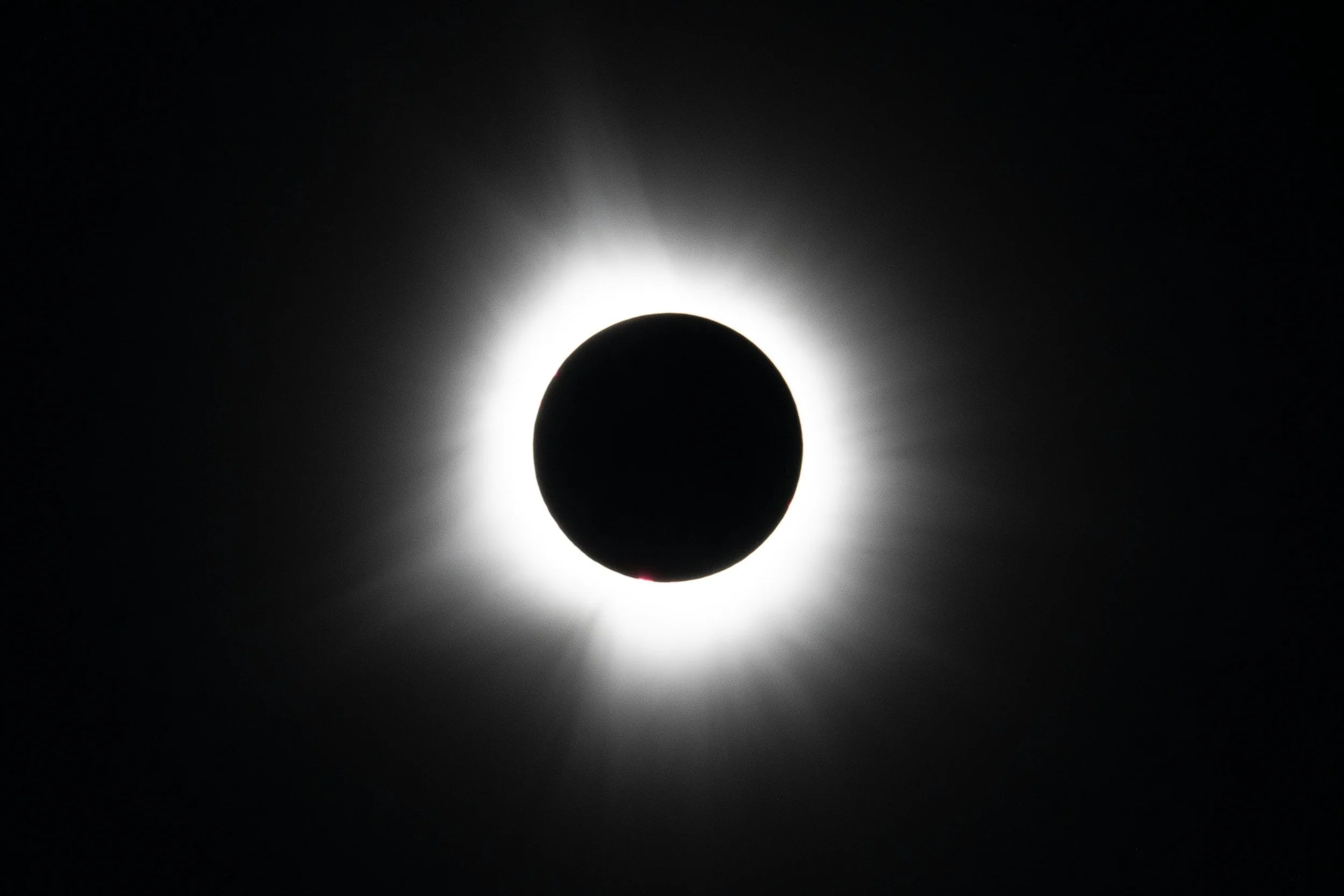
The moon has an incline (or tilt) to its orbit which means it often passes over or under the Sun during its new moon phase. Periodically, the Moon, Earth and Sun will line up just right and produce one of two very unique views. While they are usually invisible to us against the empty blackness of space, the Earth and Moon are always casting a shadow from the sunlight.
A lunar eclipse occurs when the Moon crosses into Earth’s shadow. It can be either a partial or total eclipse. As the edge of the Earth’s shadow (aka the penumbra) passes over, it turns the Moon red because the sunlight is passing through our atmosphere and the blue light gets scattered. During a total eclipse, the moon will pass into the center of Earth’s shadow (aka the umbra) and will turn to a dark brown color. Seeing Earth’s curved shadow cross the moon was one of the first big clues to ancient peoples that the world was round.
A solar eclipse occurs when the Moon’s shadow crosses over the Earth. In a stunning coincidence, we live in a time when the Moon and Sun are about the same size in Earth’s sky. Unlike lunar eclipses, which can be viewed from anywhere on the night side of Earth, solar eclipses can only be viewed from a relatively small region, often smaller than 150 miles wide. A total solar eclipse blocks out enough sunlight that allows us to the see the Sun’s elusive outer atmosphere, called the corona. Sometimes, an eclipse will occur when the moon is closer to apogee making the moon marginally smaller than the Sun, creating a ring of bright light.
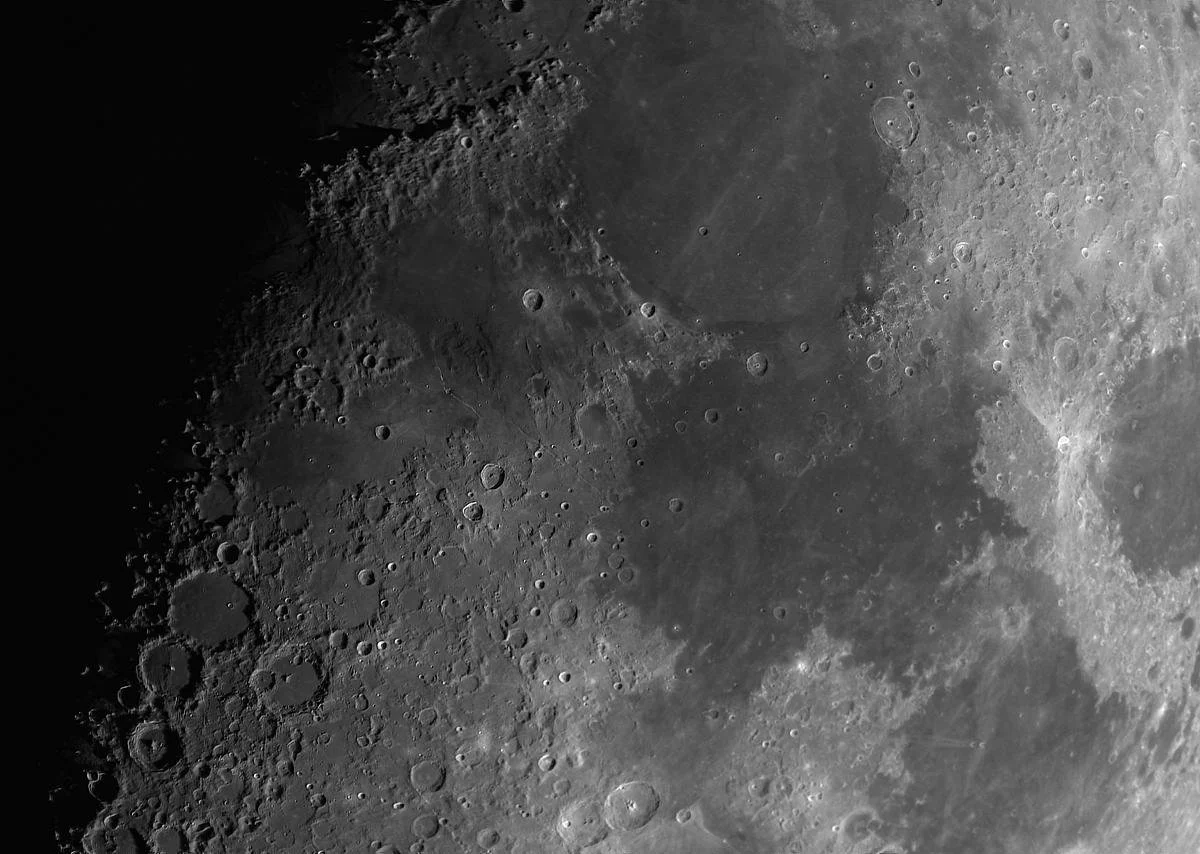
Even without a telescope, one can see that the lunar surface is separated into darker regions, called maria, and brighter regions, called highlands.
The maria, which originate from the Latin word ‘mare’ (meaning ‘sea’), are regions of fine-grained basaltic rock that cover about a third of the Moon’s near side. These are rich in absorbing metals like iron, which makes it darker. The pattern formed by these darker regions make up the fabled “man on the moon” many people see across the surface. They are the result of prolonged volcanic activity that flooded the lunar surface with lava which cooled and solidified into the maria we see today. This covered up all the impact craters in those regions. As a result, maria represent younger and smoother parts of the Moon’s geology. As prominent as maria are on the near side of the Moon, we have found it to be much less present on the far side (only 1%). This is because the lunar crust on that side is twice as thick, obstructing molten lava from breaking through.
The highlands are rugged, mountainous regions of coarse-grained anorthositic rock. These are rich in reflective minerals, which makes the Moon look much whiter than it actually is. The highlands are littered with intensive cratering that has accumulated since the Late Heavy Bombardment in the early solar system. Impact craters range wildly in diameter from just a few meters to hundreds of kilometers. Some craters even have smaller, younger craters overlapping them. One of the Moon’s most eye-catching features is Tycho crater, famous for the surrounding bright streaks of ejected material spanning thousands of kilometers that resemble spokes on a wheel.
The lunar surface is a far cry from what we are used to on Earth. It is bone dry and has no real atmosphere to speak of. This leaves the surface open to the full brunt of meteoroid impacts and solar radiation. The surface is very hot in the daylight, as high as 121°C (250°F). However, the lack of atmosphere circulating the heat leaves the night side at a freezing -133°C (-208°F). It’s like a milder version of Mercury. The Moon only has a sixth of Earth’s gravity. If you weigh 180 lbs. on Earth, you’d weigh only 30 lbs. on the Moon. This also translates to jumping height. If you can jump one foot on Earth, you can jump six feet on the lunar surface.
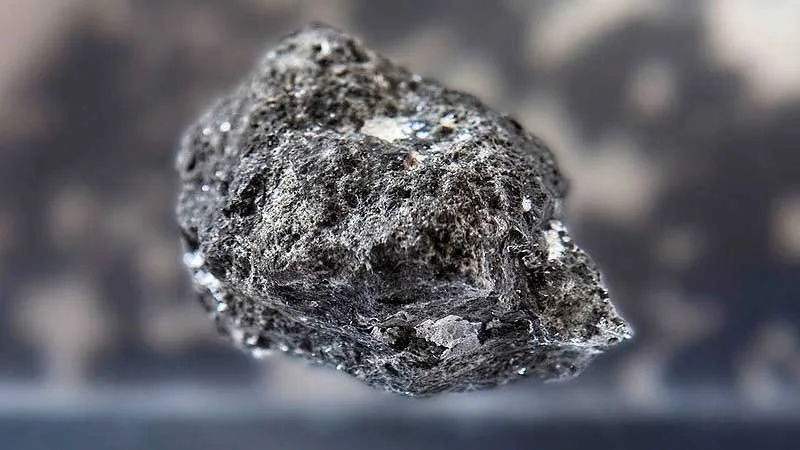
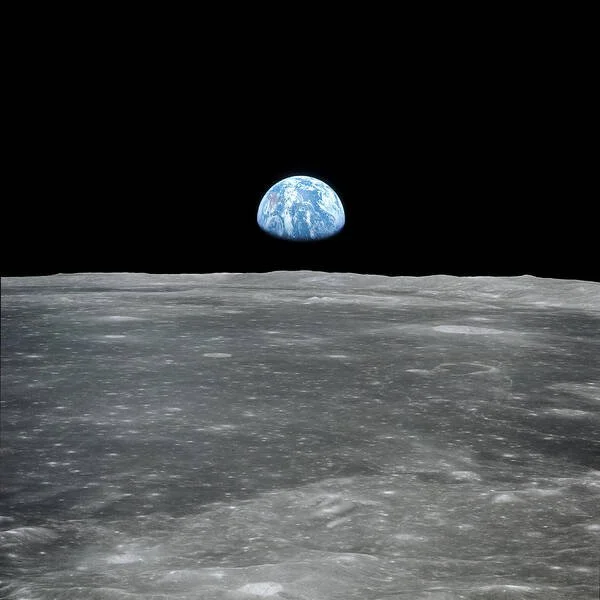
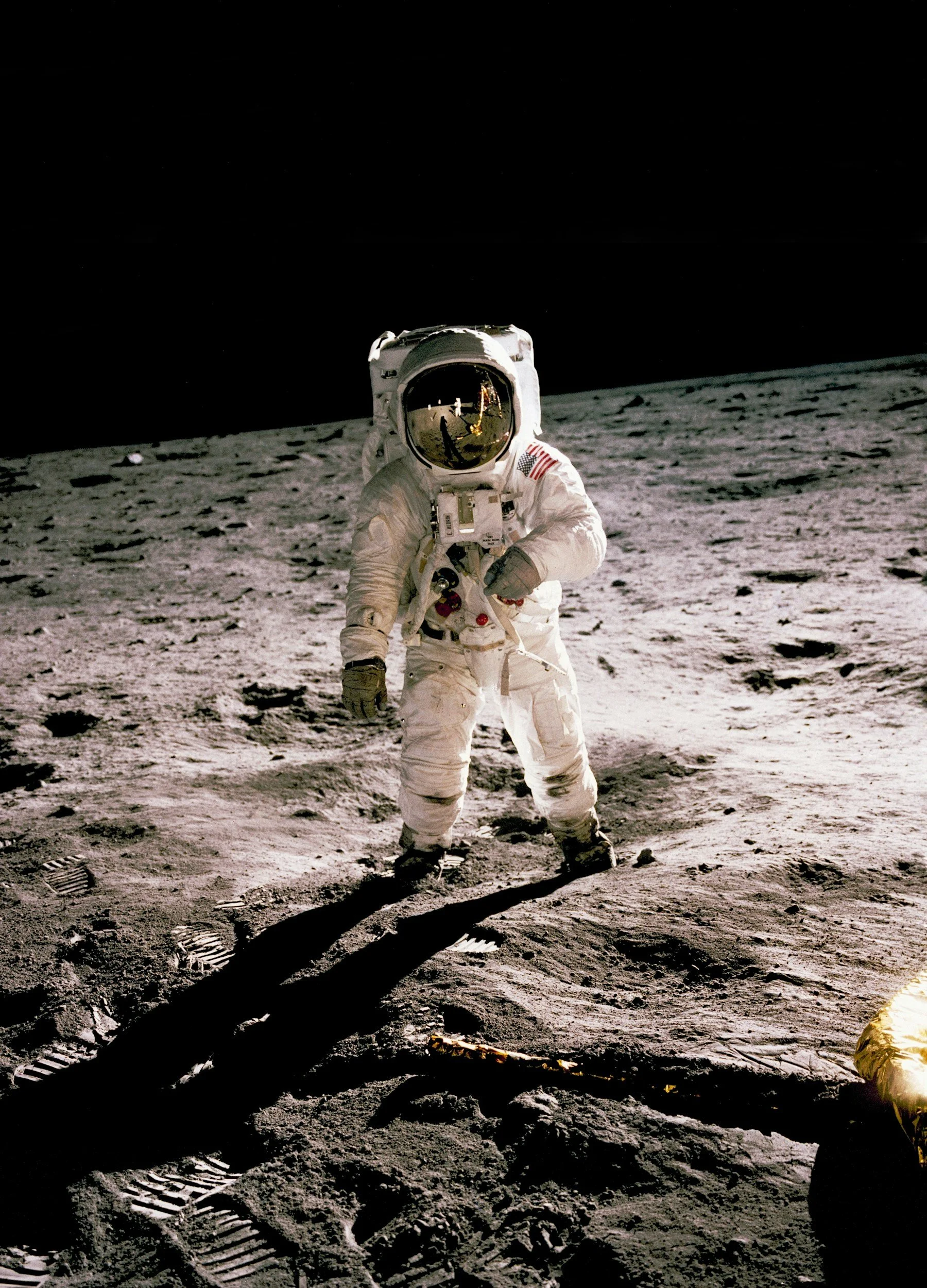
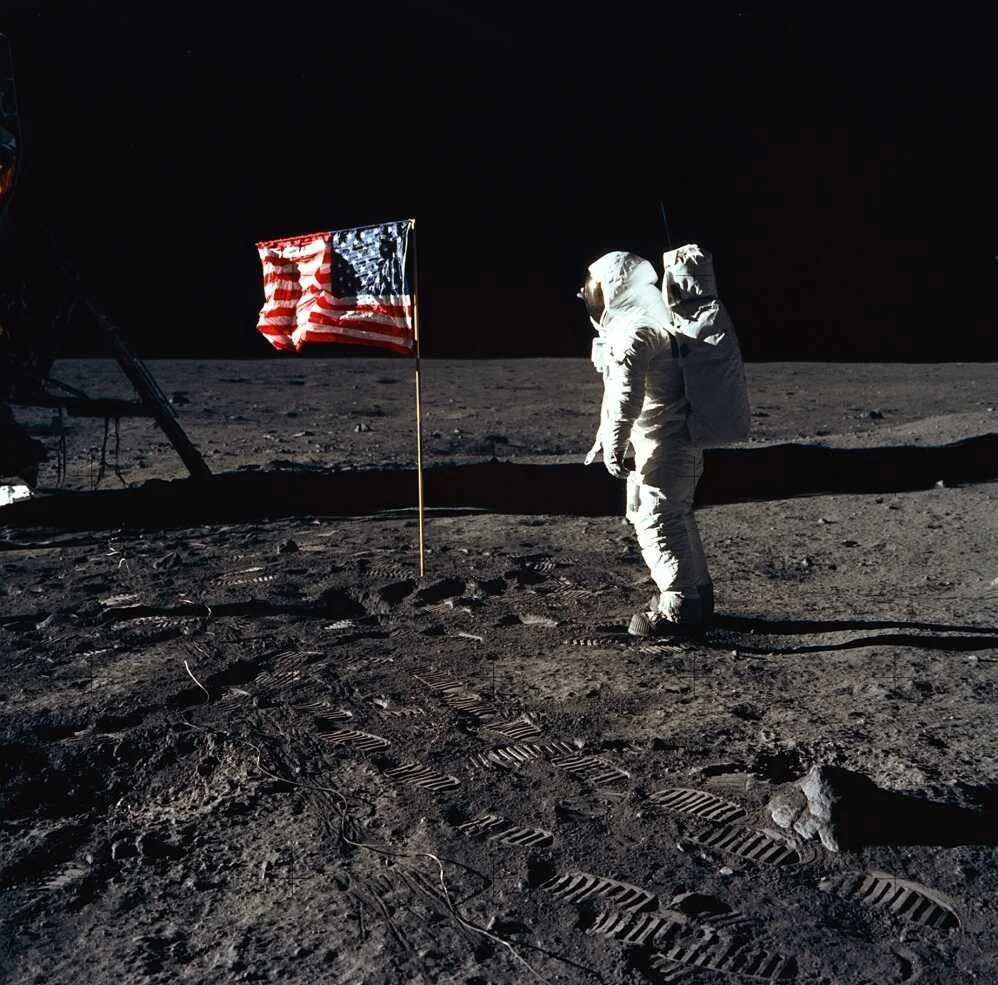
Neil Armstrong and Edwin “Buzz” Aldrin set foot on the Moon on July 20, 1969, as part of NASA’s Apollo 11 mission. It was the first time humans had walked on an astronomical body other than Earth. The landing site is near the center of Mare Tranquillitatis (Sea of Tranquility) on the near side of the Moon. To this day, only twelve humans in total have walked on the Moon and the last one to do it was in 1972. With the United States doing victory laps around the Soviet Union, the political will to return waned. Until recently. Renewed interest in the Moon has swelled across numerous nations including Japan, India, Israel, China and Russia. There is particular interest around the Moon’s southern pole where there are deposits of water ice deep within the perpetual shadows of craters. The United States has joined the fray via NASA’s Artemis program, which intends to put humans back on the lunar surface. Ultimately, the goal is to establish a permanent base which will enable a far more ambitious goal: sending humans to Mars.