
Tilting the Ecliptic
by Sam Atkins
If you watch the Sun, Moon and planets rise and set, you may notice they sometimes climb or fall steeply, and other times nearly skim the horizon. This changing angle comes from a subtle bit of celestial geometry of which understanding can help you to predict celestial motions and visibility.
NOTE: Tap or hover over images for captions and credits.
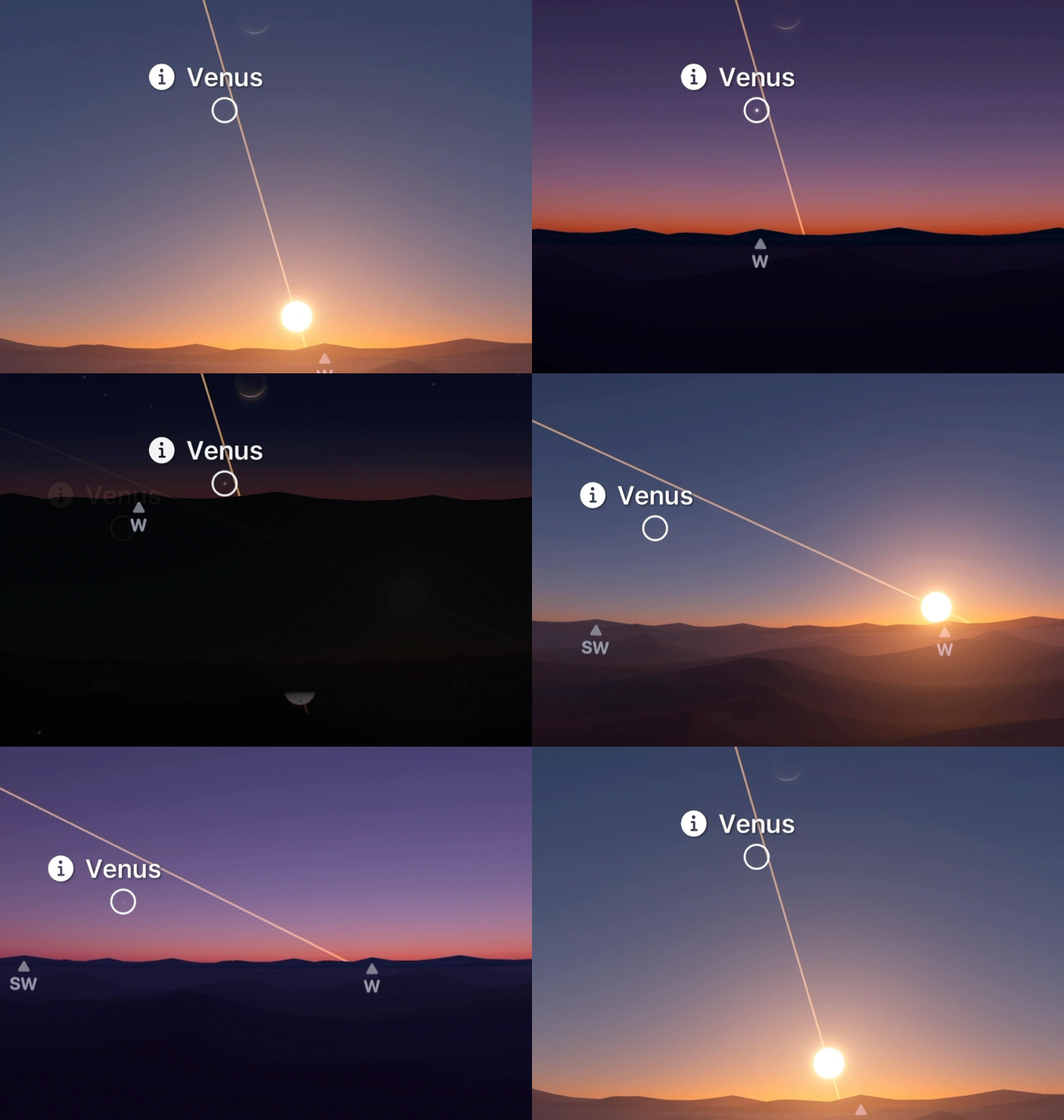
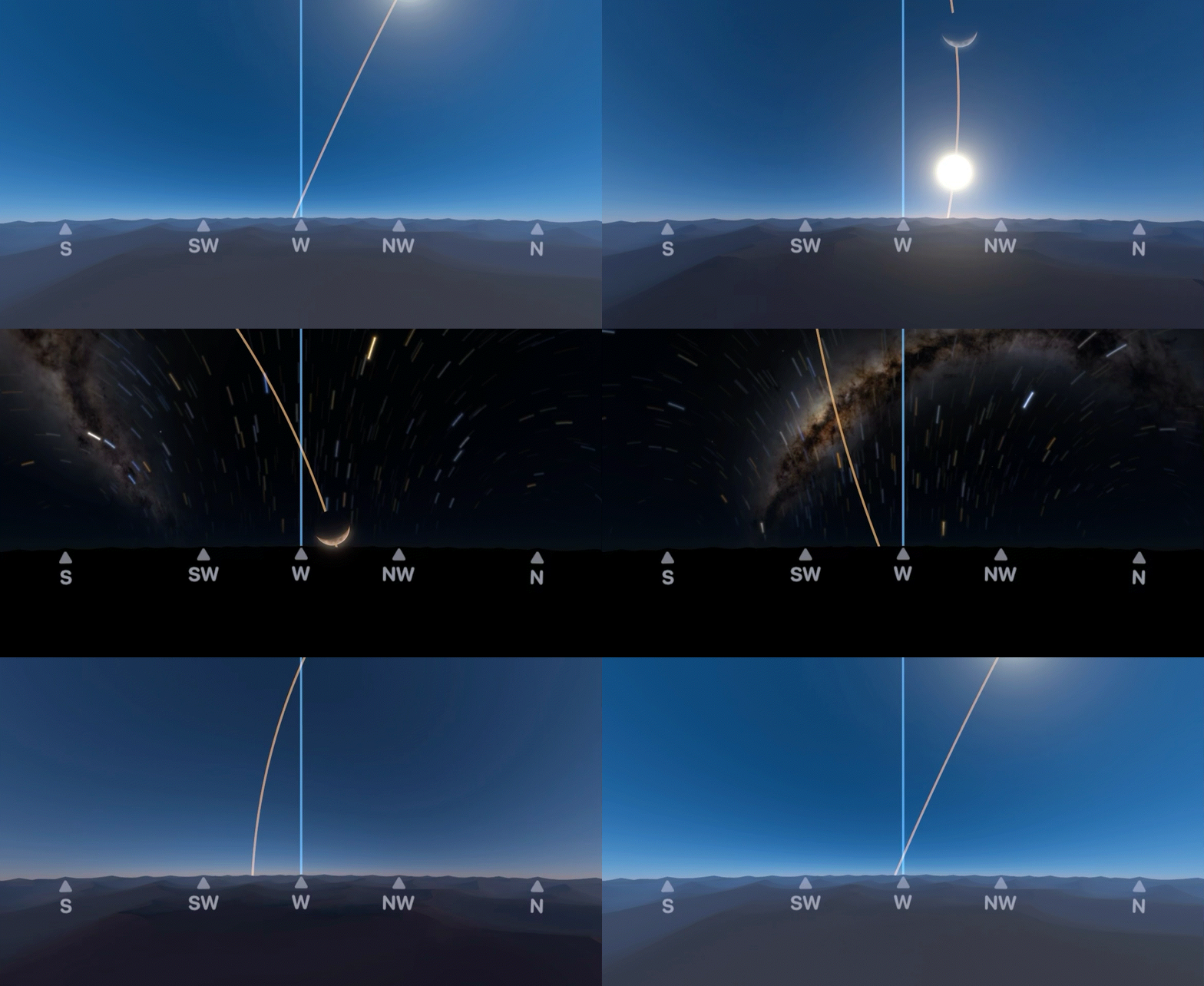
A comparison showing Venus falling at a shallow and steep angle behind the setting Sun. This article will explain when and why this happens. Video credit: Fifth Star Labs (Sky Guide).
To understand what’s happening, we turn to the celestial sphere. This is an imaginary sphere that surrounds the Earth that serves as a representation of the sky as we see it, onto which all stars, planets, and other celestial objects appear to be projected.
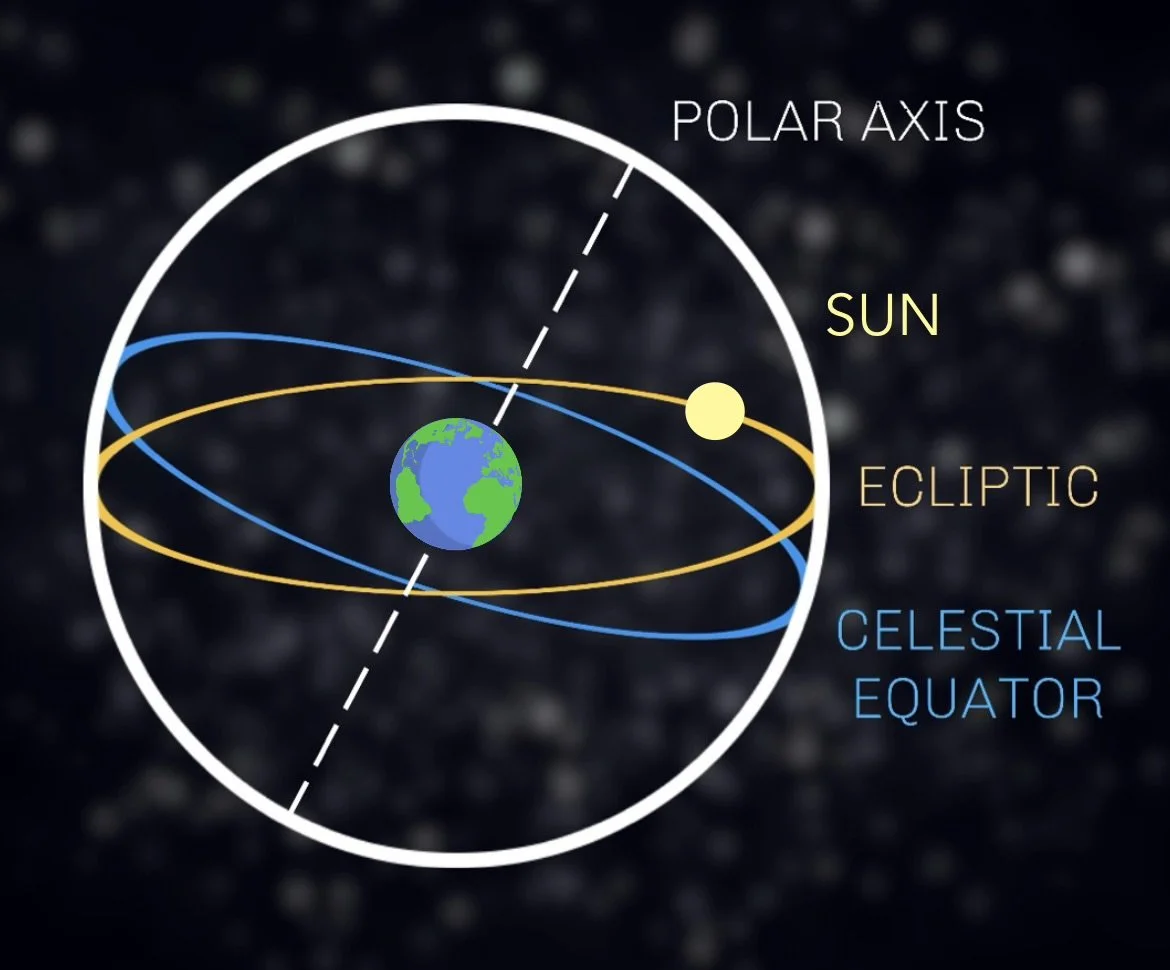
A simple conception of the celestial sphere, without latitudes and longitudes present. The Sun moves along the yellow line throughout the year, representing Earth’s orbit. The Moon and planets follow this line as well, but the incline of their own orbits means they can sway a little above or below the line. Image credit: Sam Atkins (HCAS)
There are two great circles that span the celestial sphere.
The first is the celestial equator, which is simply Earth’s equator projected outward into space. This line is perpendicular to the Earth’s axis of rotation, dividing the celestial sphere into the northern and southern hemisphere.
The second is the ecliptic, the apparent path the Sun traces across the background stars over the course of a year. What it actually represents is the Earth’s orbital plane around the Sun. Because the planets orbit on nearly the same plane as the Earth, they all stay pretty close to this line.
These two circles are tilted relative to each other by about 23.5°, directly reflecting Earth’s axial tilt with respect to its orbital plane. They intersect at two opposite points, marking the equinoxes. They reach maximum divergence at two opposite points, marking the solstices. The Sun’s path along the ecliptic through these four points marks the beginning of the four astronomical seasons.
The entire celestial sphere spins around the Earth, representing Earth’s rotation, but you’ll only ever see half of it at a time from any given point on the planet.
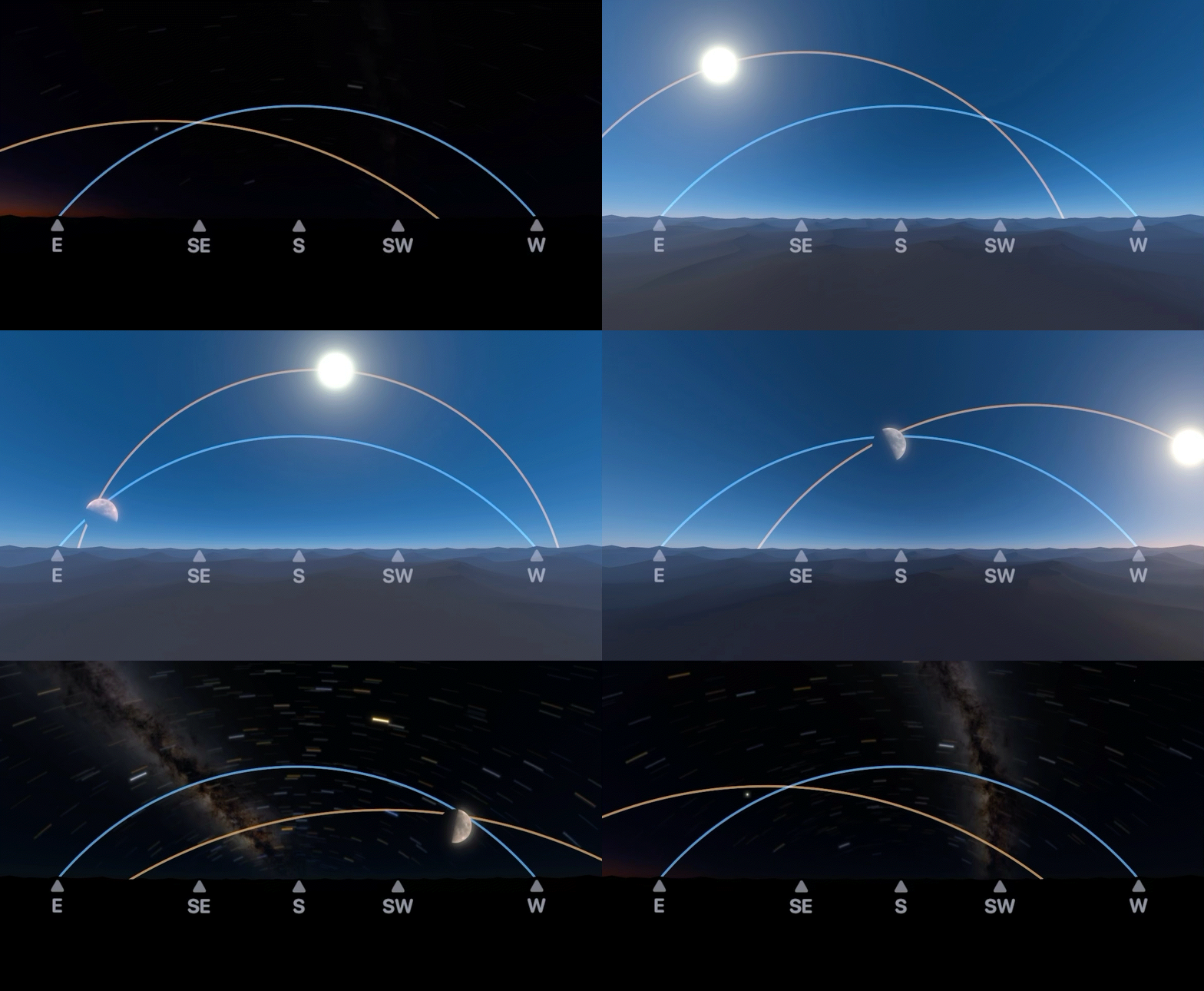
A typical view of the celestial equator (blue) and ecliptic (yellow) as seen from Bel Air, Maryland on the summer solstice. Video credit: Fifth Star Labs (Sky Guide)
As you watch the celestial sphere rotate around you throughout the day, you’ll notice that the celestial equator (blue) appears to remain fixed in place.
Meanwhile, the ecliptic (yellow) is tilted relative to the celestial equator, so half of it curves over the celestial equator while the other half curves under it. This gives the ecliptic a wave-like oscillating motion as the celestial sphere rotates around you.
As the Sun crawls around the ecliptic throughout the year, it changes how these two great circles appear from sunrise to sunset and changes how we perceive the planets to rise and set along the ecliptic.
Let’s see how this looks at different times of year.
NOTE: Keep in mind that how all this looks is dependent on your latitude (how far you are from Earth’s equator). The following section assumes the latitude of Bel Air, Maryland, which is 39.5° north of the equator.
Spring
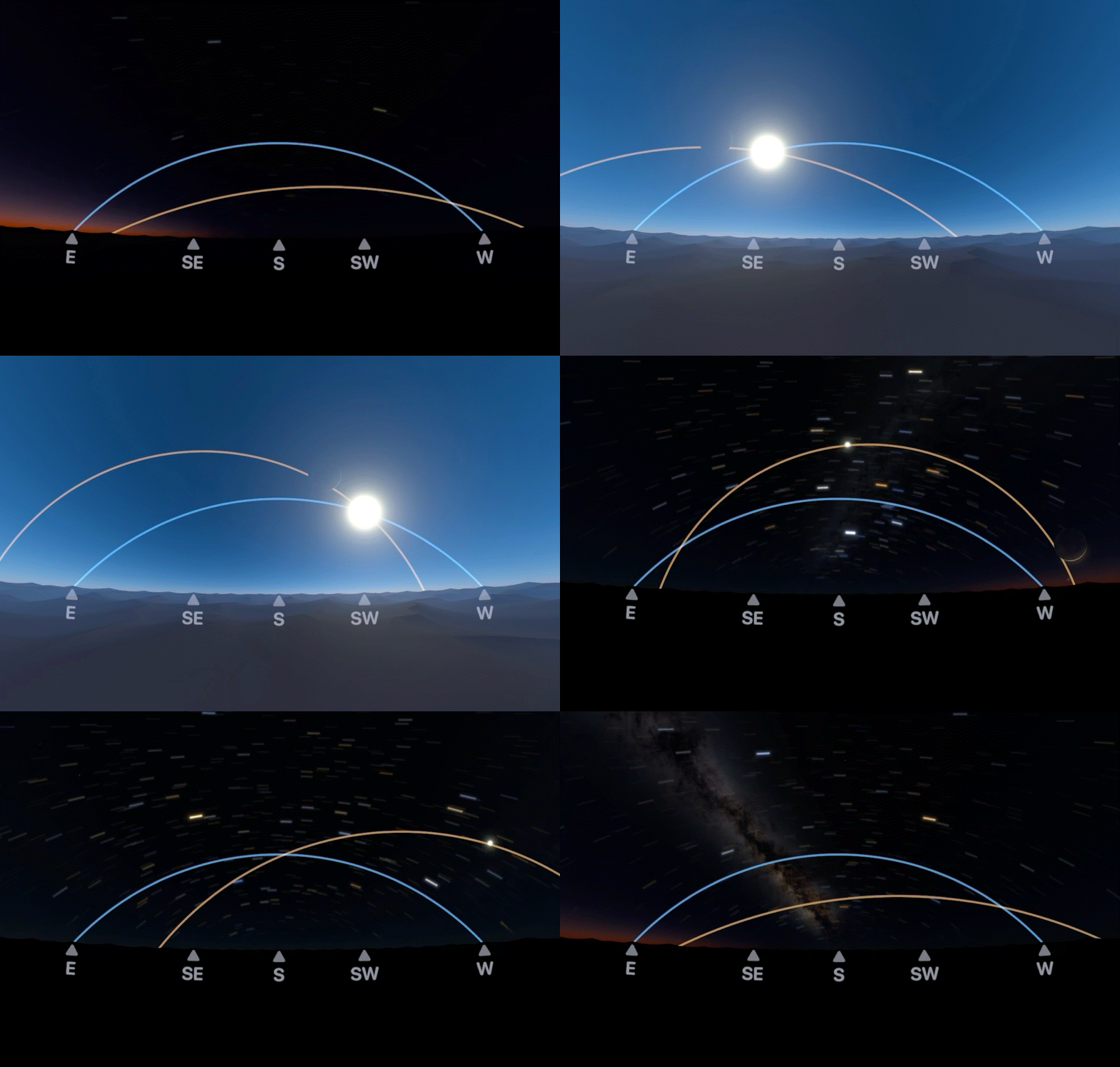
A typical view of the celestial equator (blue) and ecliptic (yellow) as seen from Bel Air, Maryland on the spring equinox. Video credit: Fifth Star Labs (Sky Guide)
This is a 24-hour timelapse of the sky at the beginning of spring. The Sun is positioned at the vernal equinox, one of two places where the celestial equator and ecliptic cross paths.
During sunrise, the ecliptic visible above the horizon is leading the Sun and tilted below the celestial equator. This gives it a shallower angle with respect to the horizon. Throughout the day, the Sun crosses from east to west. During sunset, the ecliptic above the horizon is trailing the Sun and tilted above the celestial equator. This gives it a steeper angle with respect to the horizon. In other words, the two points where the ecliptic changes hemispheres are right at the horizon when the Sun rises and sets.
All of this together means that planets in the spring rise at a shallow angle (they occupy the lower ecliptic) and set at a steep angle (they occupy the higher ecliptic). This makes spring the best time of year to see planets visible in the evening sky.
Venus and Mercury, whose orbits lie inside of Earth’s, always appear leashed to the Sun in our sky. They can only drift away from it so far before reversing direction, with their maximum apparent separation known as greatest elongation. These planets are easiest to observe when they appear highest above the horizon, remain visible for longer after sunset or before sunrise, and are less affected by atmospheric haze near the horizon. This occurs when greatest eastern elongation happens on spring evenings and greatest western elongation happens on fall mornings.
Summer
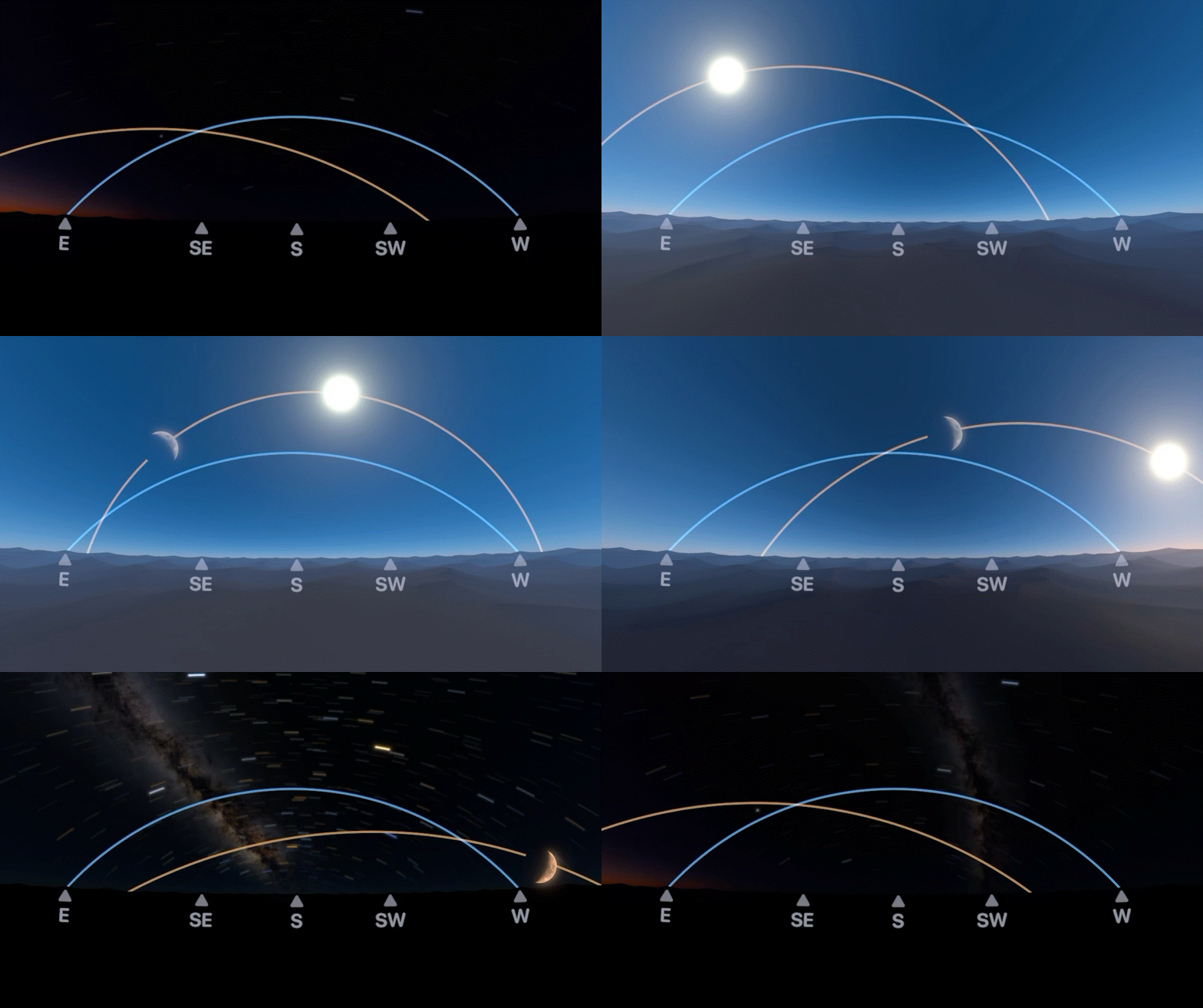
A typical view of the celestial equator (blue) and ecliptic (yellow) as seen from Bel Air, Maryland on the summer solstice. Video credit: Fifth Star Labs (Sky Guide)
Summer begins when the Sun reaches the summer solstice, the point on the ecliptic that is most above the celestial equator.
During sunrise, the ecliptic visible above the horizon leads the Sun and appears to run nearly alongside the celestial equator, the two great circles tracing very similar arcs across the sky. At sunset, the same configuration appears mirrored, with the ecliptic trailing the Sun. Unlike spring and fall, the points where the two halves of the ecliptic change hemispheres is located highest at sunrise and sunset instead of at the horizon.
At both sunrise and sunset near the summer solstice, the ecliptic meets the horizon at roughly the same moderate angle, unlike the much steeper and shallower angles seen around the equinoxes. Ironically, this reverses the seasonal pattern we usually associate with the sky: while the equinoxes represent balance in day and night and the solstices represent extremes of daylight and solar altitude, the angle of the ecliptic behaves in the opposite way, with the equinoxes producing the most extreme angles and the solstices producing moderation.
Notice how the Sun remains above the celestial equator as it crosses the sky.
Fall
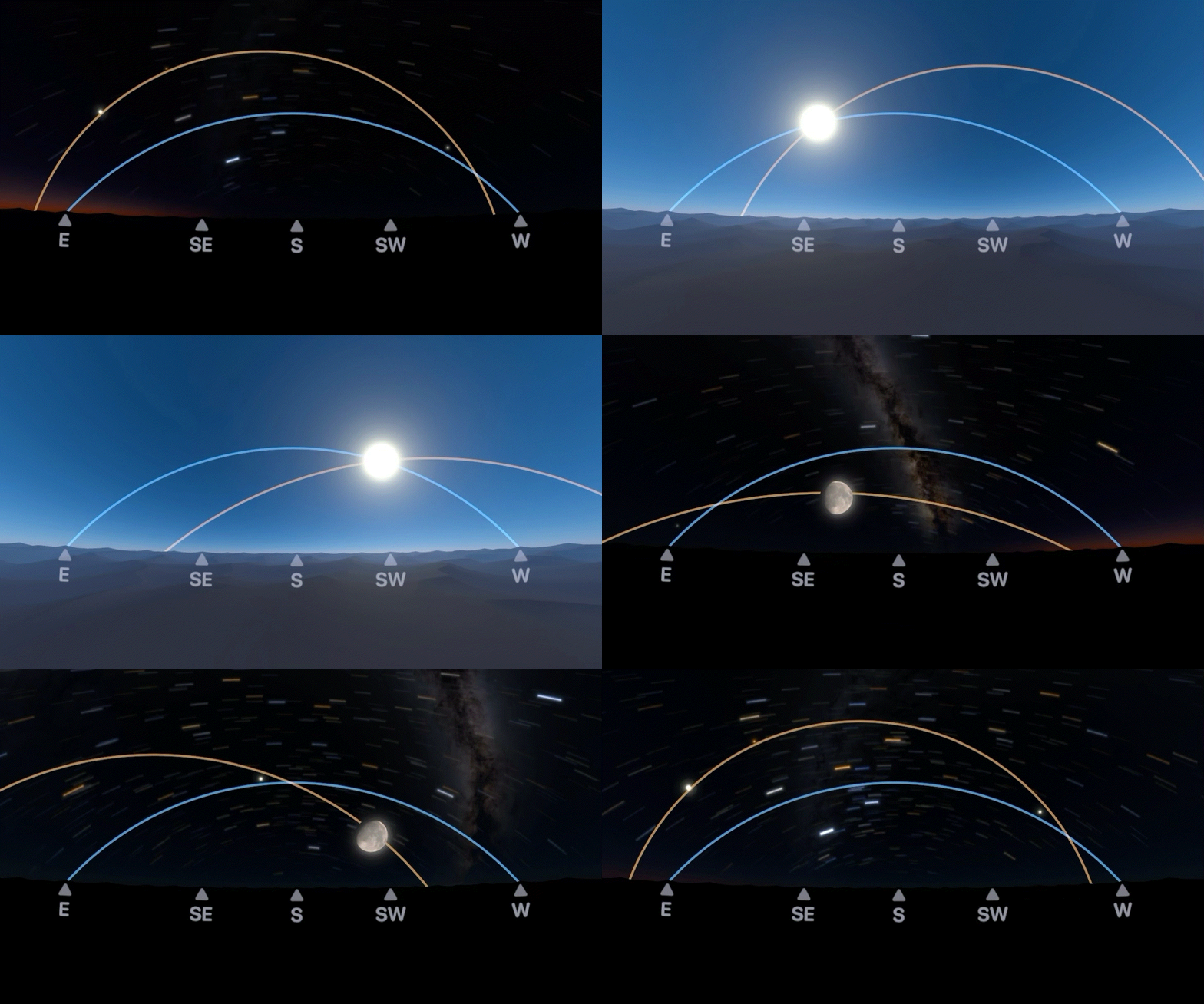
A typical view of the celestial equator (blue) and ecliptic (yellow) as seen from Bel Air, Maryland on the fall equinox. Video credit: Fifth Star Labs (Sky Guide)
We begin the fall season when the Sun is positioned at the autumnal equinox, which is opposite the vernal equinox.
The path of the ecliptic throughout the day mirrors how it is in spring but the steepness of the ecliptic at sunrise and sunset are now reversed. During sunrise, the ecliptic is tilted above the celestial equator and rises at a steeper angle with respect to the horizon. During sunset, the ecliptic is tilted below the celestial equator with a shallower angle with respect to the horizon. Just like with spring, the two points where the ecliptic changes hemispheres are right at the horizon when the Sun rises and sets, except the halves are reversed.
In other words, fall is the best time of year to see planets visible in the morning sky.
Winter
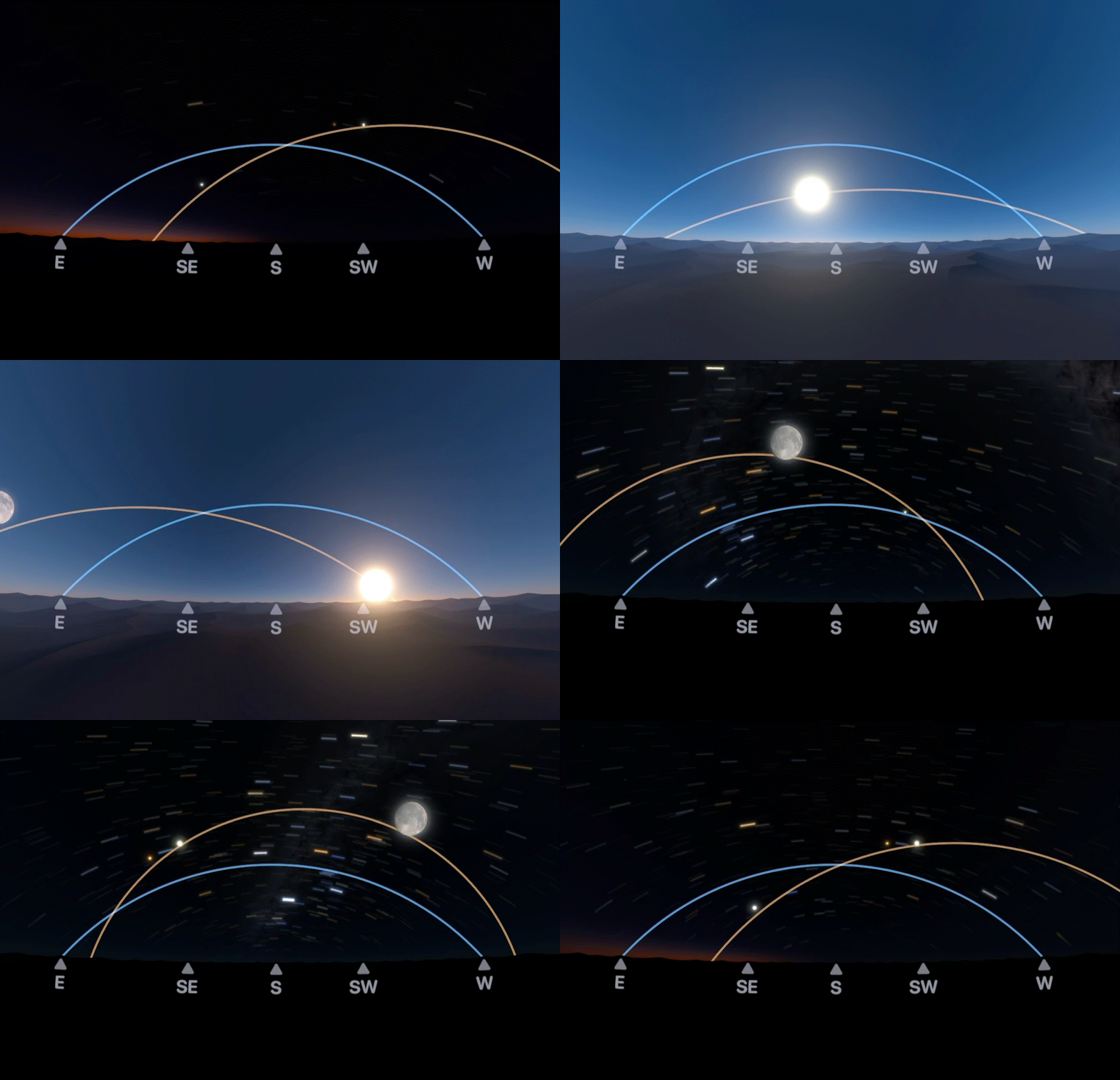
A typical view of the celestial equator (blue) and ecliptic (yellow) as seen from Bel Air, Maryland on the winter solstice. Video credit: Fifth Star Labs (Sky Guide)
We begin the winter season when the Sun is positioned on the ecliptic at the winter solstice that lies below the celestial equator.
The path of the ecliptic throughout the day mirrors how it is in summer with the ecliptic presenting at moderate angles at both sunrise and sunset.
Notice how the Sun remains below the celestial equator as it crosses the sky, the opposite of summer.
As mentioned earlier, this is all strongly dependent on latitude. Let’s leave Bel Air, MD and check out how this all looks from different places.
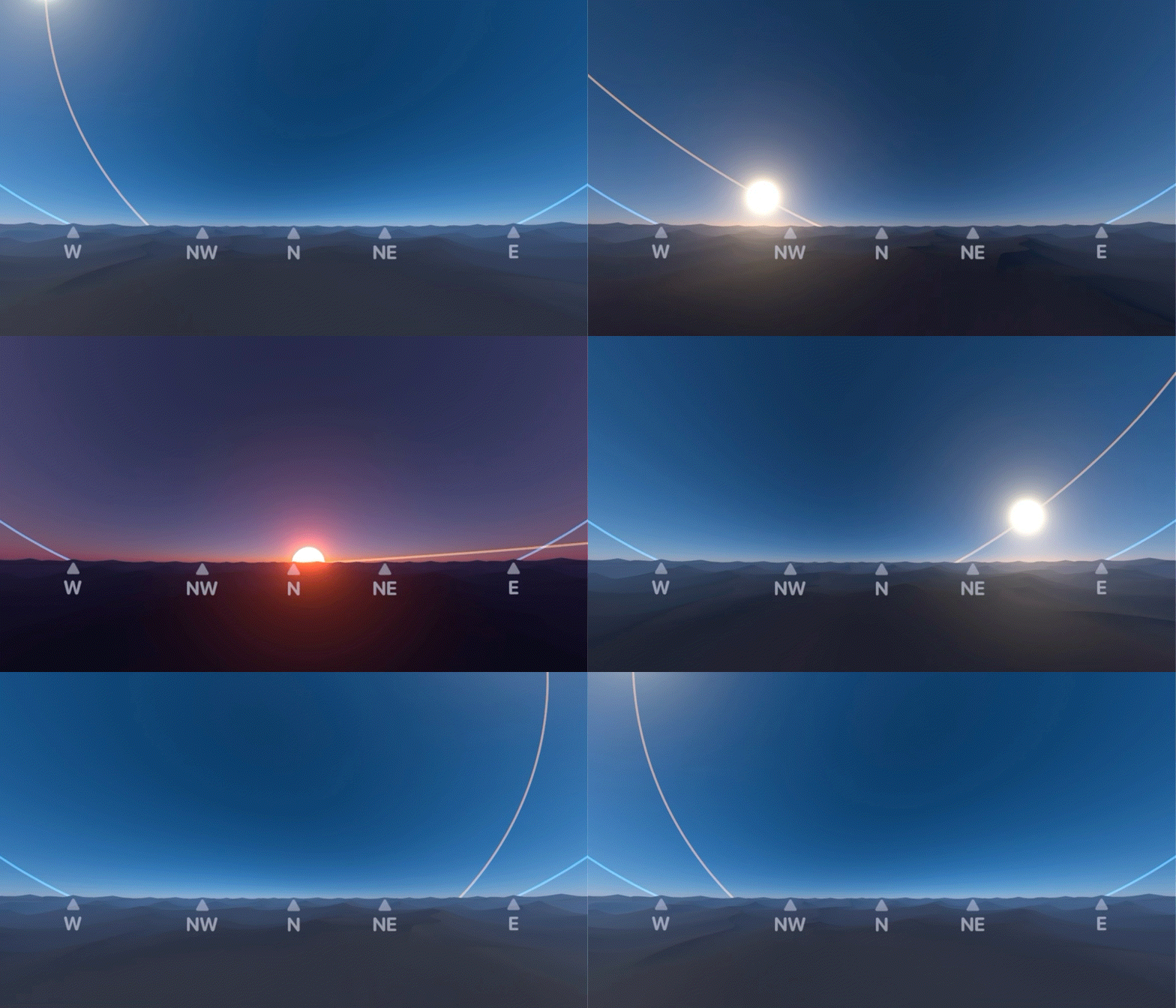
This view from the Arctic Circle (about 66.5° north of the equator) shows the summer solstice Sun skimming the northern horizon at midnight. Video credit: Fifth Star Labs (Sky Guide)
Closer to the poles, the celestial equator lies increasingly closer to the horizon, which makes the ecliptic intersect the horizon at shallower, more oblique angles. In fact, if you watch the Sun from the Arctic Circle, there is one day a year it will not set (summer solstice). The number of midnight suns per year increases as you go north until you reach the North Pole, where the Sun does not set for six straight months out of each year.
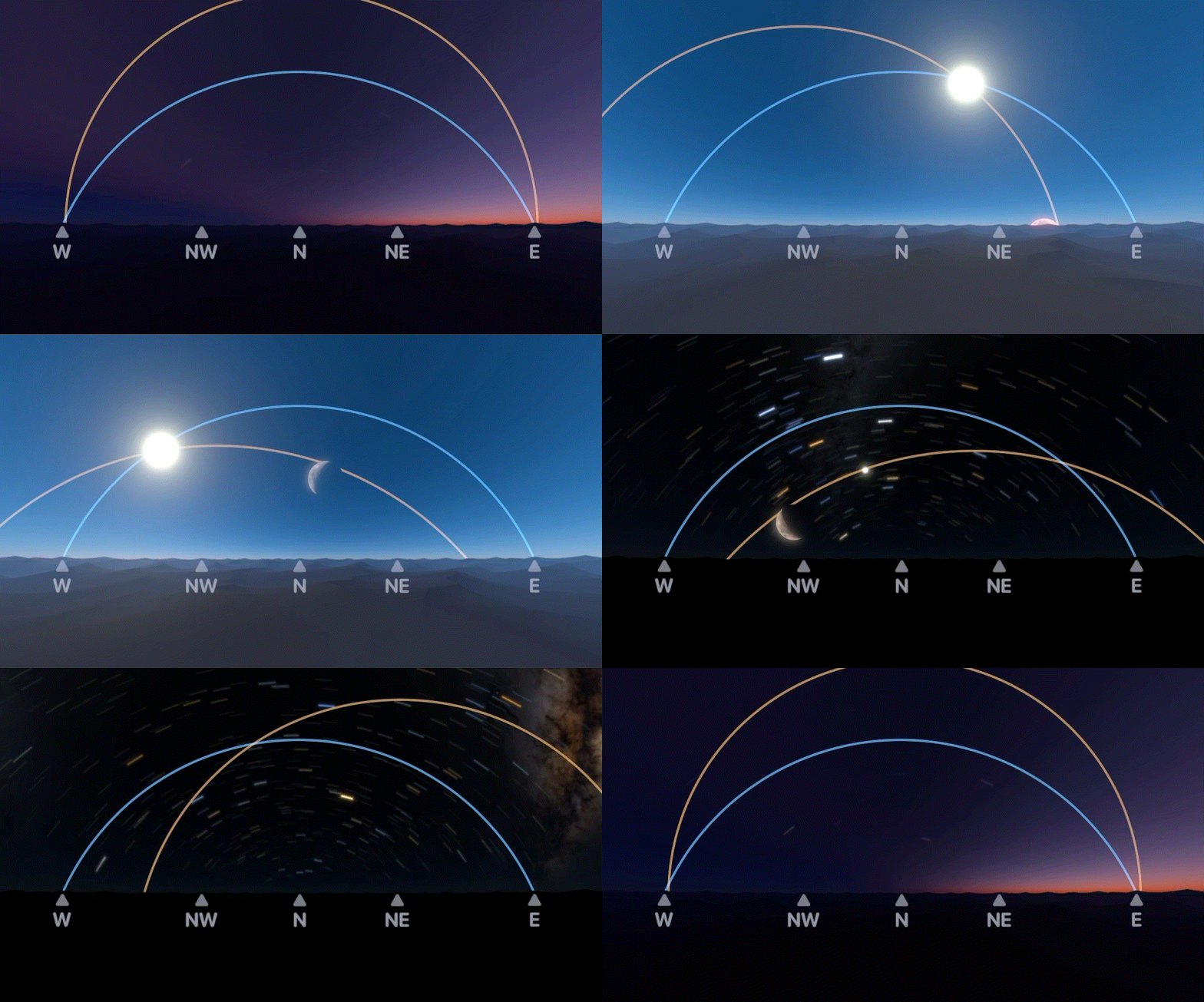
This view from the equator shows that the celestial equator (blue) arches straight over your head (zenith) from east to west. The ecliptic (yellow) wavers back and forth across this line. The Sun, Moon and planets will always rise and set at steep angles. Video credit: Fifth Star Labs (Sky Guide)
Near the equator, the celestial equator meets the horizon at steep, nearly vertical angles at the eastern and western horizons, which also influences how the ecliptic intersects the horizon throughout the year. Because the ecliptic is always inclined by about 23.5° relative to the celestial equator, its seasonal tilt relative to the horizon still varies with the Sun’s position, but the geometry is generally more symmetric and pronounced at low latitudes.
This view from the Tropic of Capricorn (about 23.5° south of the equator) shows that someone in the southern hemisphere must look to the north to see the celestial equator (blue) and to watch the Sun, Moon and planets crossing the sky. Video credit: Fifth Star Labs (Sky Guide)
Crossing into the southern hemisphere reverses the orientation of the sky relative to the horizon: the celestial equator shifts to the opposite side of the sky (north), and the seasonal pattern of steep and shallow ecliptic angles at sunrise and sunset is mirrored between spring and autumn, while summer and winter remain moderate.
Though imperceptible in any single moment, the sky is in constant motion. Earth’s rotation, the Sun’s yearly path along the ecliptic, and the planets’ own orbits against this shifting backdrop all combine to produce what we see in the sky. What appears as a simple pattern of rising and setting is actually the result of these independent motions working together. Together they form a kind of cosmic ballet, where each dancer follows a distinct routine that contributes to the larger performance. By better understanding how each part is played, the sky stops being a static backdrop and becomes a dynamic system far richer than it first appears.