
NEBULAE
Massive clouds of gas and dust in space. Some nebulas are formed from the material thrown out by exploding stars, called supernovas. Many nebulae act as stellar nurseries where new stars are born. As nebulae collapse under their own gravity, the pressure causes the material at the center to heat up, creating protostars.
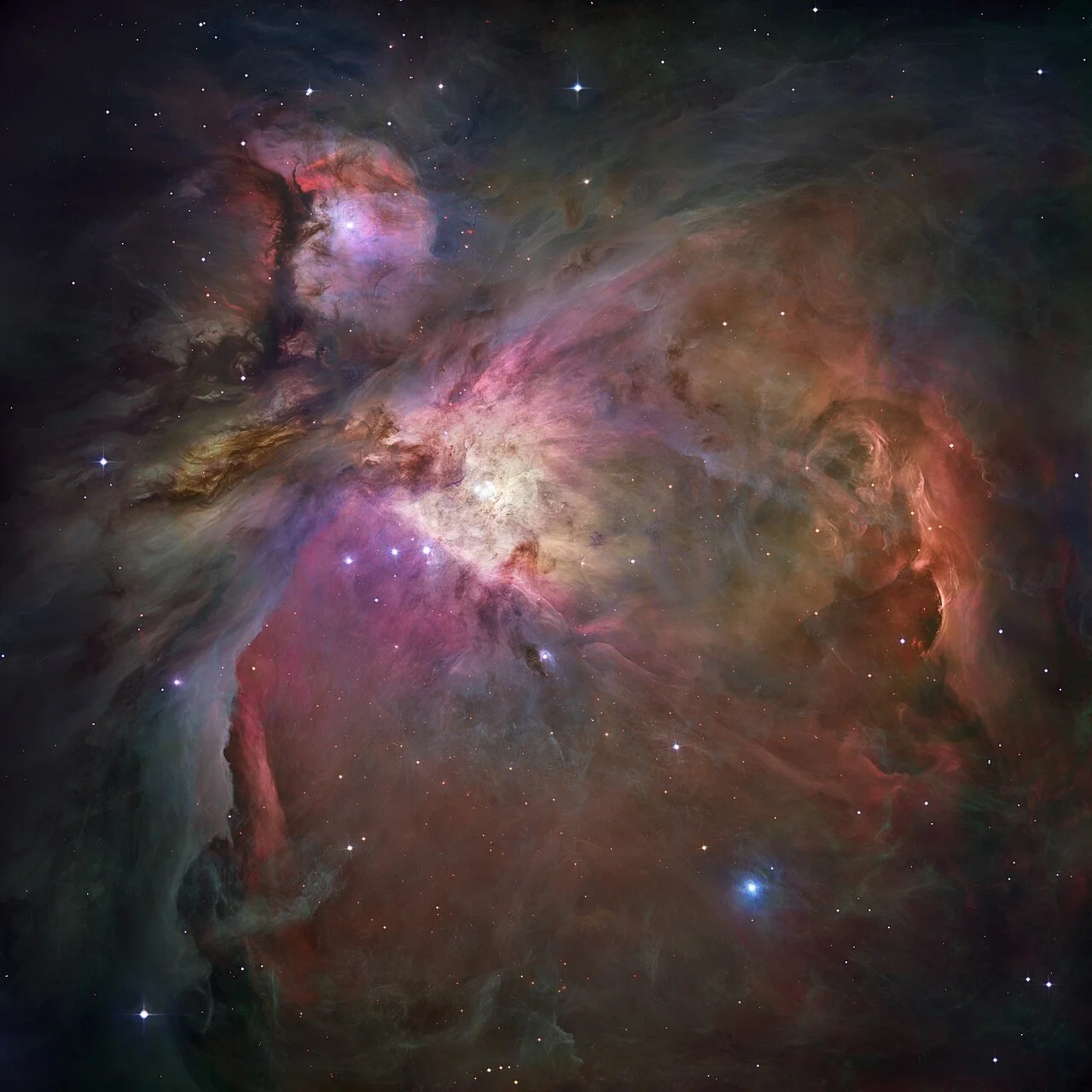
EMISSION NEBULA
An emission nebula is a cloud of high temperature gas. Within this type of nebula, a star energizes the atoms in the cloud with ultraviolet radiation. As these atoms fall back to lower energy states, they emit radiation. The process is similar to that of a neon light. This causes the nebula to glow. Emission nebulae tend to be red in color because of the abundance of hydrogen. Additional colors, such as blue and green, can be produced by the atoms of other elements, but hydrogen is almost always the most abundant.
Pictured above is the Orion Nebula (M42), one of the brightest and most beautiful emission nebulae in the night sky.
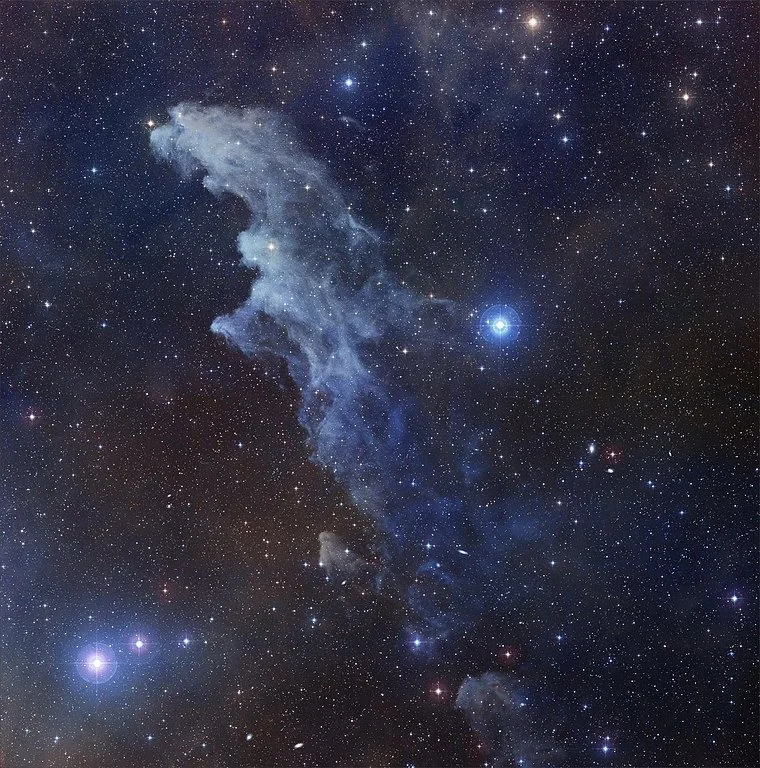
REFLECTION NEBULA
A reflection nebula differs from an emission nebula in that it does not emit radiation of its own. It is a cloud of dust and gas that reflects the light energy from a nearby star or group of stars. Reflection nebulae are frequently the sites of star formation. They usually tend to be blue in color because of the way that the light is scattered. Blue light is scattered more efficiently.
Pictured above is the Witch Head Nebula, a ghostly reflection nebula awash in the blue glow of the nearby star, Rigel.
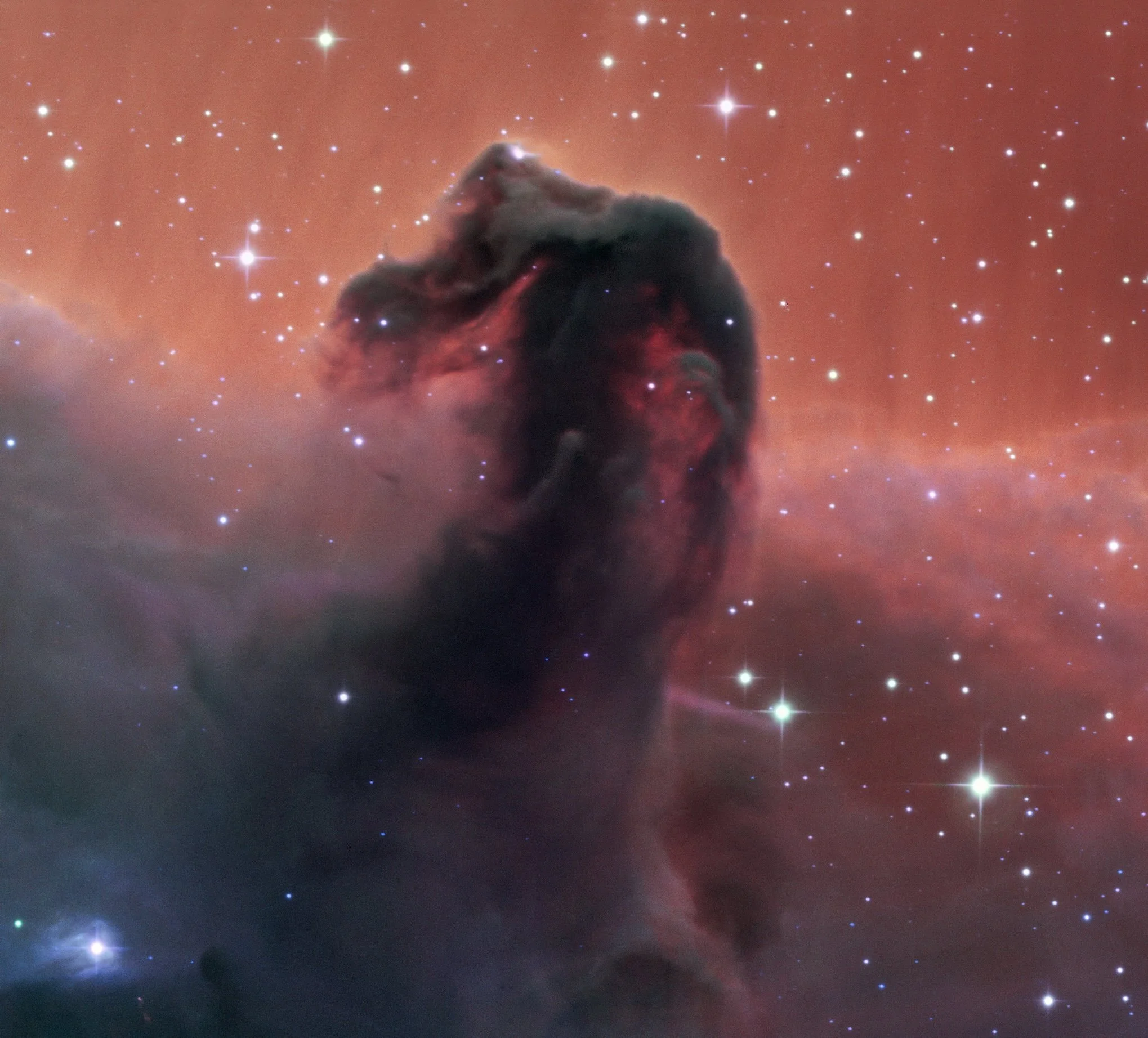
ABSORPTION NEBULA
A dark nebula is a cloud of dust that blocks the light from objects behind it. They are very similar to reflection nebulae in composition and look different primarily because of the placement of the light source. Dark nebulae are usually seen together with emission and reflection nebulae.
Pictured above is the Horse Head Nebula, a dark nebula known for its distinctive shape set against a glowing backdrop.
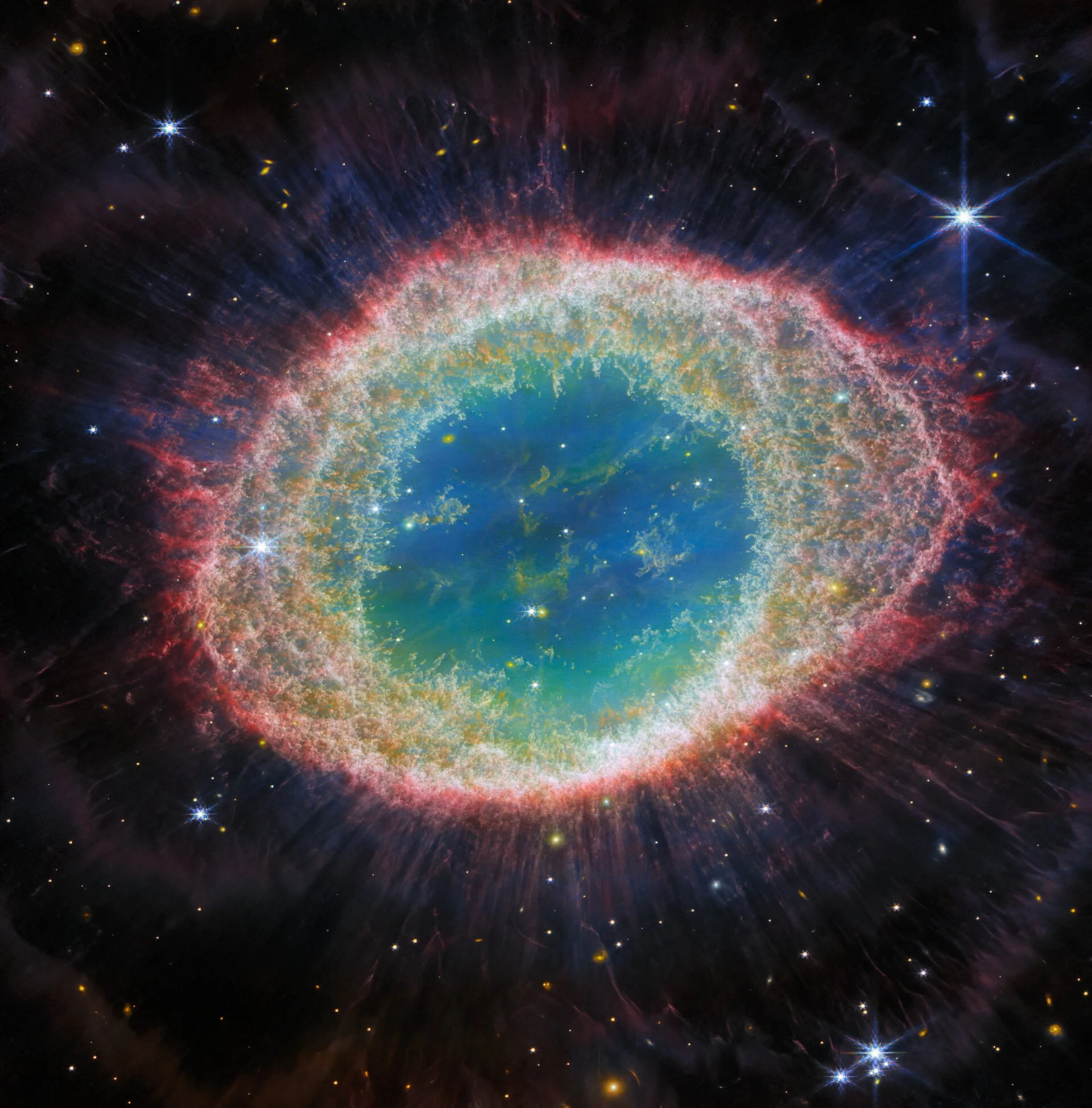
PLANETARY NEBULA
A planetary nebula is a shell of gas produced by a star as it nears the end of its life cycle. Their name can be a bit misleading. They actually have nothing to do with planets. These nebulae were given this name because they often look like planets due to their round shape. The outer shell of gas is usually illuminated by the remains of the star at its center.
Pictured above is the Ring Nebula (M57), a planetary nebula formed from the outer layers of a dying star.
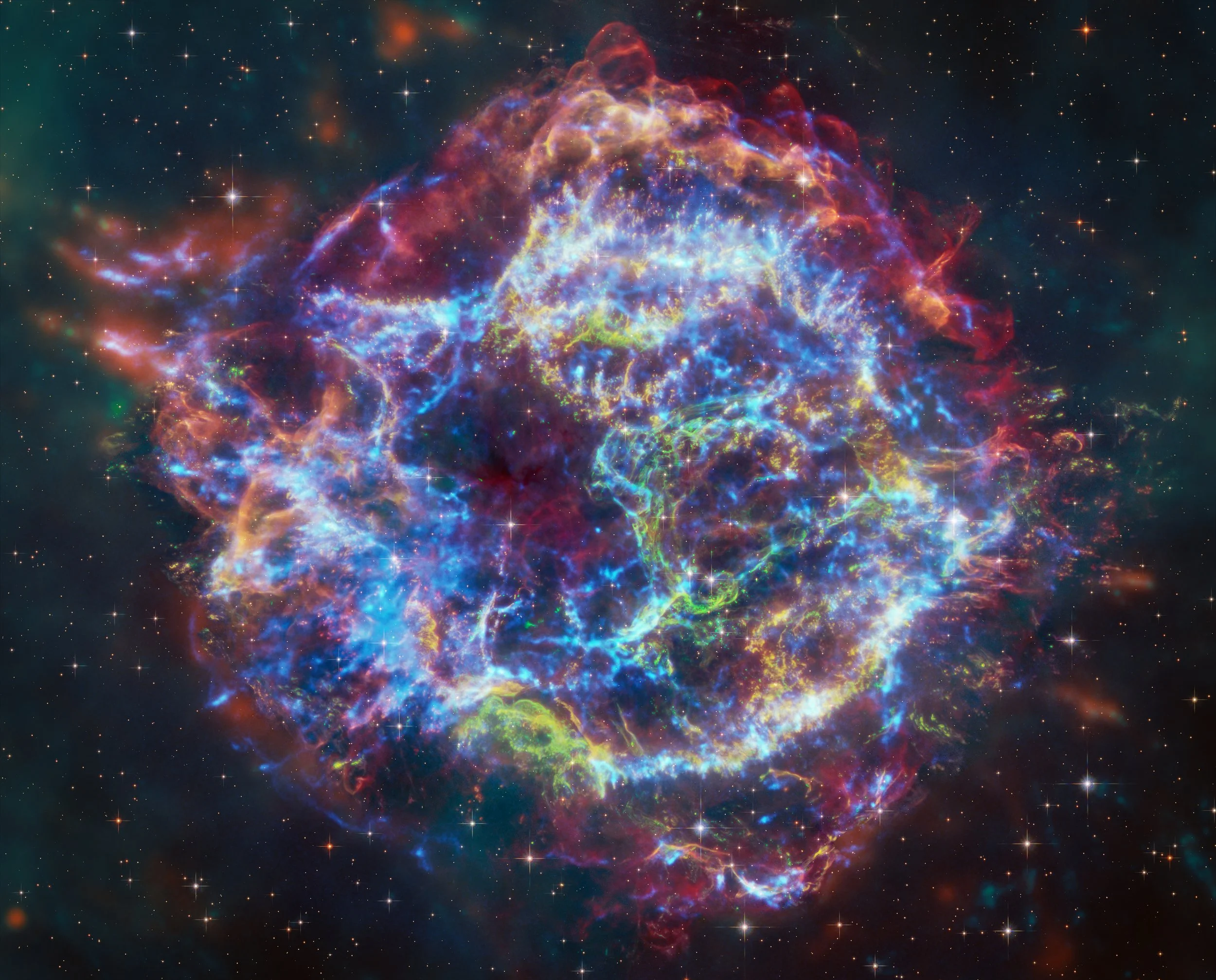
SUPERNOVA REMNANT
Supernova remnants are created when a star ends its life in a massive explosion known as a supernova. The explosion blows a large amount of the star's matter out into space. This cloud of matter glows with the remains of the star that created it. One of the best examples of a supernova remnant is the Crab Nebula (M1) in Taurus. It is illuminated by a pulsar which was created by the supernova.
Pictured above is the supernova remnant, Cassiopeia A, the result of a massive stellar explosion.