By: Rob Bayne
Okay, so, now you know what a Smart Telescope is and have a general idea of what they do, but, how do you know if it is right for you? What’s more, if a Smart Telescope is the… Smart (see what I did there?) choice; which one should you buy?!?! I hope that this second entry in our Smart Telescope series helps you navigate this technological wonderland.
Well, I am going to start with some sage advice that was passed on to me by members of our club: “The best telescope is the one that you use!”
This seems like an obvious statement at first, but it is something that is far too often forgotten. Imagine this scenario: You want to start imaging. You purchase a beautiful telescope specifically for imaging, a fantastic and stable mount, a monochrome astro imaging camera, color filter wheel, auto-guider, a control device and a new laptop to get all of that talking together and to gather your actual data.
Cool. You take an hour or so to set up, get everything talking, find your target and start taking, say, 30-second exposures. About 30 minutes in, you realize you live in Maryland and that Mother Nature doesn’t care what the meteorologists said, she wants clouds here. You pause your session, wait it out a bit, maybe get some more imaging time. You try again the next day. Doggonit! More clouds! Jeez. Okay, this time, you wait a week. Nice! It stayed clear for the whole night and you got about 5 hours of data. You take that to your computer and start stacking the images… Only to learn that something was off. Now your stars look like this:
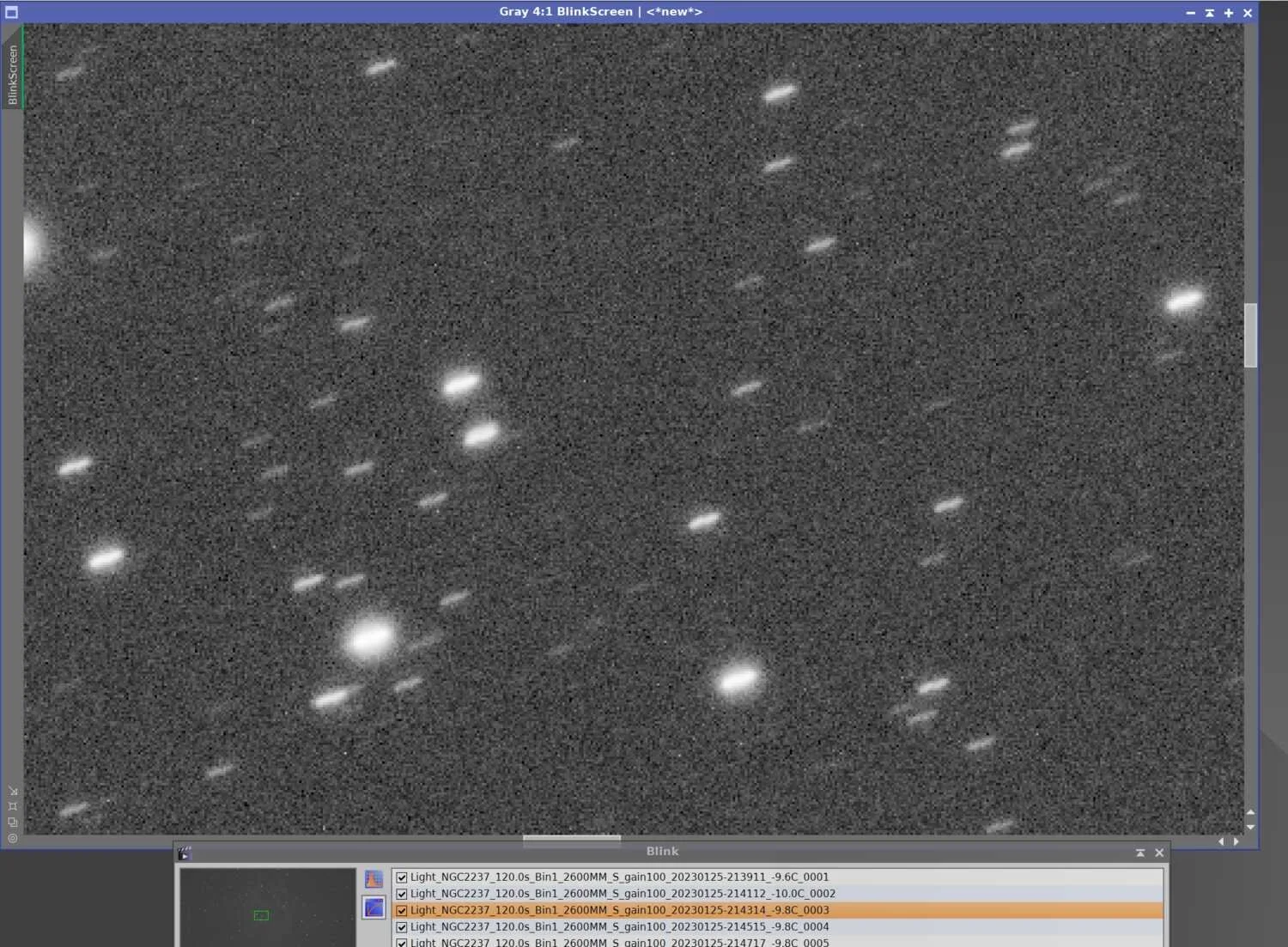
Image property of user: Helloworld1234 at https://www.cloudynights.com/forums/topic/860907-star-trail-drift-on-ra-axis-while-phd2-guiding-graph-and-log-looks-ok/
Ugh! Really?!?
Okay, so this situation is of course hyperbole, but the frustration that you can imagine is real. If you are not committed to the level of work that goes to setting up your equipment, you should not spend the money. That is the real value of Smart Telescopes. They are so easy to set up! Ten-minute break in the clouds? Go for it! The universe awaits!
So, to help you on your way, I am going to put some information below to help you figure out which Smart Telescope is right for you or your lucky loved one this holiday season.
The Candidates:
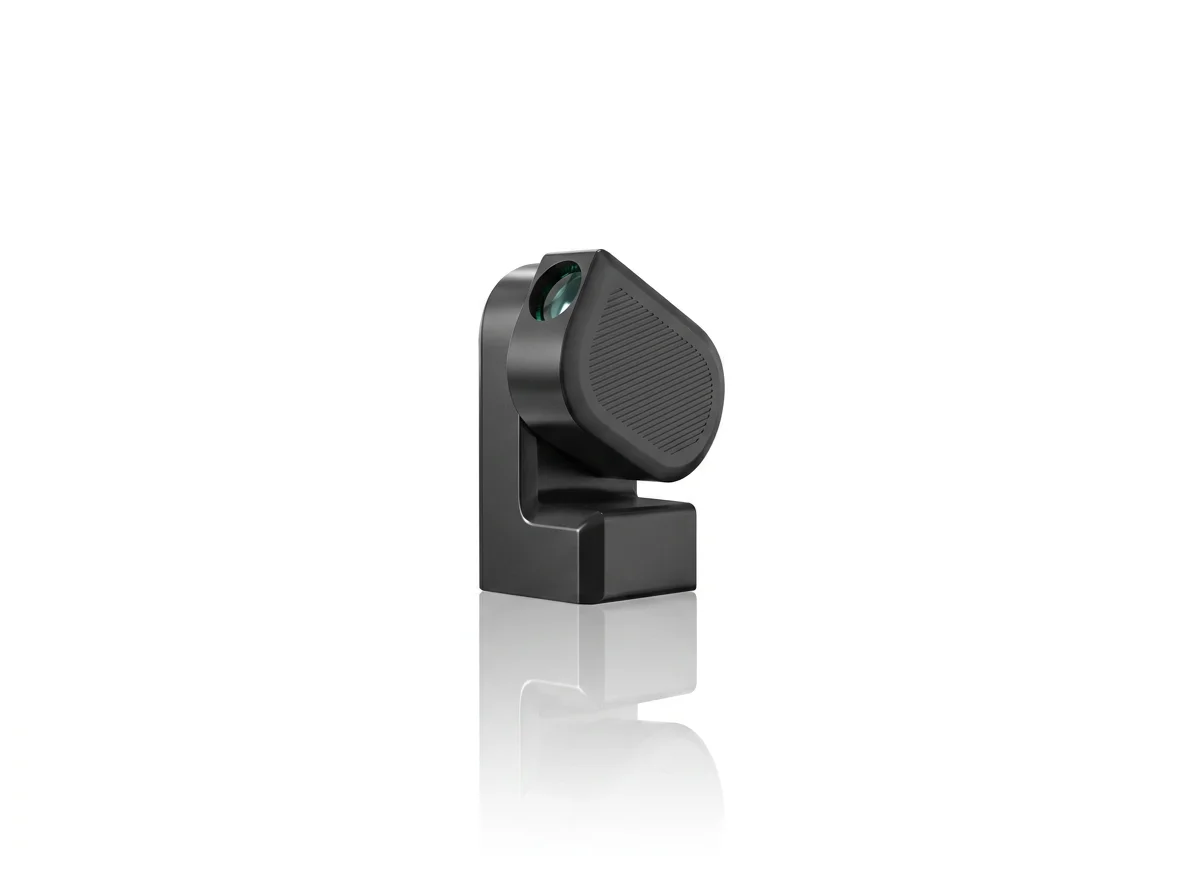
ZWO Seestar S50
ZWO Seestar S50
| Category | Details |
|---|---|
| Price | $499-$549 USD |
| Website | ZWO Seestar S50 |
| Dimensions | 142.5 × 130 × 257 mm (5.6 × 5.1 × 10.1 in) |
| Weight | 2.5 kg (5.5 lb) |
| Battery Life | 6000 mAh internal battery, approximately 5-6 hours |
| Sensor | Sony IMX462 |
| Image Resolution | 1080 × 1920 (2 MP) |
| Storage Capacity | 64 GB onboard storage |
| File Types | JPEG, FITS, MP4, AVI |
| What's Included |
|
| Key Features |
|
Rob’s Take:
This is a good, entry level, all round scope. It combines a small form factor with ease of use and a very large community of users. This means there will always be help out there should you need it. Also, there has recently been a software released that will allow you to directly control the Seestar from a desktop computer as opposed to using the mobile app. Check that out here: Nebulink: plan the night, let your Seestar work it
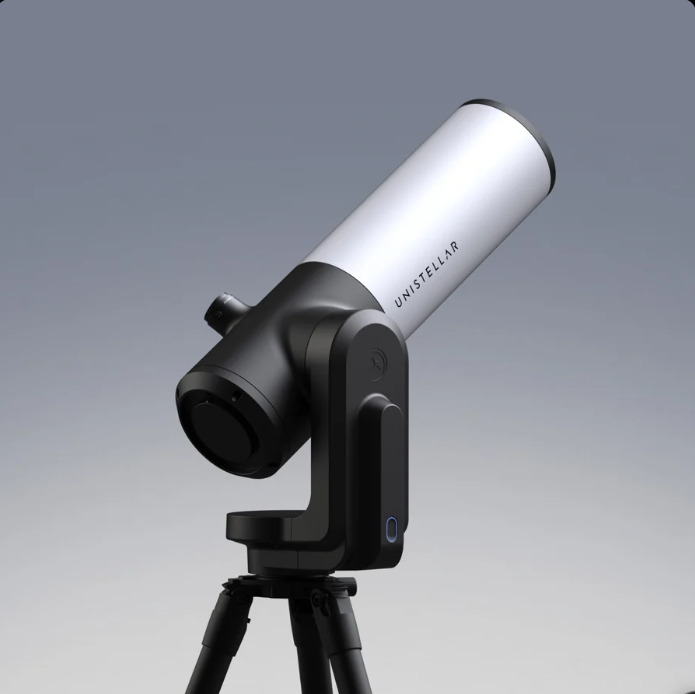
Unistellar eVscope 2
Unistellar eVscope 2
| Category | Details |
|---|---|
| Price | $3,999 USD |
| Website | Unistellar eVscope 2 |
| Dimensions | 650 × 190 × 230 mm (25.6 × 7.5 × 9.1 in) |
| Weight | 7 kg (15.5 lb) telescope, 2 kg (4.4 lb) tripod |
| Battery Life | Up to 9 hours |
| Sensor | 7.7 MP Sony imaging sensor |
| Image Resolution | Approximately 7.7 MP |
| Storage Capacity | 64 GB onboard storage |
| File Types | JPEG, TIFF, FITS |
| What's Included |
|
| Key Features |
|
Rob’s Take:
This is the quintessential educational telescope. Many users can connect and download images without interfering with the observing session. The app contains a great deal of information about each object. You can register an account and your device to actively participate in NASA and SETI citizen science programs. There is also a large community of users, but most are institutional and also outside the U.S. Finally, it has a “digital eyepiece” which combines the functionality of a Smart Telescope with the “wow-factor” of viewing through a traditional visual telescope.
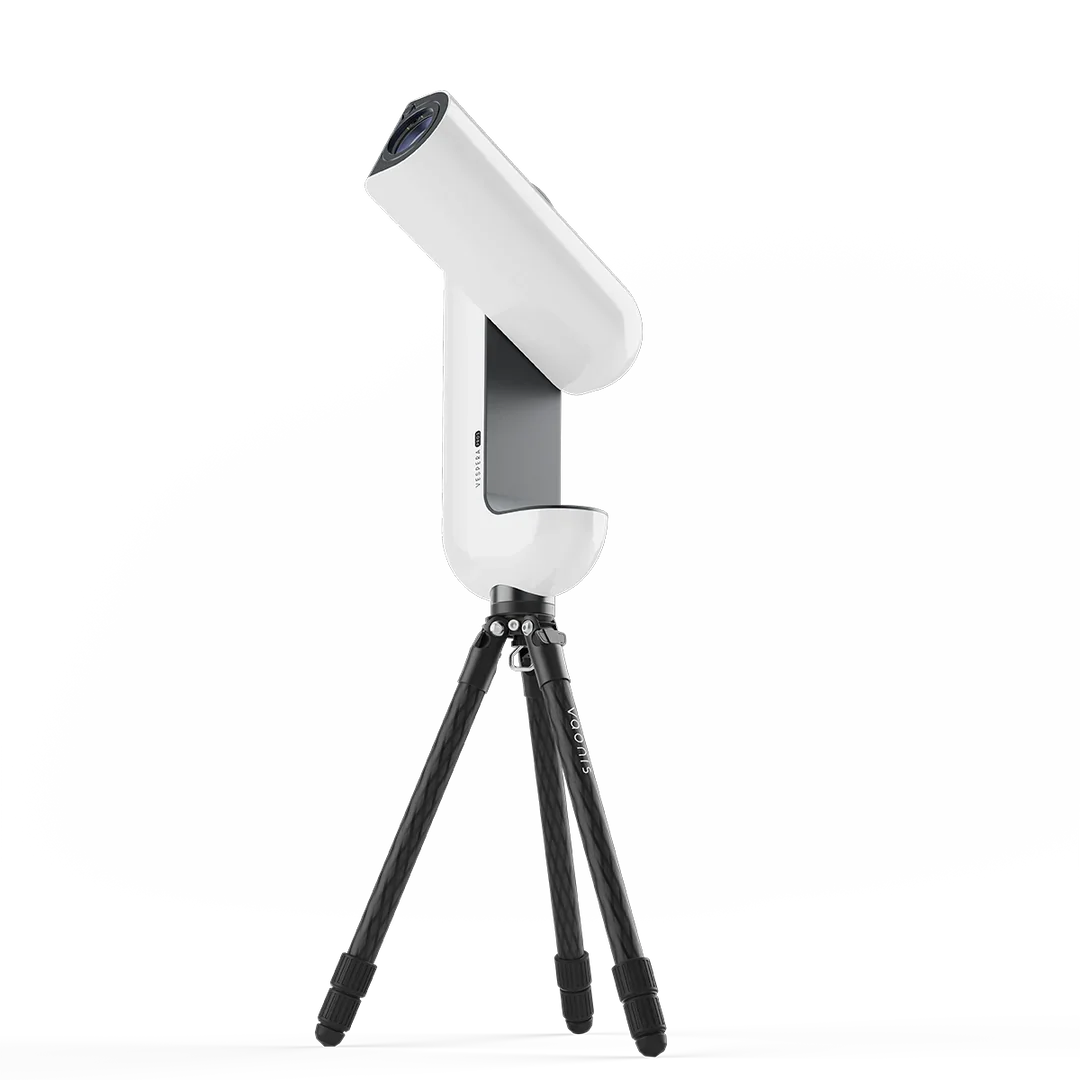
Vaonis Vespera Pro 2
Vaonis Vespera Pro 2
| Category | Details |
|---|---|
| Price | $2,990 USD |
| Website | Vaonis Vespera Pro 2 |
| Dimensions | 400 × 200 × 90 mm (15.7 × 7.8 × 3.5 in) |
| Weight | Approximately 5 kg (11 lb) including tripod |
| Battery Life | Up to 11 hours |
| Sensor | Sony IMX676 12.5 MP Square Sensor |
| Image Resolution | 12.5 MP Native, up to 50 MP Mosaic Images |
| Storage Capacity | 225 GB onboard storage |
| File Types | JPEG, TIFF, FITS, 16-bit RAW |
| What's Included |
|
| Key Features |
|
Rob’s Take:
The Vespera Pro is the fastest way to take professional looking images with no additional work. It is the highest resolution available on the market. It has the longest battery life of any of the models I have used, a built-in dew heater, an incredible amount of storage and is water-resistant. It also has an AI-assisted mosaic mode which can take breathtaking images of larger objects. Finally, you can set up observations in the app, kick them off, and walk away. The device will shutdown automatically when the session is complete. You can do multiple targets in a single night or schedule a multi-night session to collect a large amount of data for a single object. This last piece allows you to get crisp bright images of some of the dimmest objects we can view in the night sky, even in areas with moderate light pollution.
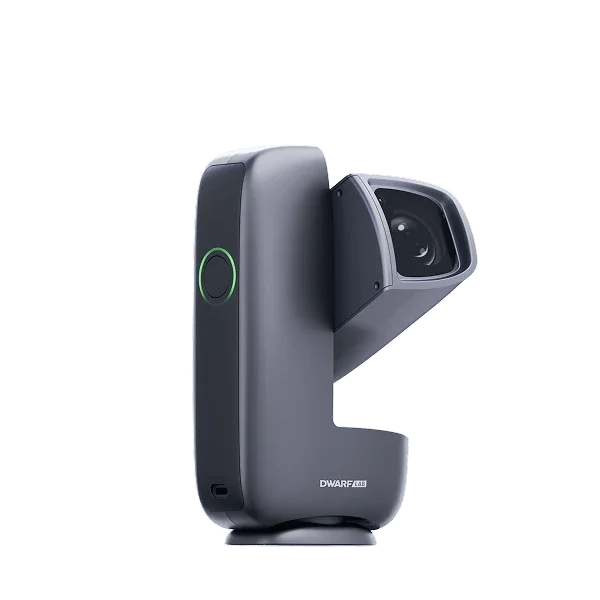
The DwarfLab Dwarf Mini
DwarfLab Dwarf Mini
| Category | Details |
|---|---|
| Price | $419 USD |
| Website | DwarfLab Dwarf Mini |
| Dimensions | Ultra-portable pocket-sized design |
| Weight | 840 g (1.85 lb) |
| Battery Life | Up to 4 hours |
| Sensor | Sony IMX662 (1/2.8-inch) |
| Image Resolution | 2 MP RAW imaging |
| Storage Capacity | Internal storage (capacity varies by firmware version) |
| File Types | RAW, JPEG, and video formats through DWARFLAB software ecosystem |
| What's Included |
|
| Key Features |
|
Rob’s Take:
The Dwarf Mini is the only Smart Telescope on this list that also has a wide-angle camera that allows for terrestrial view/imaging. That almost doubles the value if you are interested in landscape photography or nature photography of any sort. It is also the only one that ships with a solar filter at no additional cost! If you look at the cost of filters of any type for any telescope, smart or not, you will realize that this is a steal all on its own. This little scope also comes with the most intuitive, easy-to-use app out of the bunch. It took me less than a minute from powering on the device to beginning to image an object. The app also comes with a sky map feature, which will allow you to use your phone to find an object on the fly (a la Stellarium, Google SkyMap, etc.). Then, you simply click the object, click the little camera icon, and away goes the Mini to start imaging your object. The app also has built-in editing modes to clean up your images, removing things like noise, satellite trails, and more without ever having to leave the app. There is also a “Super stack” mode, which allows you to combine multiple sets of observations, similar to the multi-night function of the Vespera, albeit after the fact.
It is also an excellent tool for sharing and collaboration. You can share your images with various communities right within the app: amateur astronomers, bird watchers, and landscape photographers, just to name the big ones. And finally, my favorite feature as a member of an astronomy club, is the Star Party Mode. You can coordinate with multiple Dwarf Mini users across the internet or physically nearby to collaborate on imaging a single object, thus multiplying the overall amount of data collected allowing for a more detailed image and access to dimmer objects in the night sky.
Oh, and did I mention that the Mini FITS INTO THE POCKET OF MY CARGO PANTS?!?! Talk about having the universe in your pocket.
So, which is right for me?
Well, fellow star hopper, at the risk of sounding less-than-helpful, it really depends on what you are trying to accomplish. If you are a seasoned imager and you just want something easier than pulling out your full rig every night, then the Vespera Pro 2 is for you. It is definitely the “professional” grade here.
An educator would probably want to focus on the eVscope 2. The eyepiece, in-depth information in the app, and the citizen science participation are amazing tools for sharing STEM concepts with all ages.
The Seestar is prolific and has truly set the standard for what Smart Telescopes can be. With probably the largest community, a familiar and reputable astro-imaging hardware company at its back, and praise from many astronomy websites, magazines, and content creators, there is a good chance that you are going to run into other Seestar users wherever you go. It is also still small enough to fit into a backpack, so transportation is also no concern with this model.
If we focus on the quote that I made at the beginning of the article, the Dwarf Mini is the “telescope that you use”. It is no exaggeration to say that this is the simplest to use by far. Not that any of these scopes are complicated… But, the Dwarf Mini is simplicity itself. The whole package is almost minimalist, but that doesn’t mean that it is lacking in any way. It is also the ultimate travel scope considering it can go pretty much anywhere…
I hope this helps, whether you are shopping for yourself, a loved one, or a community organization near you. If you do pick up one of these and you have questions, feel free to reach out to us via our contact form or, heck, come out and join us for one of our Open House events and get some hands-on experience! The next article in this series will be an assessment of how these devices are impacting amateur astronomy and even astronomy as a whole. Stay tuned!
Harford County Astronomical Society, Inc. does not receive any endorsement, payment, or equipment from any of the vendors listed in this article series. All of the opinions and recommendations contained herein are solely those of the author and do not reflect the views of the organization.